A Bill of Lading Document Sample for Sea Freight serves as a crucial legal contract between the shipper and carrier detailing the goods transported by sea. It specifies the type, quantity, and destination of the shipment, ensuring smooth customs clearance and delivery. This document also acts as a receipt, title, and proof of ownership for the cargo during transit.
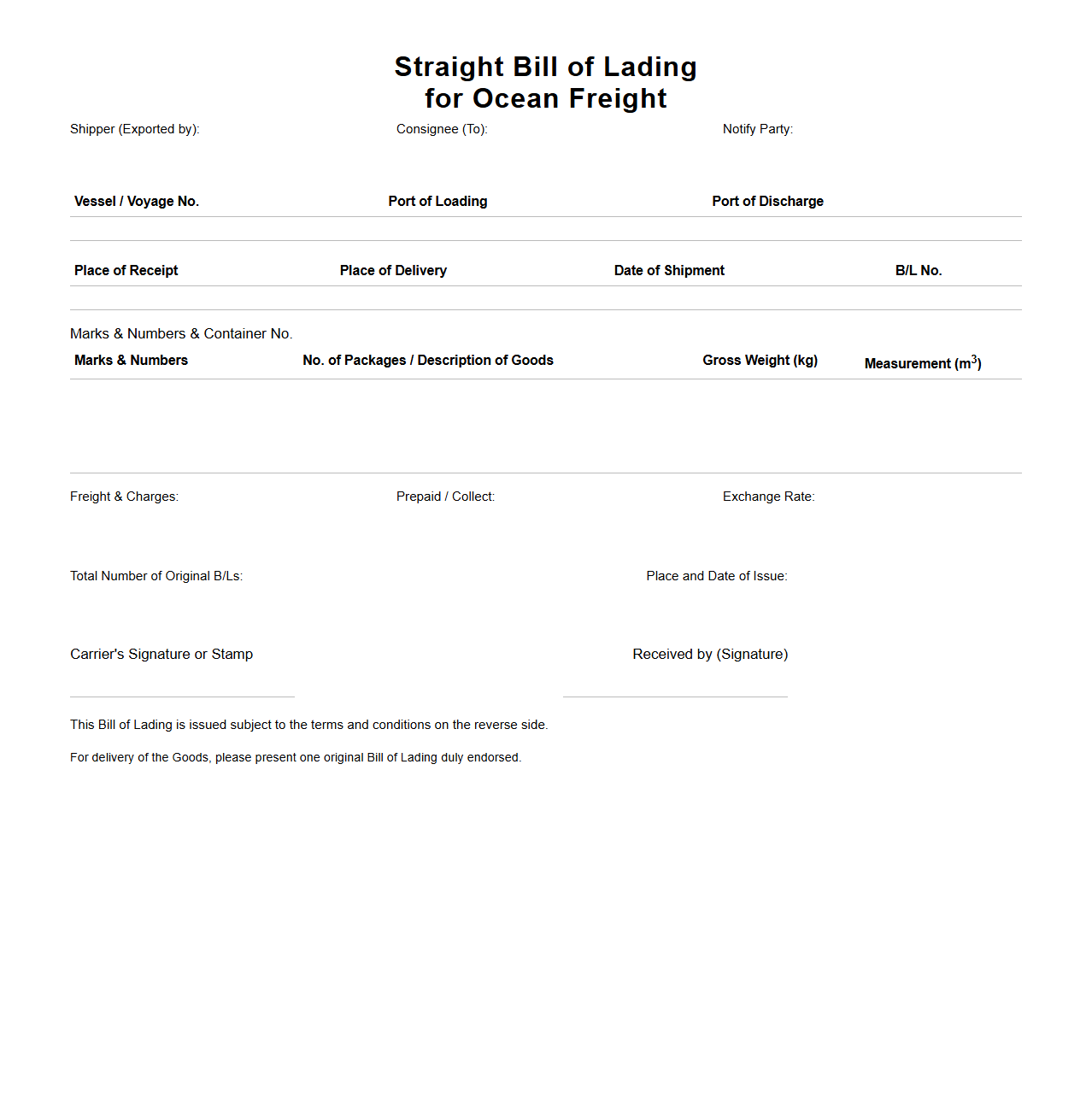
Straight Bill of Lading for Ocean Freight
A
Straight Bill of Lading for ocean freight is a non-negotiable shipping document issued by a carrier that specifies the consignee who is authorized to receive the cargo. It serves as a receipt for the goods, a contract of carriage, and evidence of title, but unlike a negotiable bill of lading, it cannot be transferred or endorsed to another party. This document is essential for shipments where the cargo is consigned directly to a specific receiver, ensuring controlled delivery and reducing the risk of diversion.
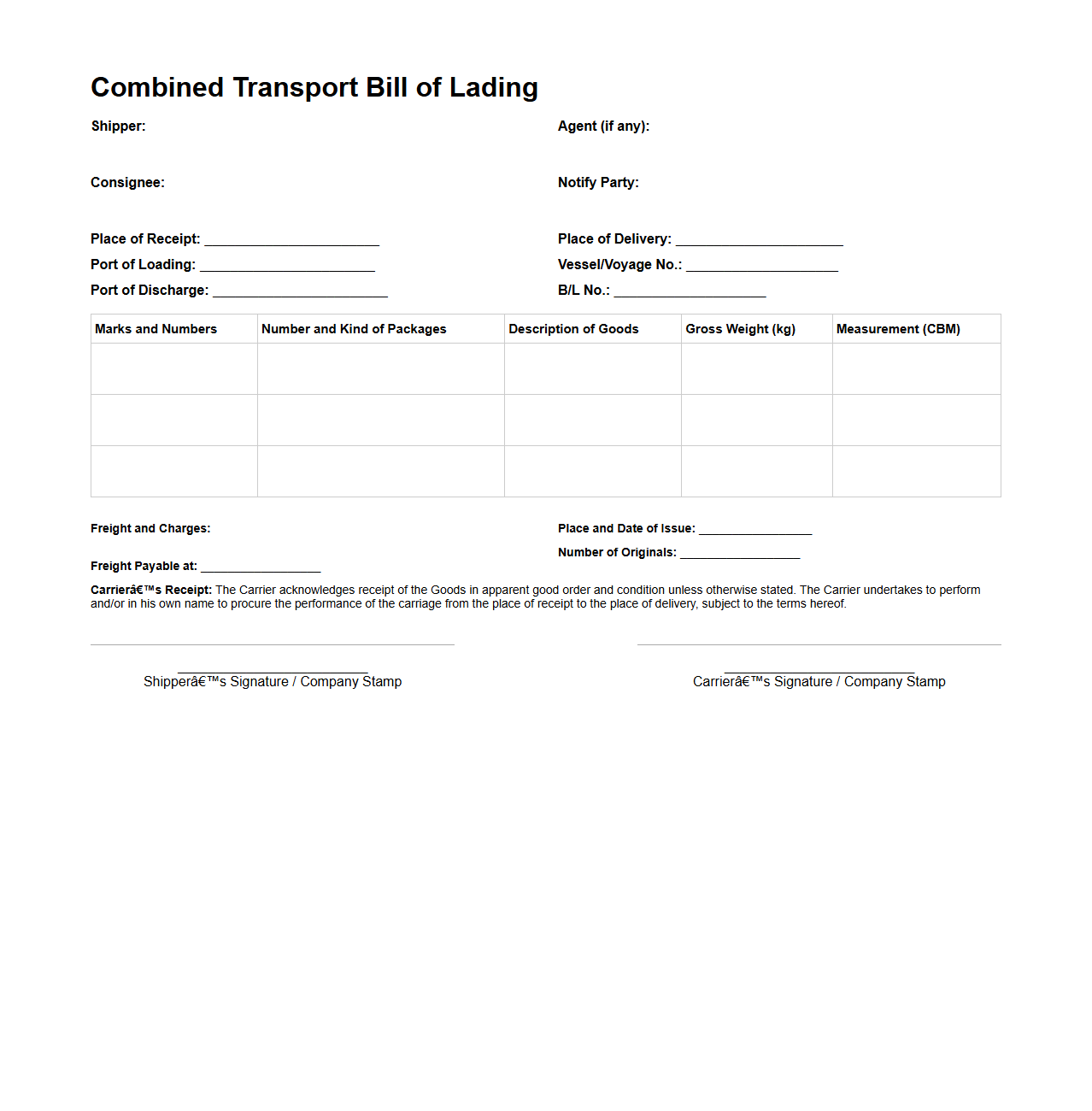
Combined Transport Bill of Lading Template
A
Combined Transport Bill of Lading Template document serves as a standardized form that outlines the terms and conditions governing the shipment of goods using multiple modes of transportation, such as sea, rail, and road. This template ensures clear documentation for carriers, shippers, and consignees, facilitating seamless coordination across different transport segments. It is crucial for legal accountability, cargo tracking, and smooth customs clearance throughout the transit process.
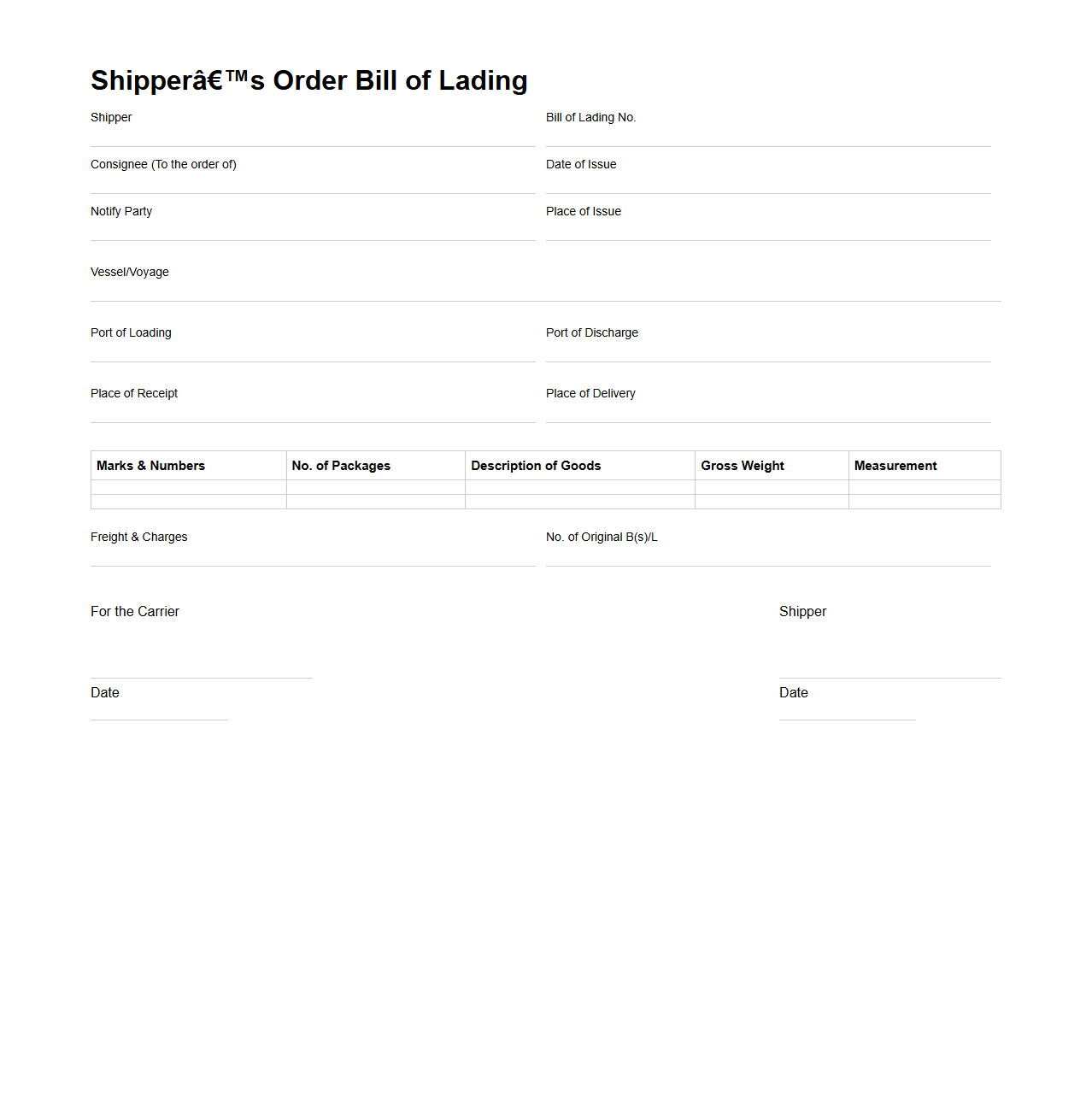
Shipper’s Order Bill of Lading Sample
A
Shipper's Order Bill of Lading is a legal document issued by a carrier that serves as a receipt for goods being shipped and a contract for their transportation. This document allows the shipper to retain control over the shipment while it is in transit, as the goods can only be released to the holder of the original Bill of Lading. It is commonly used in international trade to facilitate the transfer of ownership and ensure secure delivery.
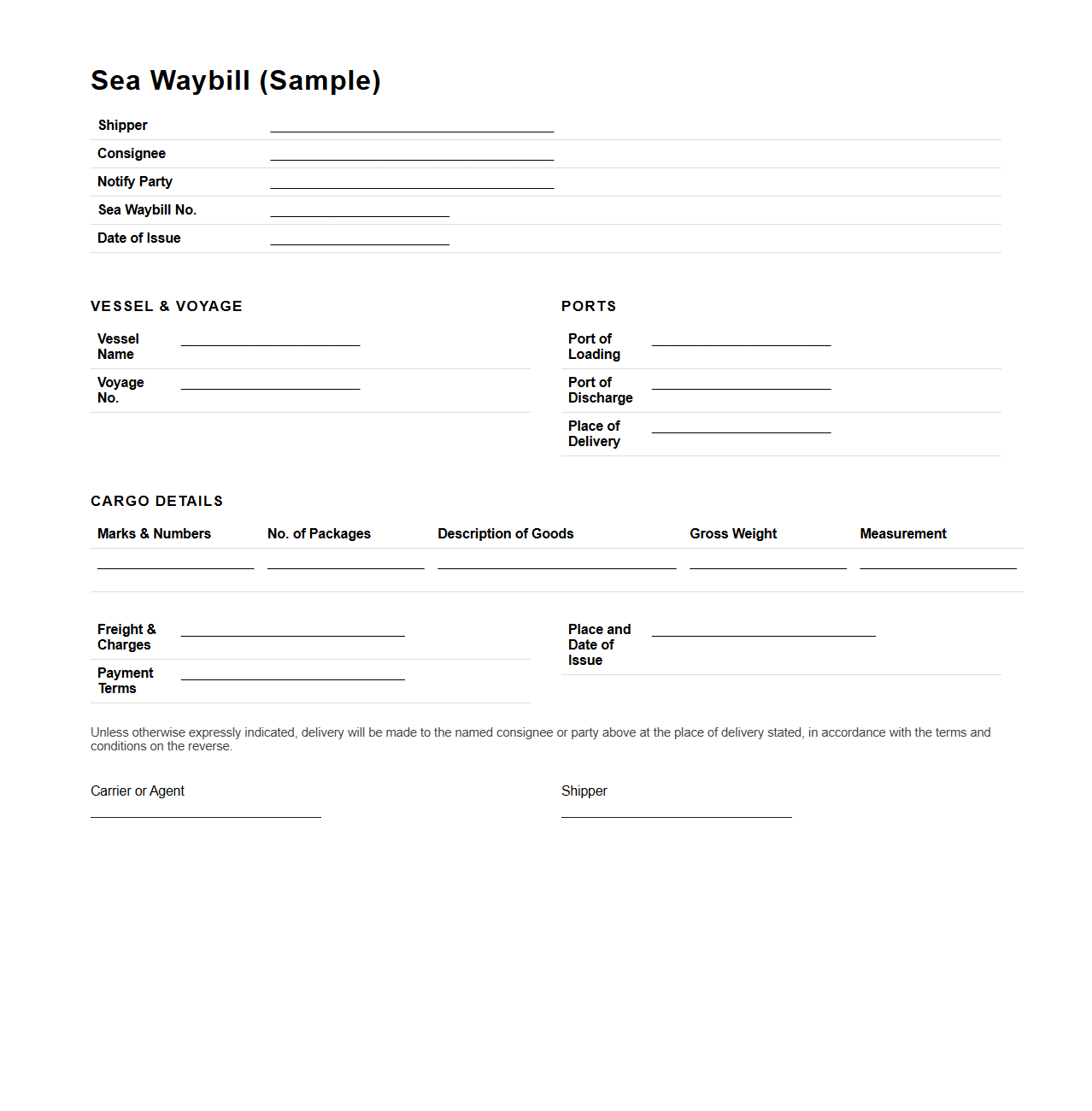
Sea Waybill Example for International Shipping
A
Sea Waybill is a vital shipping document used in international trade that serves as proof of the contract of carriage and receipt of goods by the carrier. Unlike a bill of lading, it is non-negotiable and does not confer title to the cargo, which simplifies the delivery process by allowing the consignee to take possession without presenting the original document. This document streamlines logistics by ensuring faster release of goods at the destination port while maintaining legal clarity between shipper, carrier, and consignee.
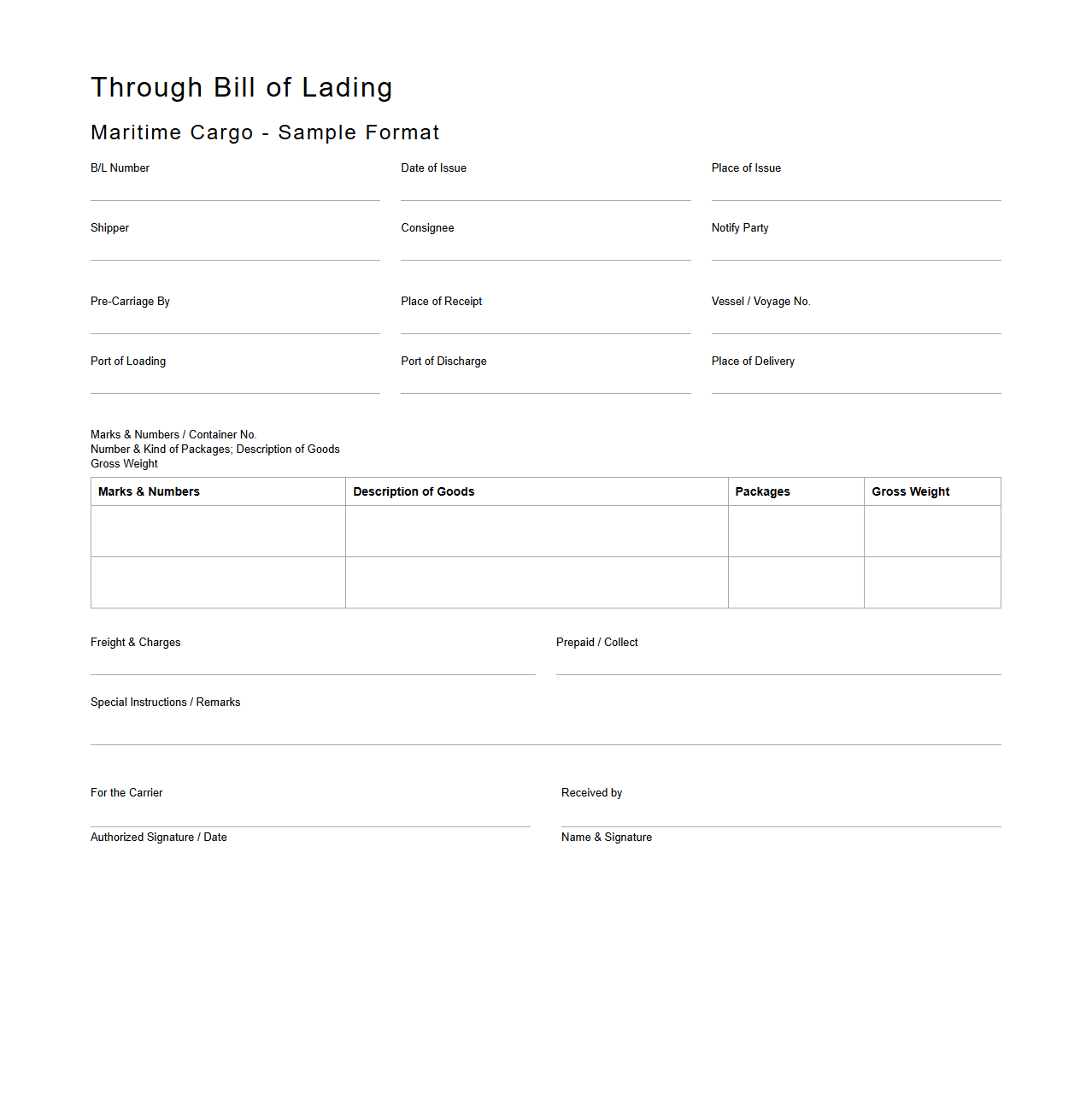
Through Bill of Lading Format for Maritime Cargo
The
Through Bill of Lading is a vital maritime cargo document that serves as a contract and receipt for goods transported across multiple modes of transportation, typically from the point of origin to the final destination. It consolidates shipping details, including the carrier's responsibilities and terms for both sea and land transit, ensuring seamless transfer and accountability through the entire supply chain. This format optimizes logistics efficiency by providing a unified document that simplifies the handling and tracking of cargo shipments in international trade.
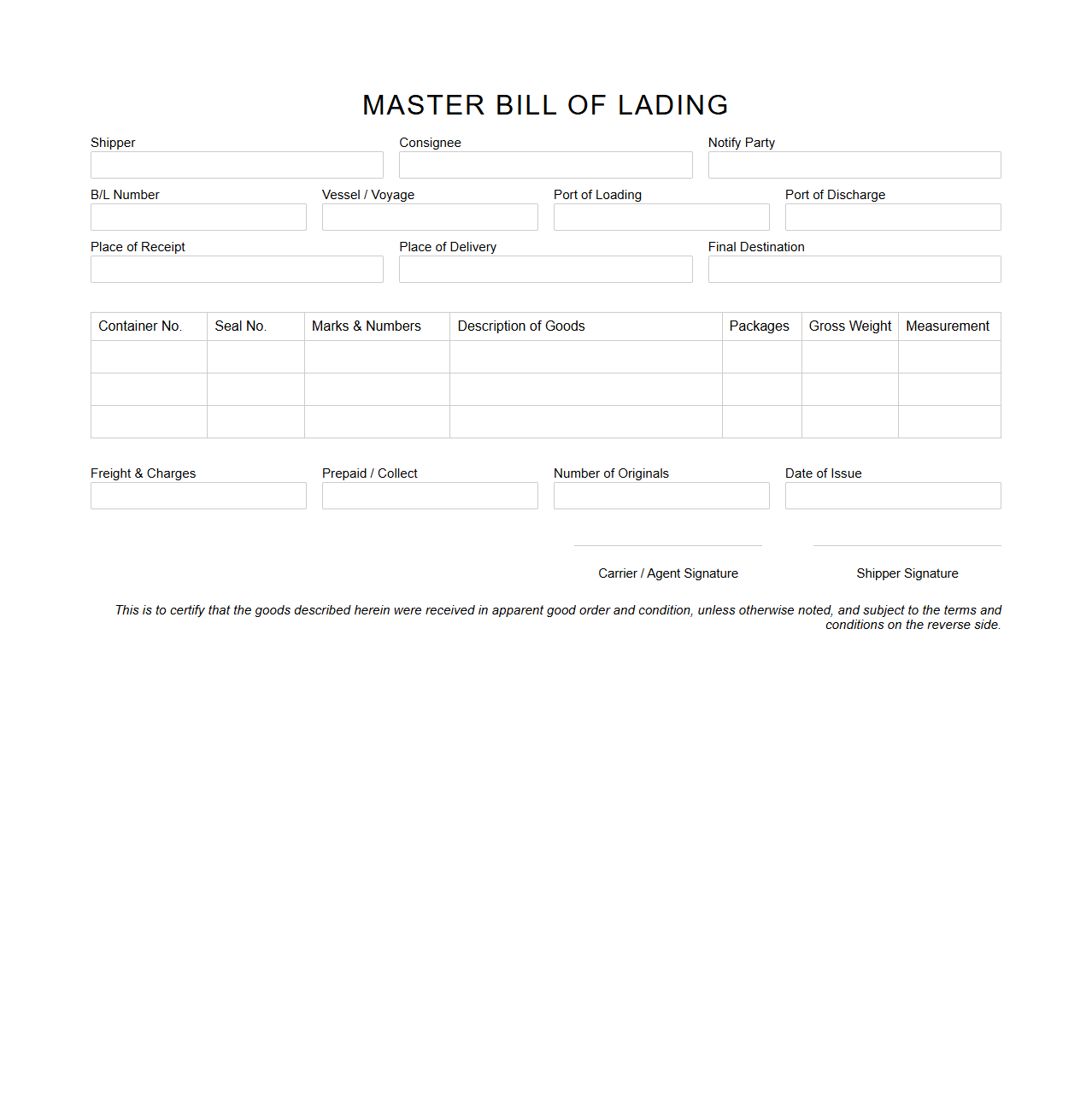
Master Bill of Lading for Containerized Shipping
A
Master Bill of Lading in containerized shipping serves as the primary transport document issued by the carrier to the shipper, detailing the shipment of consolidated cargo. It acts as proof of receipt and contract of carriage for the containerized goods, facilitating transfer and tracking throughout the shipping process. This document is crucial for customs clearance, delivery authorization, and resolving disputes in international freight logistics.
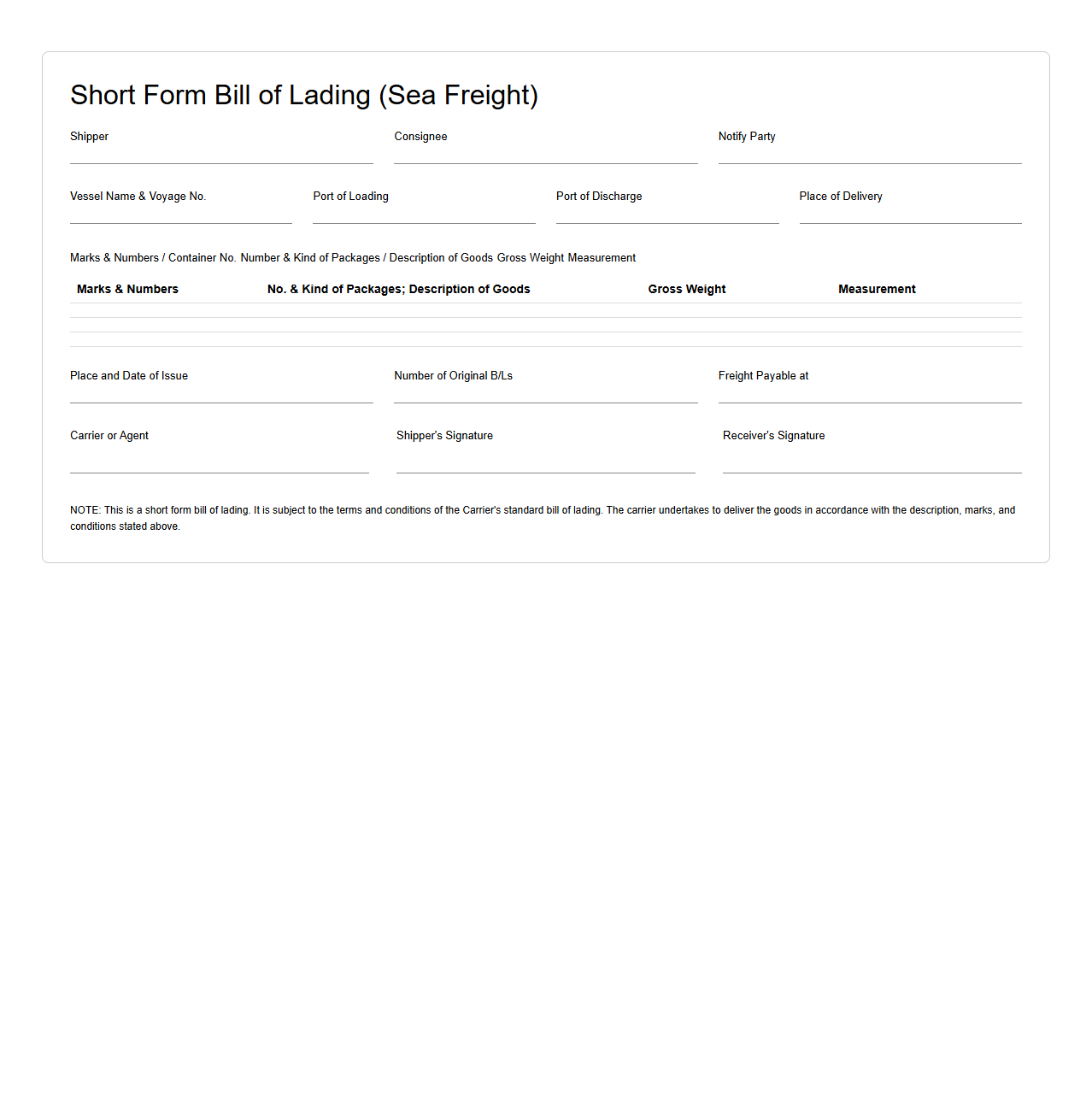
Short Form Bill of Lading for Sea Freight
A
Short Form Bill of Lading for sea freight is a simplified version of the traditional bill of lading used in maritime shipping. It contains essential shipment details such as the shipper, consignee, vessel name, and description of goods, but omits extensive contractual terms typically found in a full bill of lading. This document facilitates quicker processing and is often used when the full terms are outlined in a separate contract or when shipments are less complex.
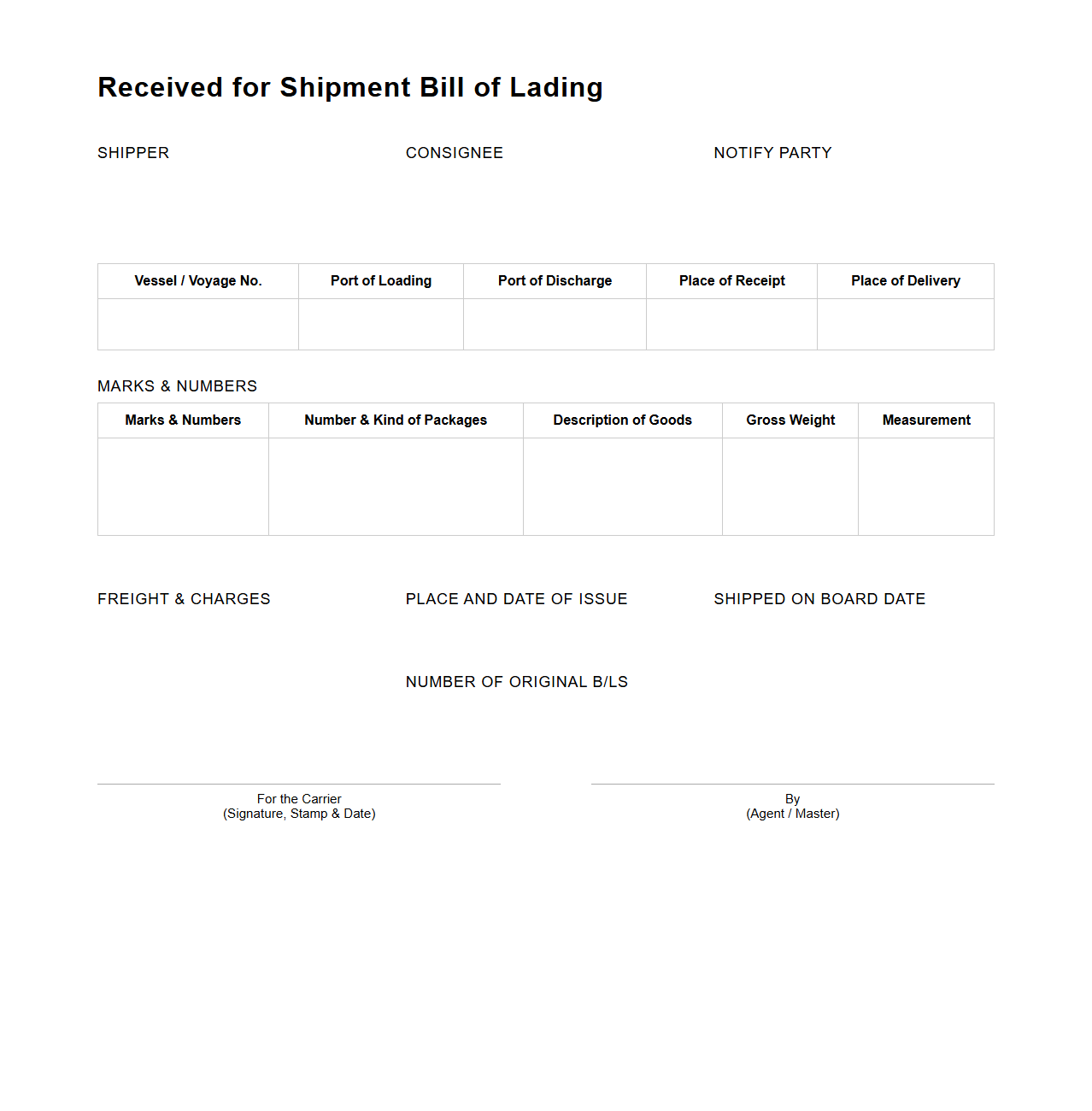
Received for Shipment Bill of Lading Layout
The
Received for Shipment Bill of Lading Layout document serves as a detailed record confirming that the carrier has received the goods from the shipper but has not yet loaded them onto the vessel. This document includes crucial information such as shipper details, consignee data, shipment description, and conditions of goods, ensuring transparency and accountability in the shipping process. It acts as a preliminary proof of receipt, facilitating smooth coordination between all logistics parties involved.
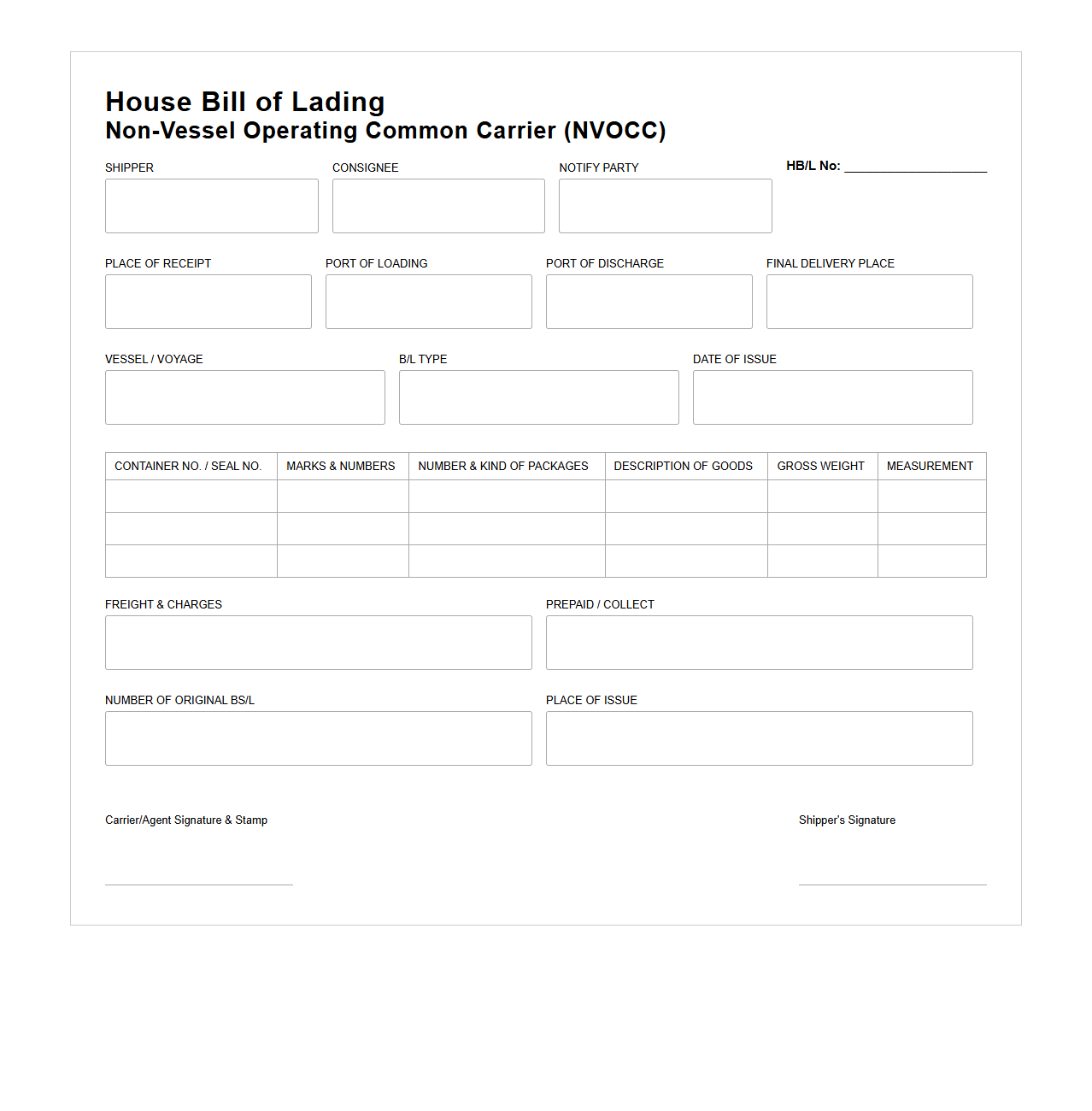
House Bill of Lading Sample for NVOCC
A House Bill of Lading Sample for NVOCC is a detailed shipping document issued by a Non-Vessel Operating Common Carrier that serves as evidence of the contract of carriage and receipt of goods. It includes critical information such as shipper and consignee details, description of cargo, terms and conditions of transport, and shipment instructions. This document plays a
vital role in international logistics by facilitating cargo tracking, customs clearance, and the transfer of ownership.
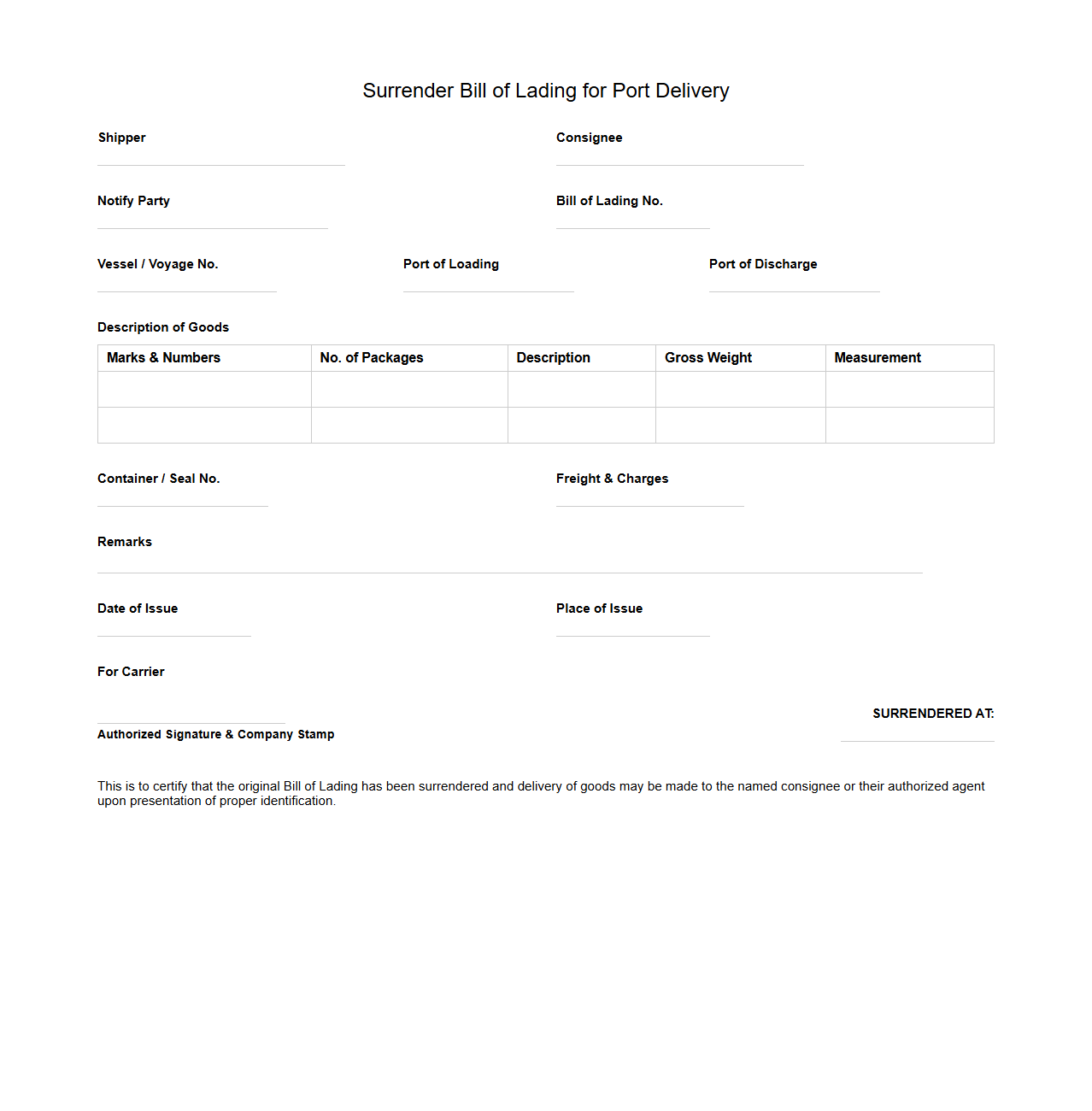
Surrender Bill of Lading for Port Delivery
A
Surrender Bill of Lading is a critical document used in maritime shipping that authorizes the release of cargo at the port without presenting the original bill of lading. It serves as proof that the carrier has received instructions to release goods to the consignee or their agent, facilitating smooth and efficient port delivery. This document helps expedite cargo clearance and minimizes delays in the supply chain by enabling quicker transfer of ownership and possession at the destination port.
What essential parties are identified in a sea freight Bill of Lading document?
The Bill of Lading identifies crucial parties involved in the shipping process. These include the shipper, the carrier, and the consignee. Each party's information ensures accountability and smooth cargo transfer during transit.
Which sections of the Bill of Lading specify cargo description and quantity?
The cargo description and quantity are detailed under the Goods Description and Quantity sections of the Bill of Lading. This information provides clarity on the type and amount of cargo shipped. Accurate entries in these sections prevent disputes and facilitate customs clearance.
How does the document indicate the port of loading and port of discharge?
The Bill of Lading clearly specifies the Port of Loading and the Port of Discharge to outline the cargo's journey. These sections help track the origin and destination points for shipment logistics. Proper identification aids in coordinating timely vessel arrival and unloading operations.
What terms and conditions govern the carriage and delivery stated in the sample Bill of Lading?
The Terms and Conditions section governs the responsibilities, liabilities, and rights of all parties during carriage. It includes clauses related to shipment handling, risks, and delivery protocols. Understanding these terms is essential to mitigate legal issues and ensure compliance.
Where does the Bill of Lading sample outline payment terms and freight charges?
Payment terms and freight charges are outlined in the Freight and Charges section of the Bill of Lading. This specifies who is responsible for costs and the mode of payment for transportation services. Clear payment terms help avoid financial disputes between shippers and carriers.