A Quality Assurance Document Sample for Construction Work outlines the standards and procedures to ensure that all phases of construction meet specified quality requirements. It includes detailed checklists, inspection reports, and compliance criteria to monitor workmanship and materials. This document is essential for maintaining consistent quality control and mitigating risks throughout the project lifecycle.
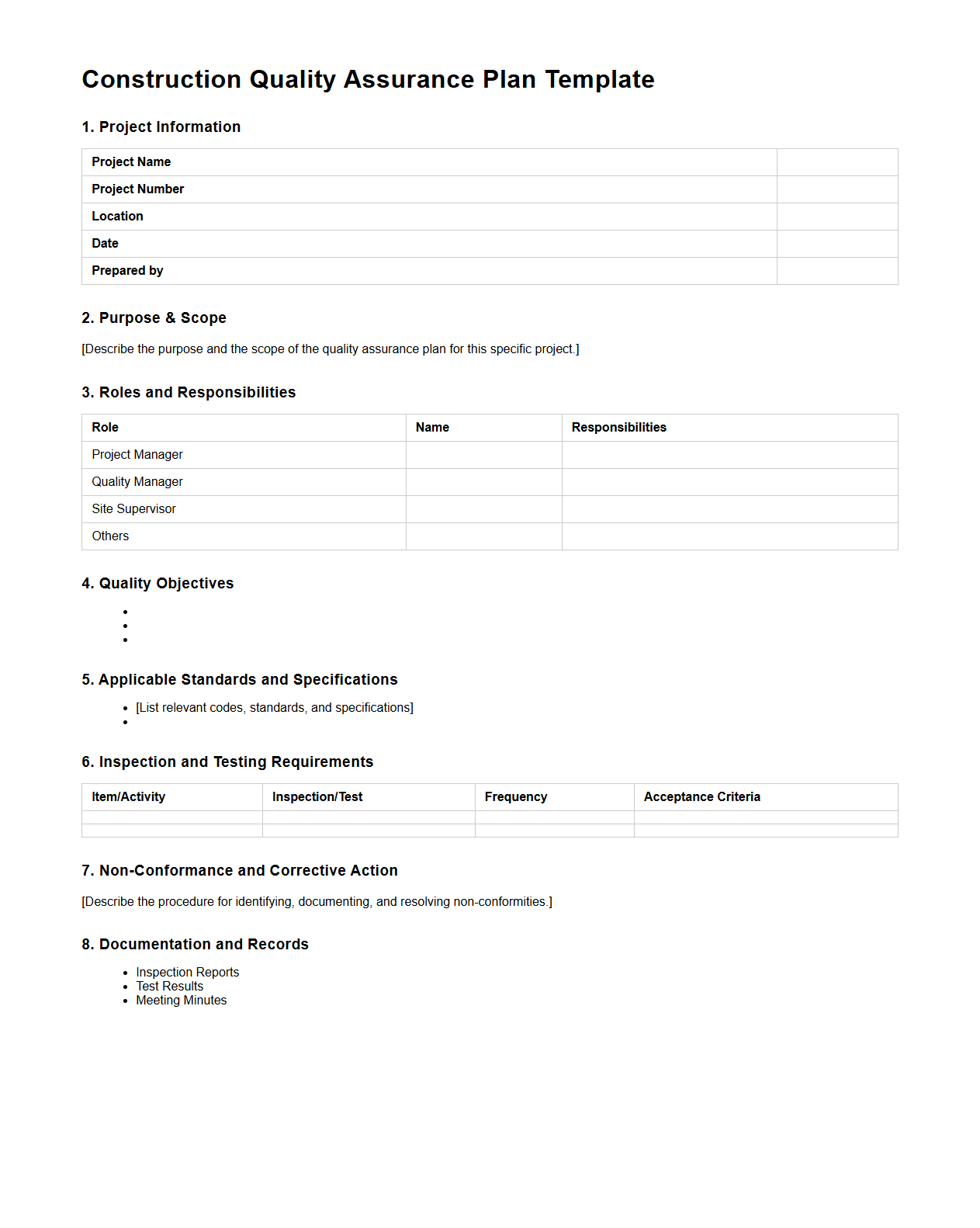
Construction Quality Assurance Plan Template
A
Construction Quality Assurance Plan Template document serves as a structured guide to ensure all construction activities meet predefined quality standards and regulatory requirements. This template outlines specific procedures, inspection checkpoints, and quality control measures to systematically monitor project compliance and enhance construction reliability. Implementing this document helps project teams minimize defects, reduce rework, and maintain consistent quality throughout the construction lifecycle.
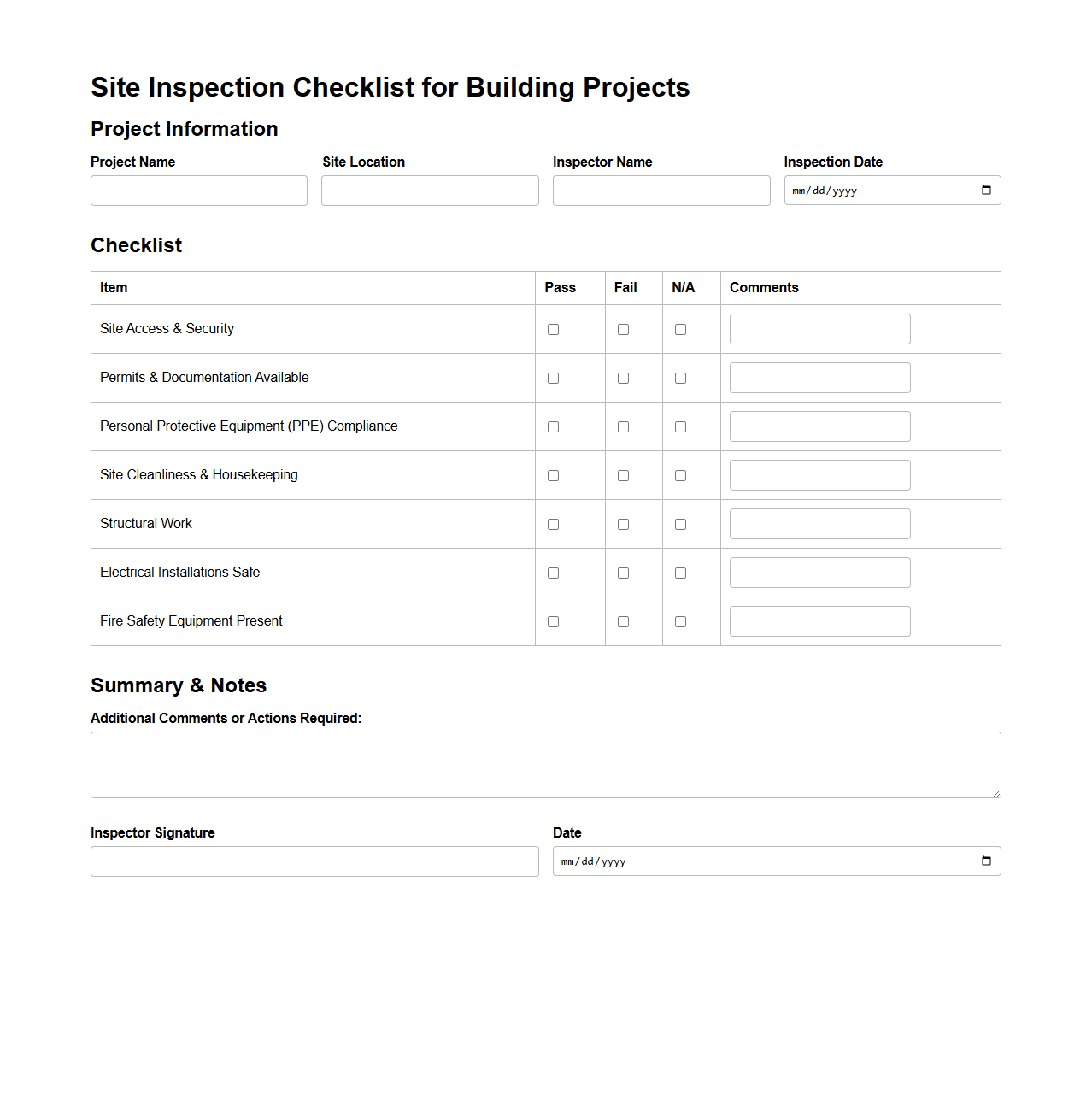
Site Inspection Checklist for Building Projects
A
Site Inspection Checklist for Building Projects document is a comprehensive tool used to systematically assess construction sites, ensuring compliance with safety standards, design specifications, and regulatory requirements. It includes detailed criteria for evaluating structural integrity, material quality, workmanship, and environmental conditions to mitigate risks and prevent costly errors. This checklist enhances project management efficiency by providing a clear, consistent framework for inspections and documentation throughout the construction process.
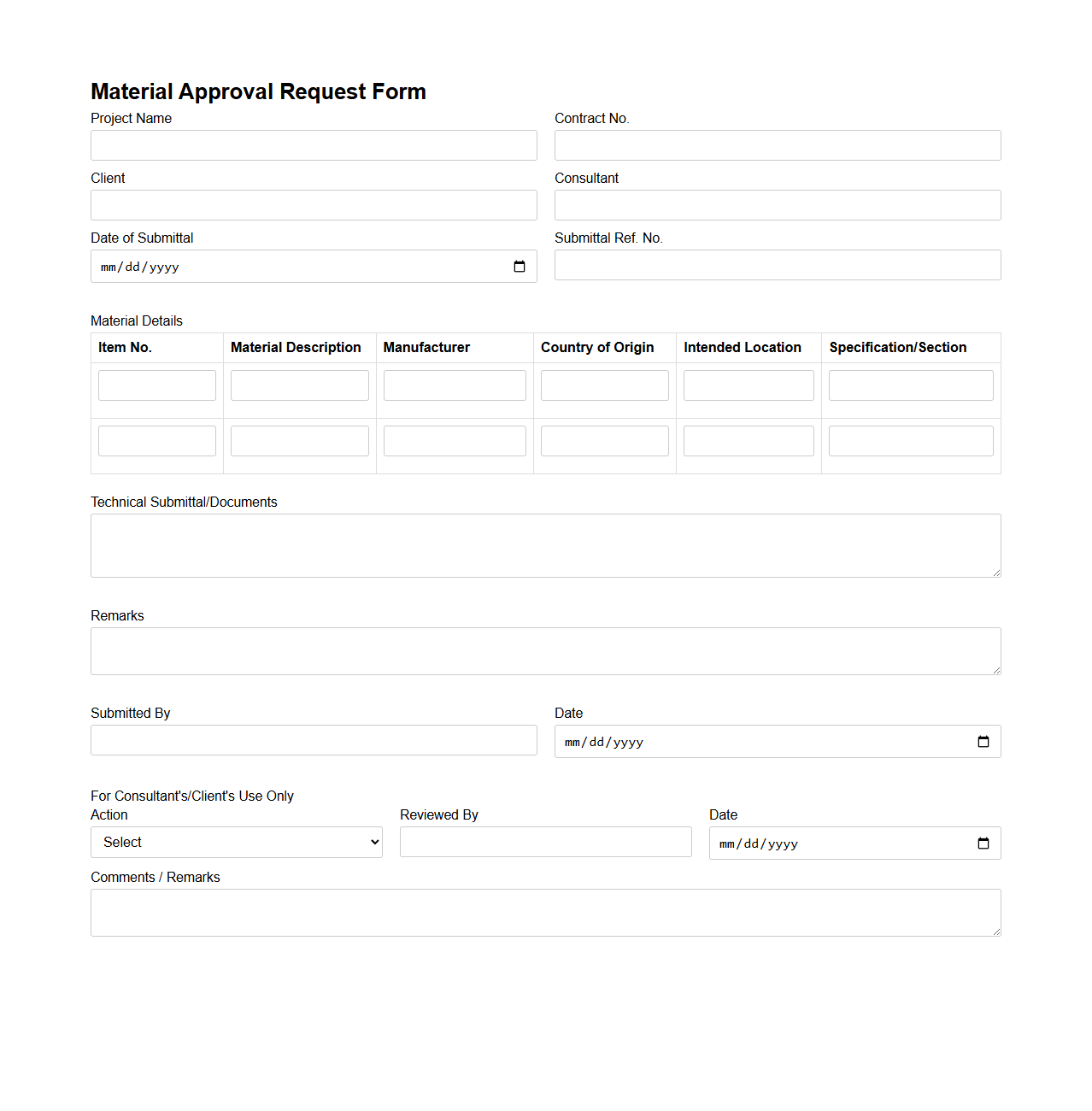
Material Approval Request Form for Construction
A
Material Approval Request Form in construction is a standardized document used to seek formal approval for specific materials before they are incorporated into a project. It ensures that materials meet the required specifications and quality standards, preventing potential issues during construction. This form typically includes details about the material type, supplier information, test results, and compliance certificates.
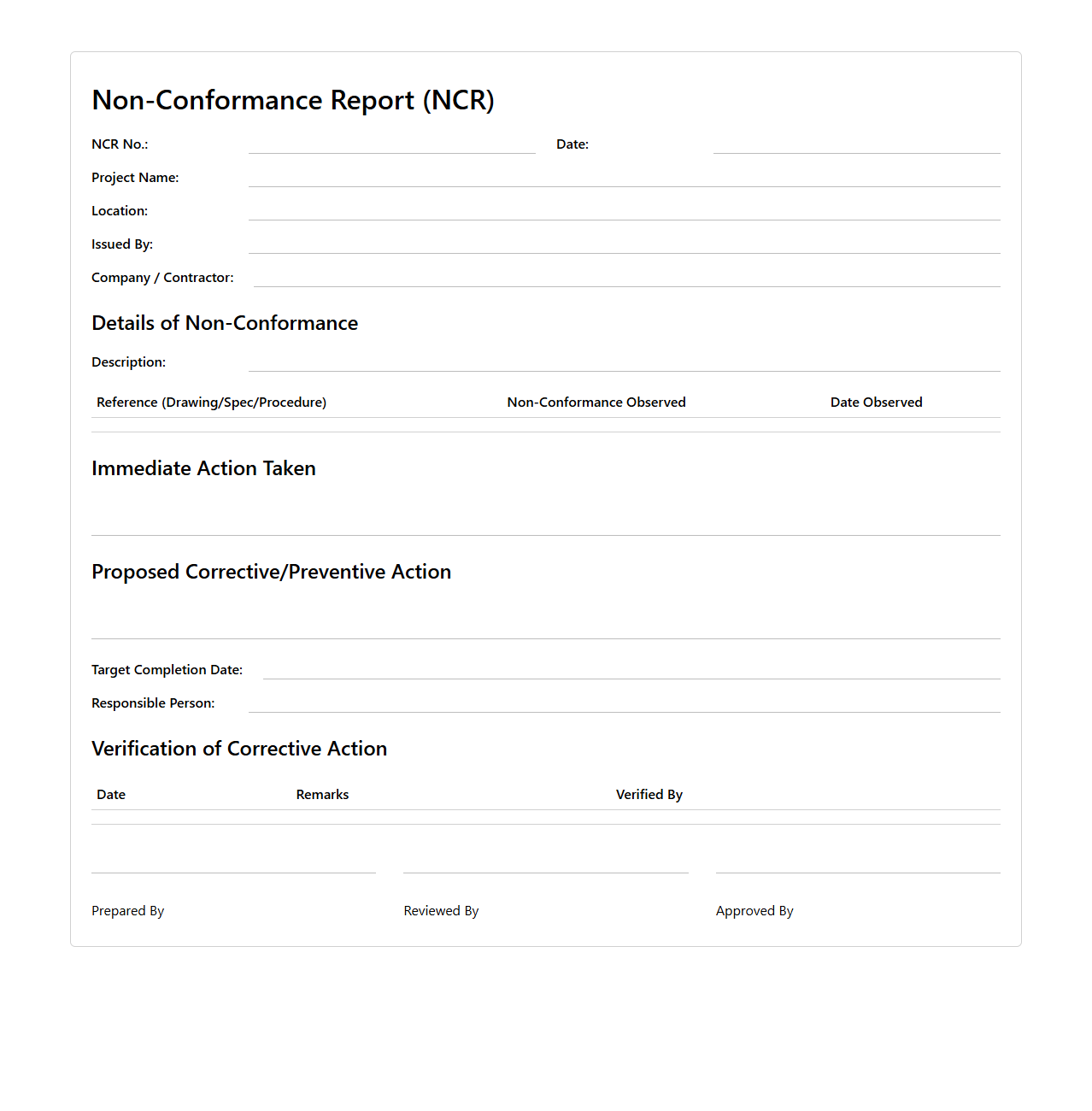
Non-Conformance Report Format for Construction Sites
A
Non-Conformance Report (NCR) Format for Construction Sites document is a standardized template used to identify, document, and address deviations from project specifications, standards, or contractual requirements during construction activities. It captures detailed information such as the nature of the non-conformance, location, responsible parties, corrective actions, and verification measures to ensure compliance and quality control. Effective use of NCR formats minimizes rework, enhances accountability, and supports continuous improvement in construction project management.
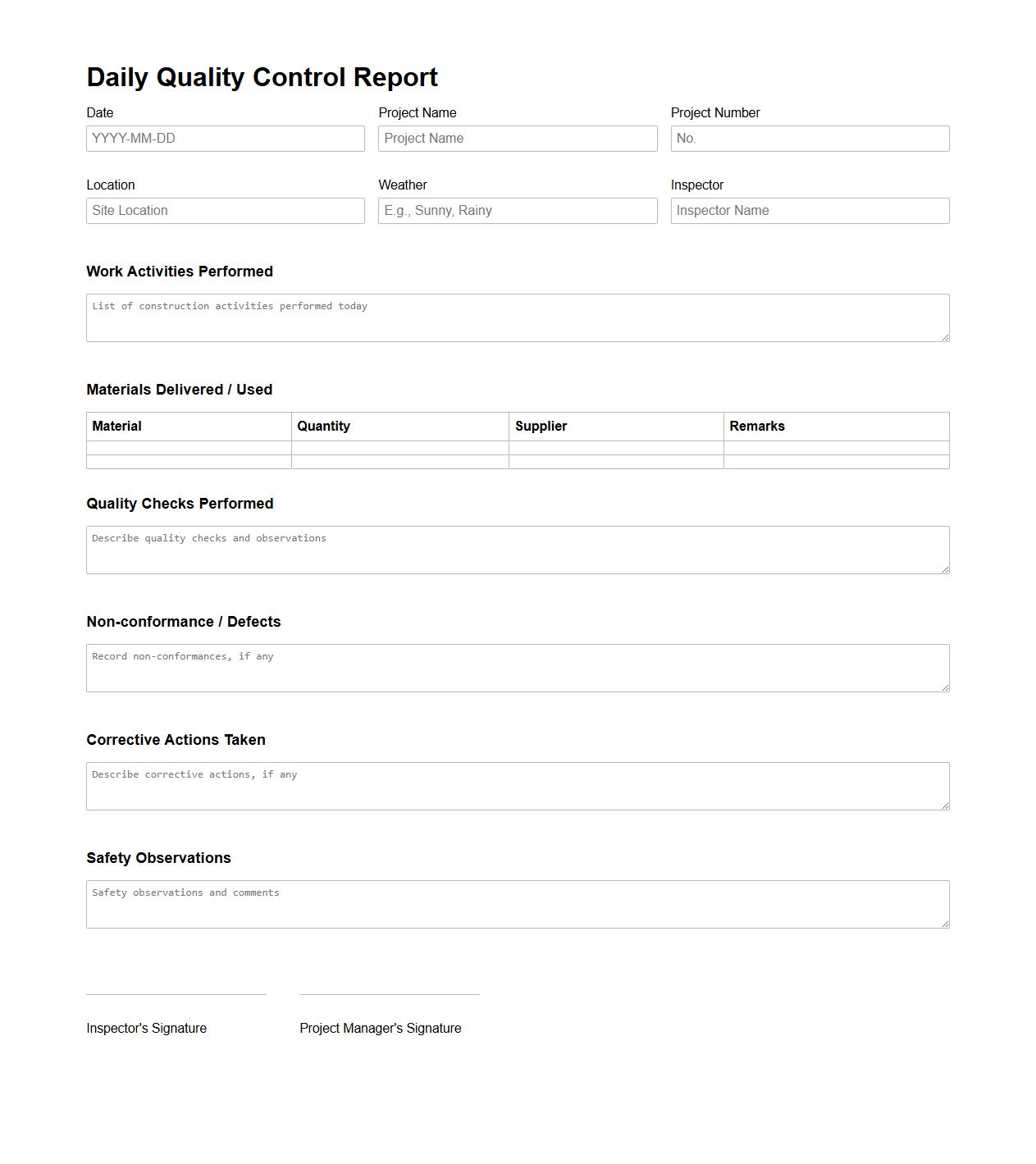
Daily Quality Control Report for Construction Activities
The
Daily Quality Control Report for Construction Activities document records the quality assurance measures and inspections conducted each day on a construction site. It includes detailed information on materials used, workmanship, compliance with project specifications, and any identified defects or corrective actions taken. This report ensures continuous monitoring and documentation to maintain construction standards and project integrity.
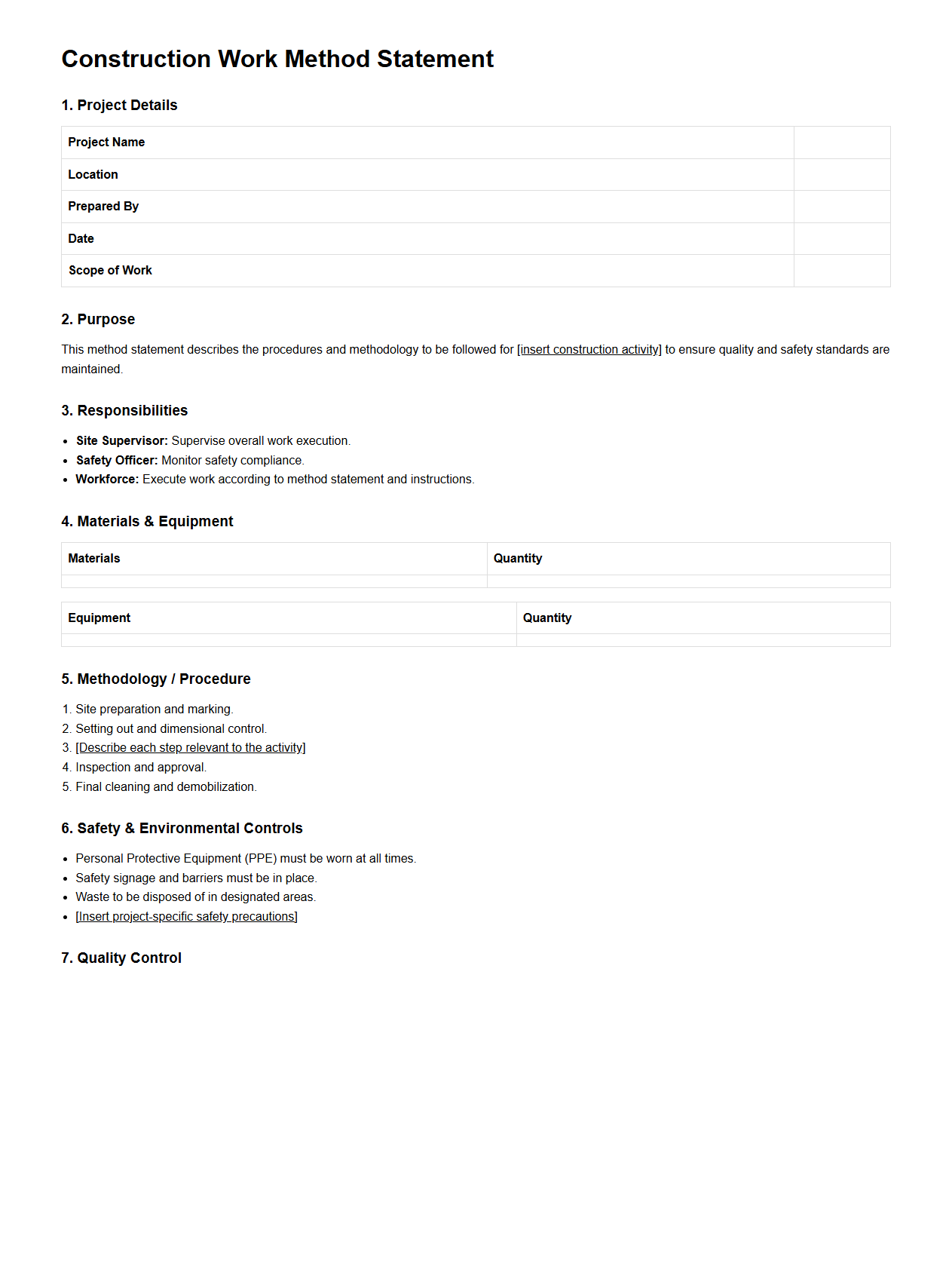
Construction Work Method Statement Sample
A
Construction Work Method Statement Sample document outlines detailed procedures and safety measures for specific construction tasks, ensuring compliance with regulatory standards. It serves as a practical guide for workers and supervisors to minimize risks and maintain quality during project execution. This document typically includes step-by-step operations, necessary equipment, hazard identification, and control measures.
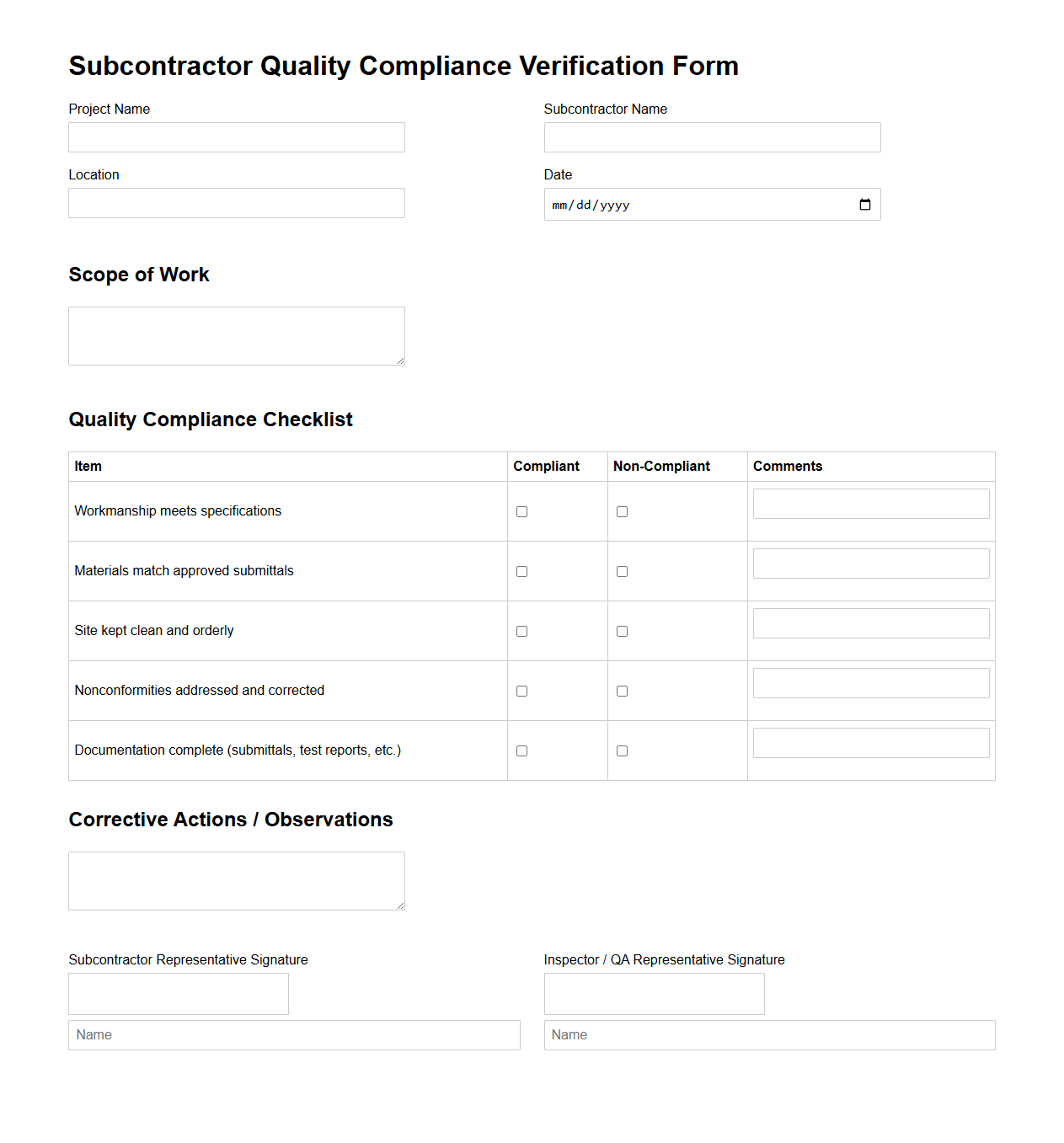
Subcontractor Quality Compliance Verification Form
The
Subcontractor Quality Compliance Verification Form is a critical document used to assess and confirm that subcontractors meet specified quality standards throughout a project. This form typically includes detailed checklists, inspection criteria, and compliance checkpoints to ensure all deliverables align with contract requirements and industry regulations. Maintaining accurate and thorough verification through this form helps mitigate risks, enhance accountability, and promote consistent quality performance from subcontracted work.
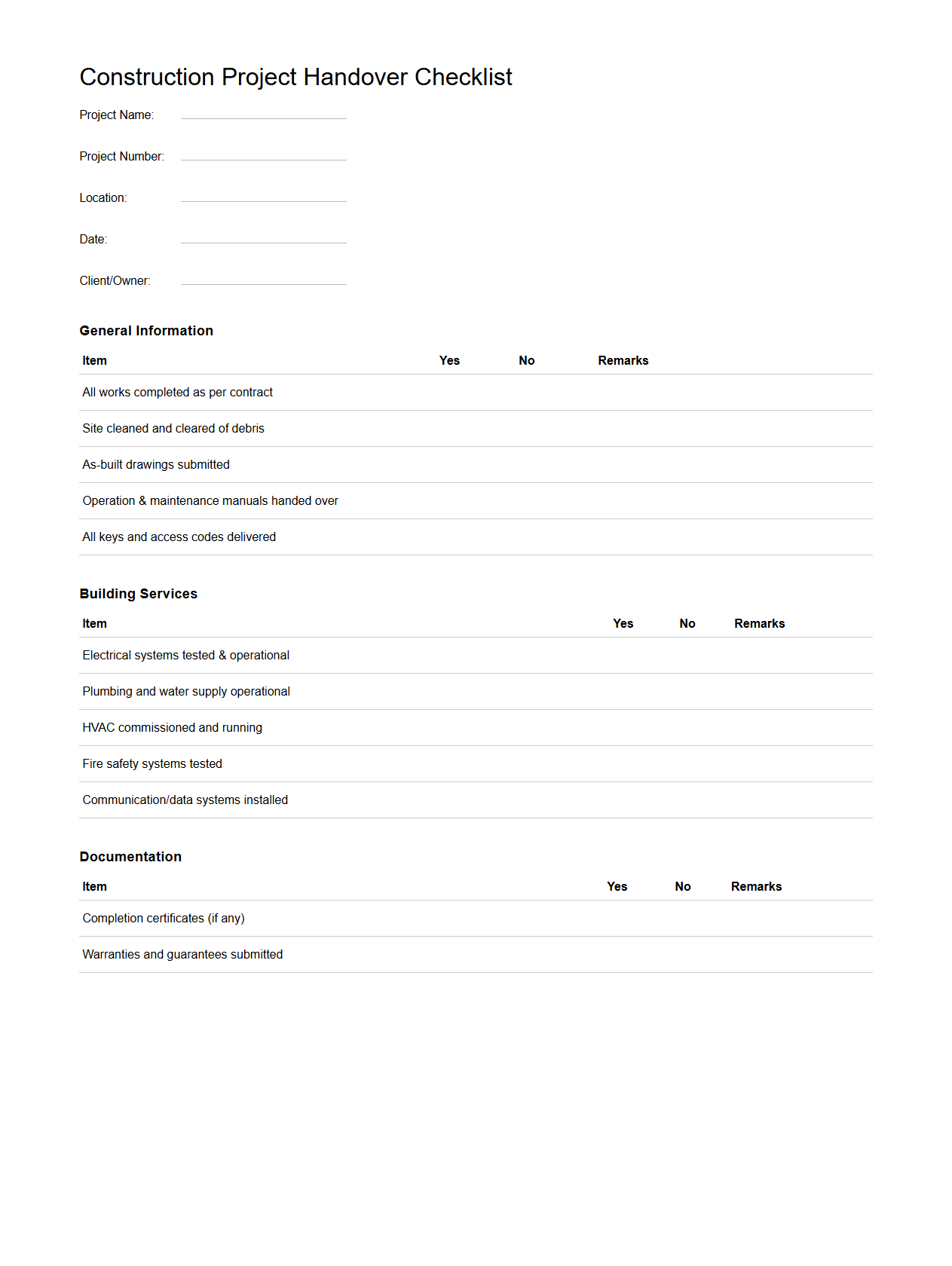
Construction Project Handover Checklist
A
Construction Project Handover Checklist document is a comprehensive tool used to ensure all critical tasks and deliverables are completed before transferring a construction project from the contractor to the client. It typically includes verification of compliance with safety standards, quality inspections, equipment and material handovers, as-built drawings, warranties, and operational manuals. This checklist helps streamline the project closeout process, minimize disputes, and ensure a smooth transition for facility management and future maintenance.
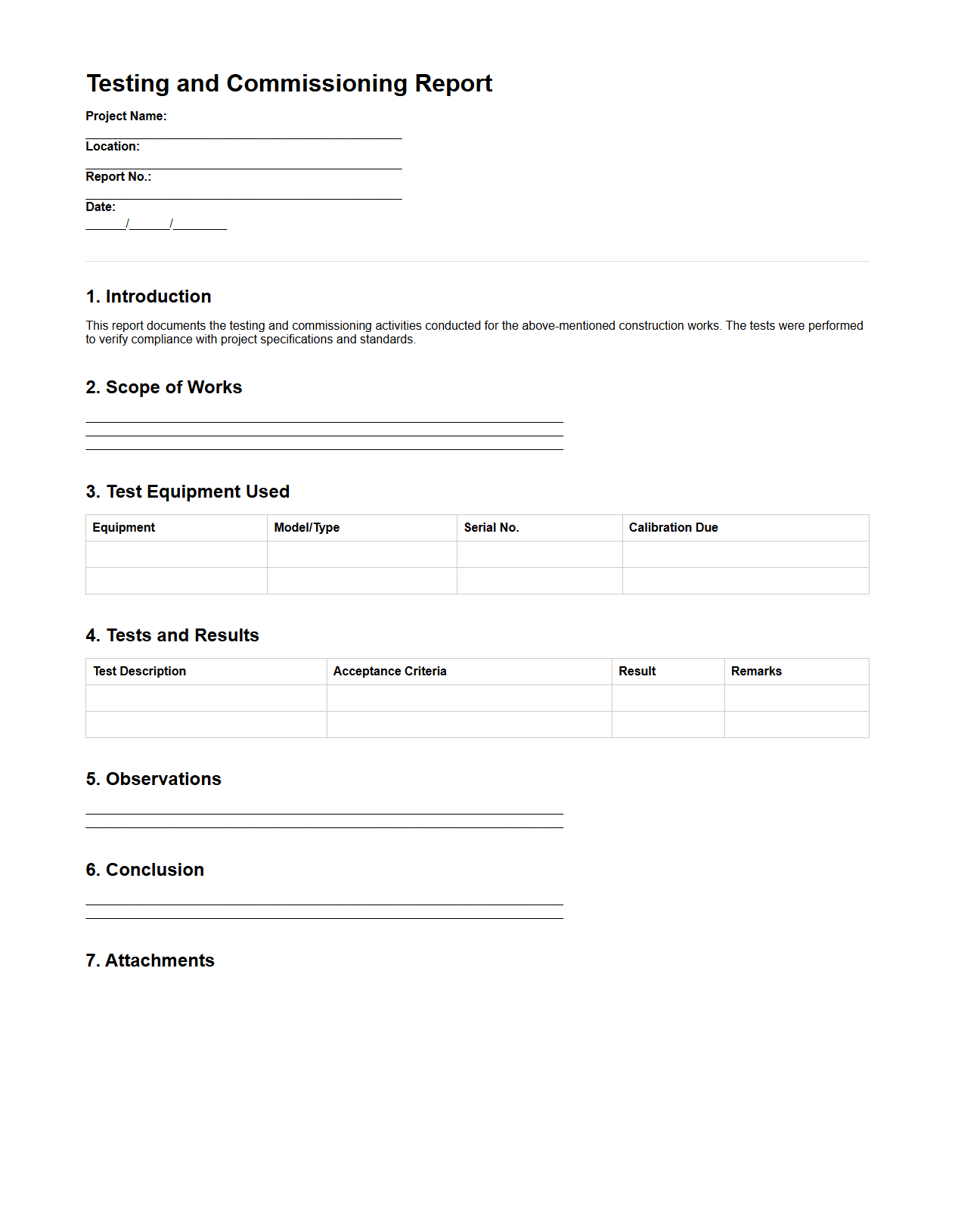
Testing and Commissioning Report for Construction Works
A
Testing and Commissioning Report for construction works documents the systematic verification and validation of building systems and components to ensure they meet specified performance criteria and safety standards. It includes detailed records of tests conducted, outcomes, compliance with design specifications, and any identified deficiencies or corrective actions required before project handover. This report serves as a critical quality assurance tool, demonstrating that all installed systems function correctly and are ready for operational use.
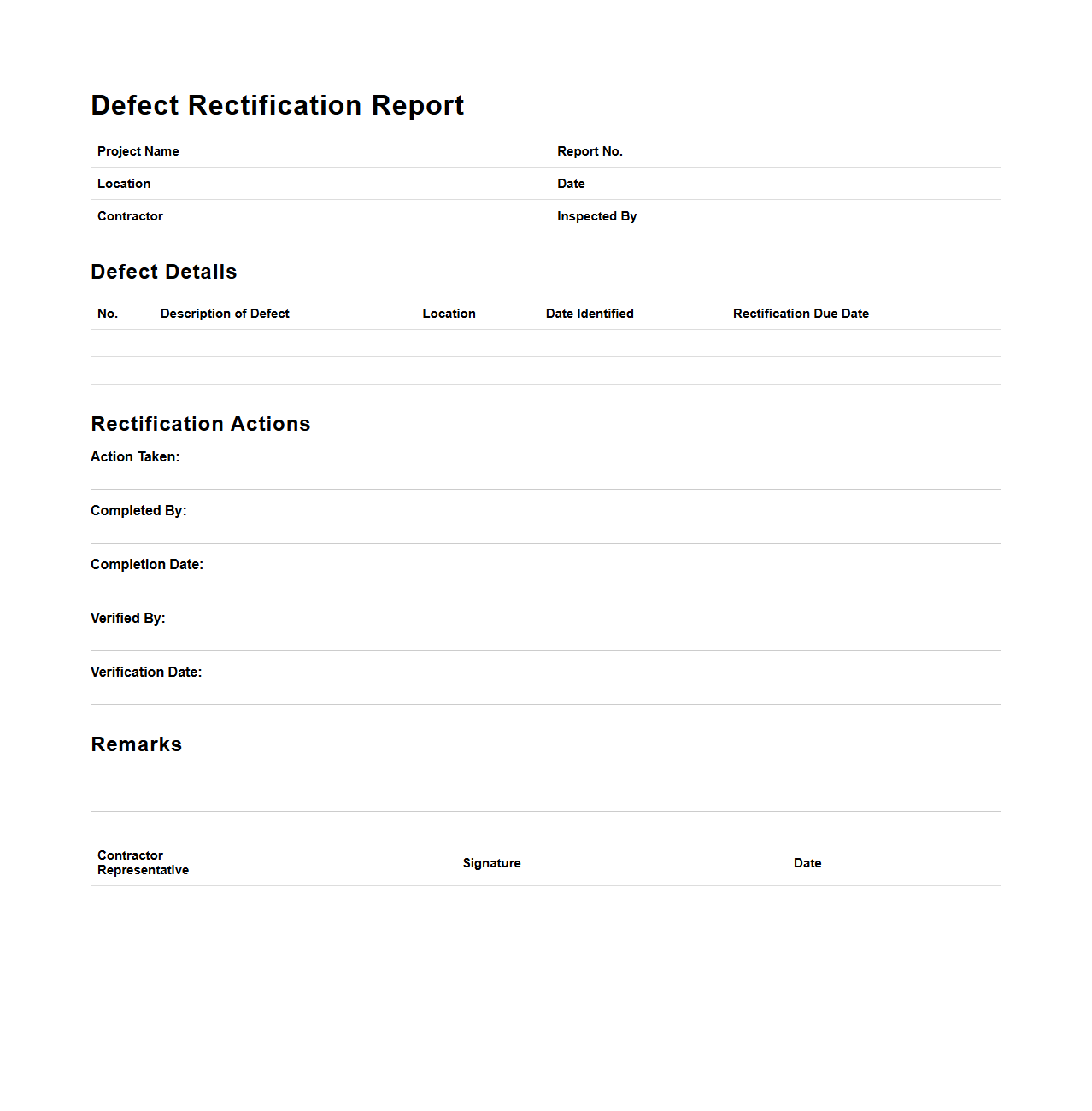
Defect Rectification Report Template for Construction
A
Defect Rectification Report Template for construction documents serves as a structured format to systematically identify, document, and track defects found during inspections or project handovers. It ensures clear communication between contractors, clients, and quality control teams, specifying defect descriptions, locations, responsible parties, and deadlines for rectification. This template enhances project accountability and supports timely resolution, minimizing delays and cost overruns in construction projects.
What are the primary objectives outlined in the Quality Assurance Document for construction work?
The Quality Assurance Document aims to ensure all construction work meets specified quality standards and client expectations. It focuses on minimizing defects and enhancing the durability and safety of structures through systematic quality control. The document also promotes continuous improvement and compliance with project requirements.
Which standards and regulations does the document reference for ensuring construction quality?
The document references key industry standards and regulations such as ISO 9001, local building codes, and relevant environmental guidelines. These standards ensure consistent quality and legal compliance throughout the construction process. Adherence to these norms helps prevent irregularities and guarantees project reliability.
What procedures are specified for quality inspections and testing during construction?
The document outlines rigorous inspection and testing procedures including material verification, on-site inspections, and structural integrity tests. Scheduled quality audits and real-time monitoring are integral to identifying issues early. These procedures help maintain high standards and ensure corrective actions are promptly implemented.
How does the document define responsibilities for quality assurance among project stakeholders?
The Quality Assurance Document clearly assigns roles and responsibilities to contractors, engineers, and project managers for maintaining quality standards. It emphasizes collaboration and accountability throughout the project lifecycle. Each stakeholder is required to document compliance and address quality-related concerns proactively.
What documentation and record-keeping requirements are mandated by the Quality Assurance Document?
The document mandates comprehensive documentation and record-keeping to track quality audits, inspection reports, and material certifications. This ensures traceability and facilitates audits, providing transparency in the construction process. Maintaining accurate records supports dispute resolution and continuous quality improvement.
More Construction Templates