A Subcontractor Agreement Document Sample for Building Construction outlines the terms and conditions between the main contractor and subcontractor, detailing the scope of work, payment schedule, and project timelines. This agreement ensures clear communication and legal protection for both parties involved in the construction process. It helps prevent disputes by specifying responsibilities, safety requirements, and quality standards.
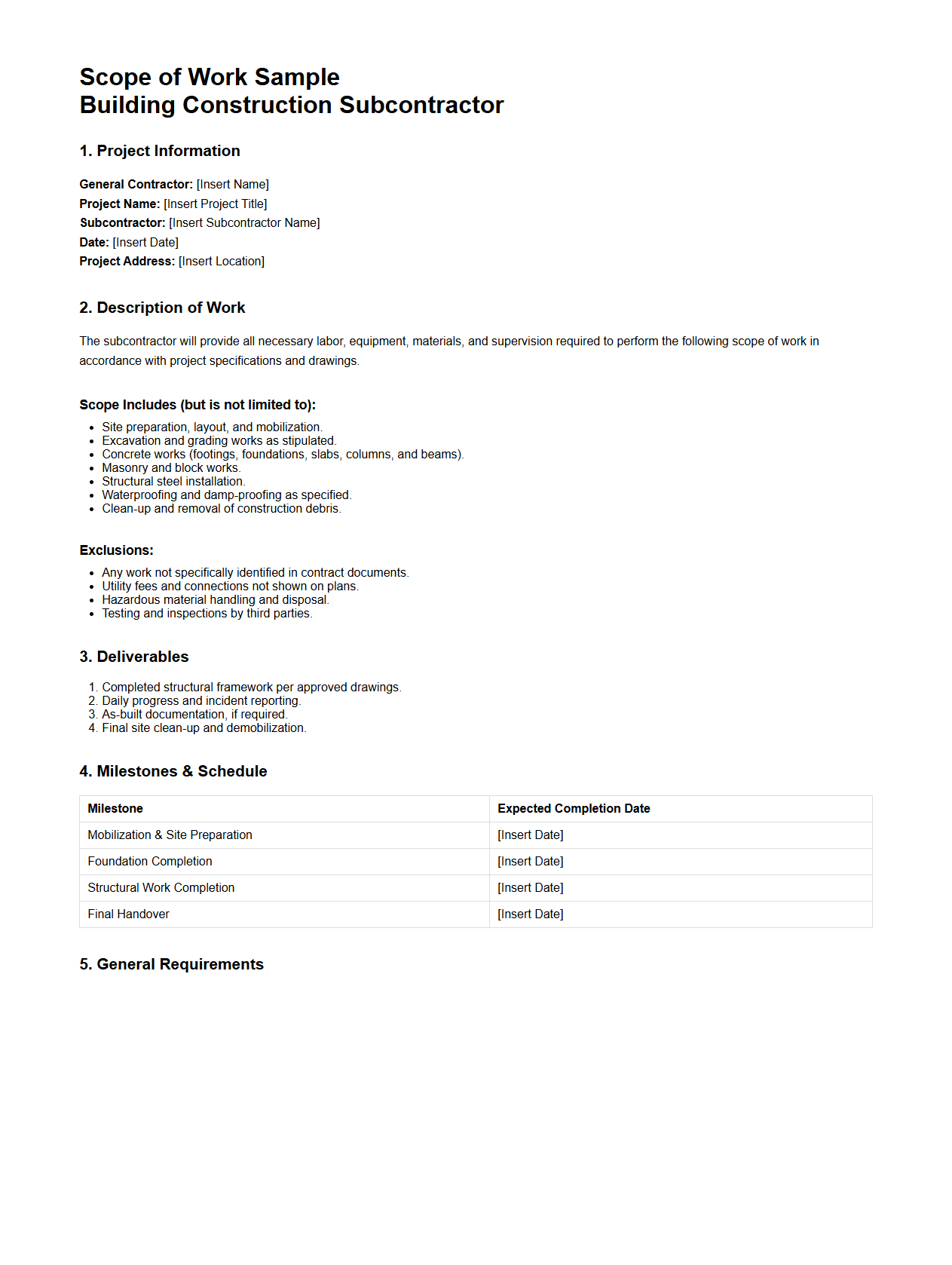
Scope of Work Sample for Building Construction Subcontractor
A
Scope of Work Sample for Building Construction Subcontractor document outlines detailed tasks, responsibilities, and project deliverables assigned to a subcontractor within a construction project. It defines specific work phases, materials to be used, quality standards, timelines, and safety requirements to ensure clarity and accountability. This document serves as a critical reference for project coordination, progress tracking, and contractual compliance.
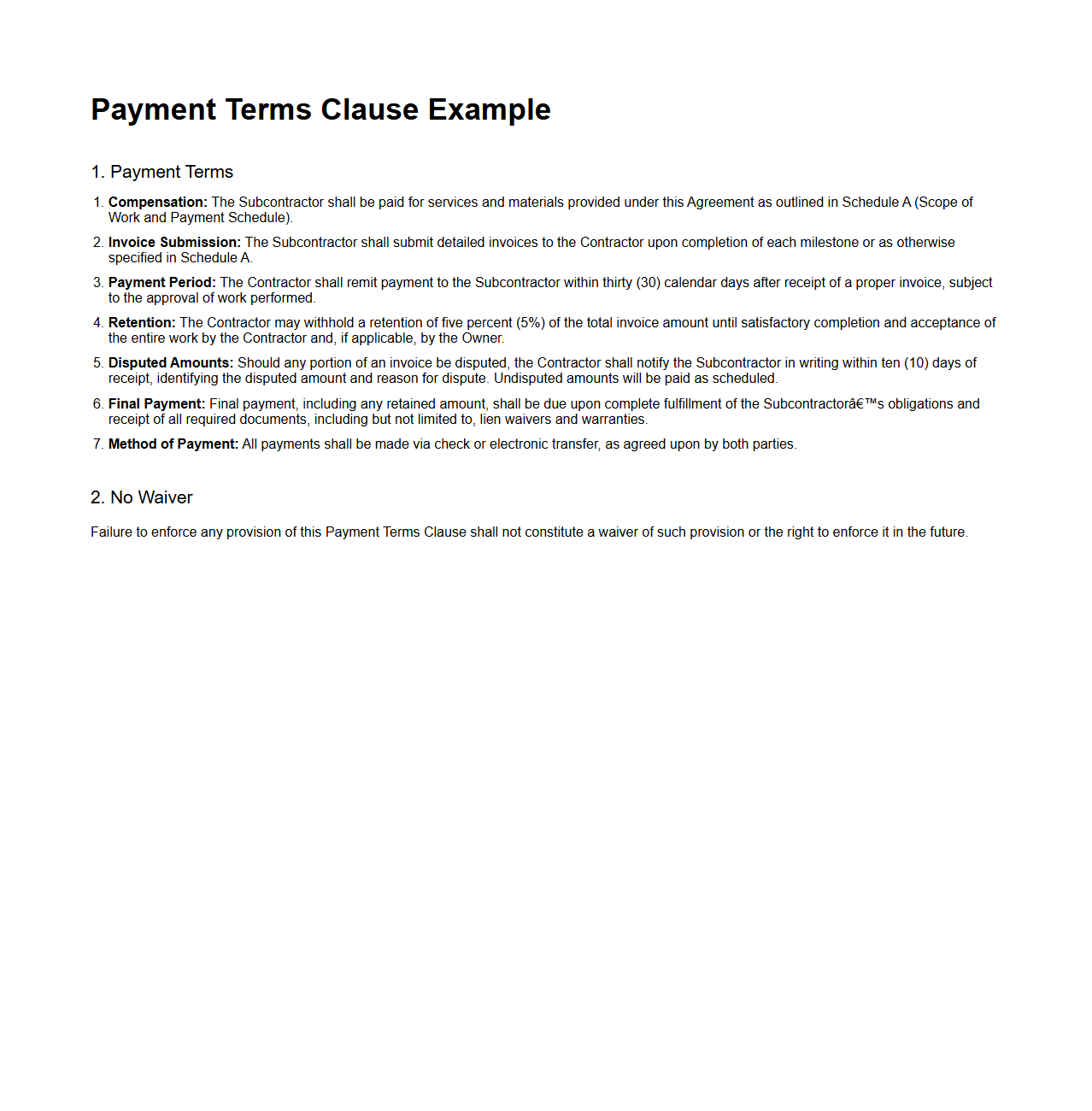
Payment Terms Clause Example for Subcontractor Agreement
The
Payment Terms Clause in a Subcontractor Agreement outlines the schedule, method, and conditions under which payments will be made to the subcontractor. It specifies details such as invoicing requirements, milestone payments, retention amounts, and timelines for payment processing to ensure clarity and avoid disputes. Clear payment terms protect both parties by defining cash flow expectations and financial responsibilities throughout the project.
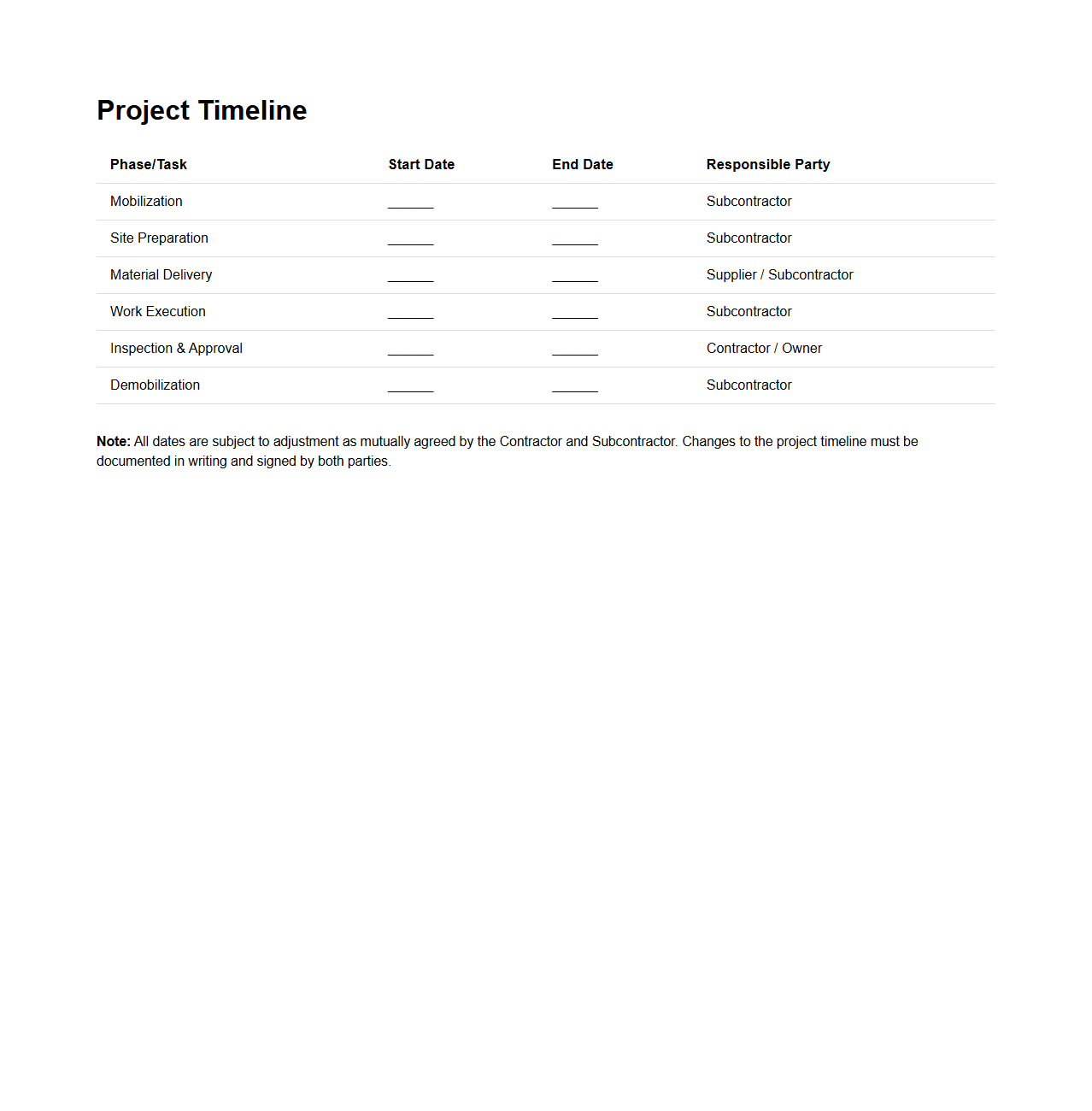
Project Timeline Section for Construction Subcontractor Contract
The
Project Timeline Section in a Construction Subcontractor Contract document outlines the specific schedule and deadlines for each phase of the subcontracted work. This section details start and completion dates, milestone targets, and any critical dependencies to ensure the project stays on schedule. Clear timelines help manage expectations, coordinate activities, and mitigate risks related to delays or scheduling conflicts.
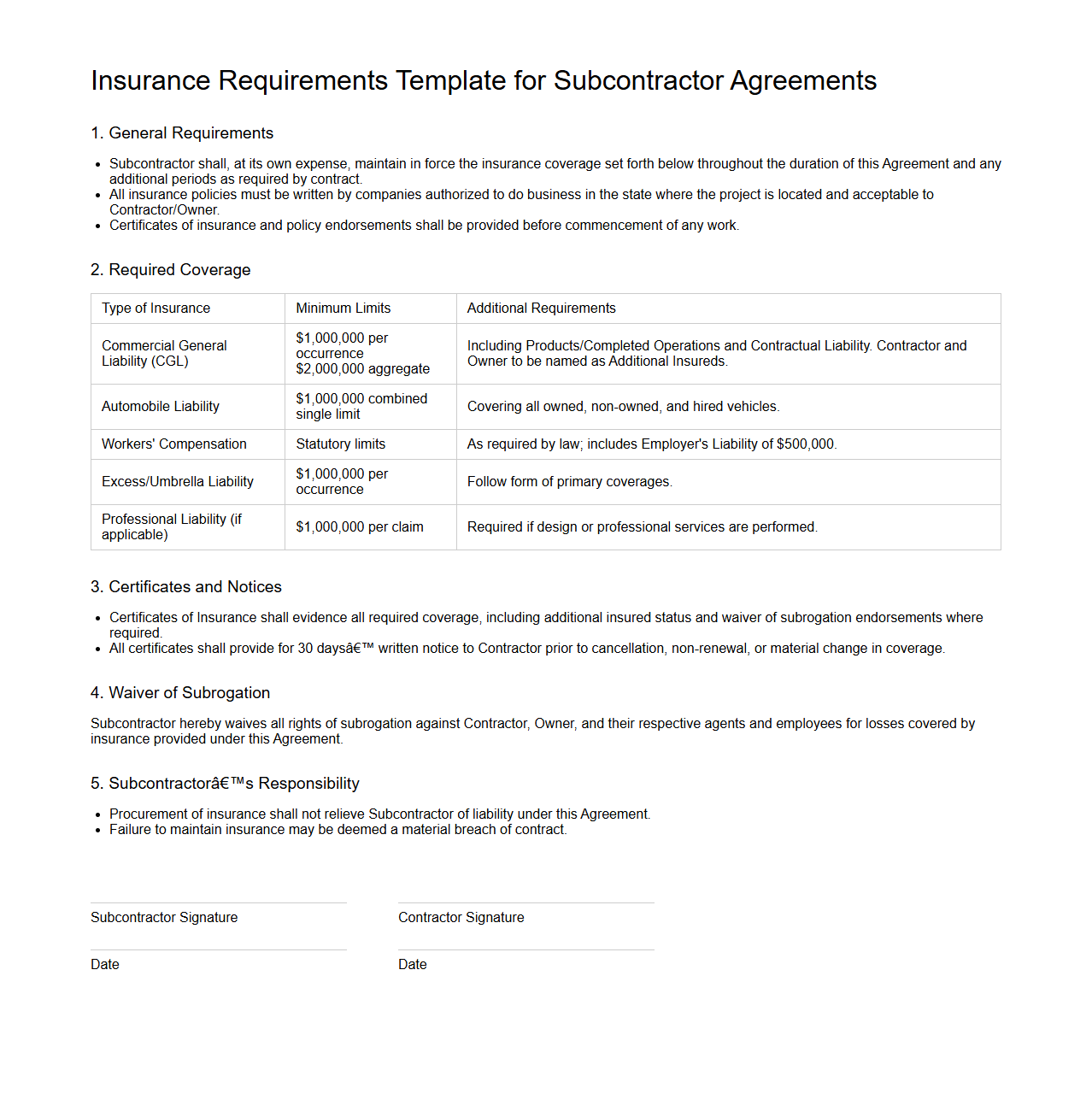
Insurance Requirements Template for Subcontractor Agreements
An
Insurance Requirements Template for Subcontractor Agreements document outlines the specific insurance policies and coverage limits that subcontractors must maintain to protect all parties involved in a construction or service project. This template ensures compliance with contractual and legal obligations by detailing types of insurance such as general liability, workers' compensation, and auto insurance. It serves as a standardized reference for project managers and contractors to mitigate financial risks and liability issues during the project lifecycle.
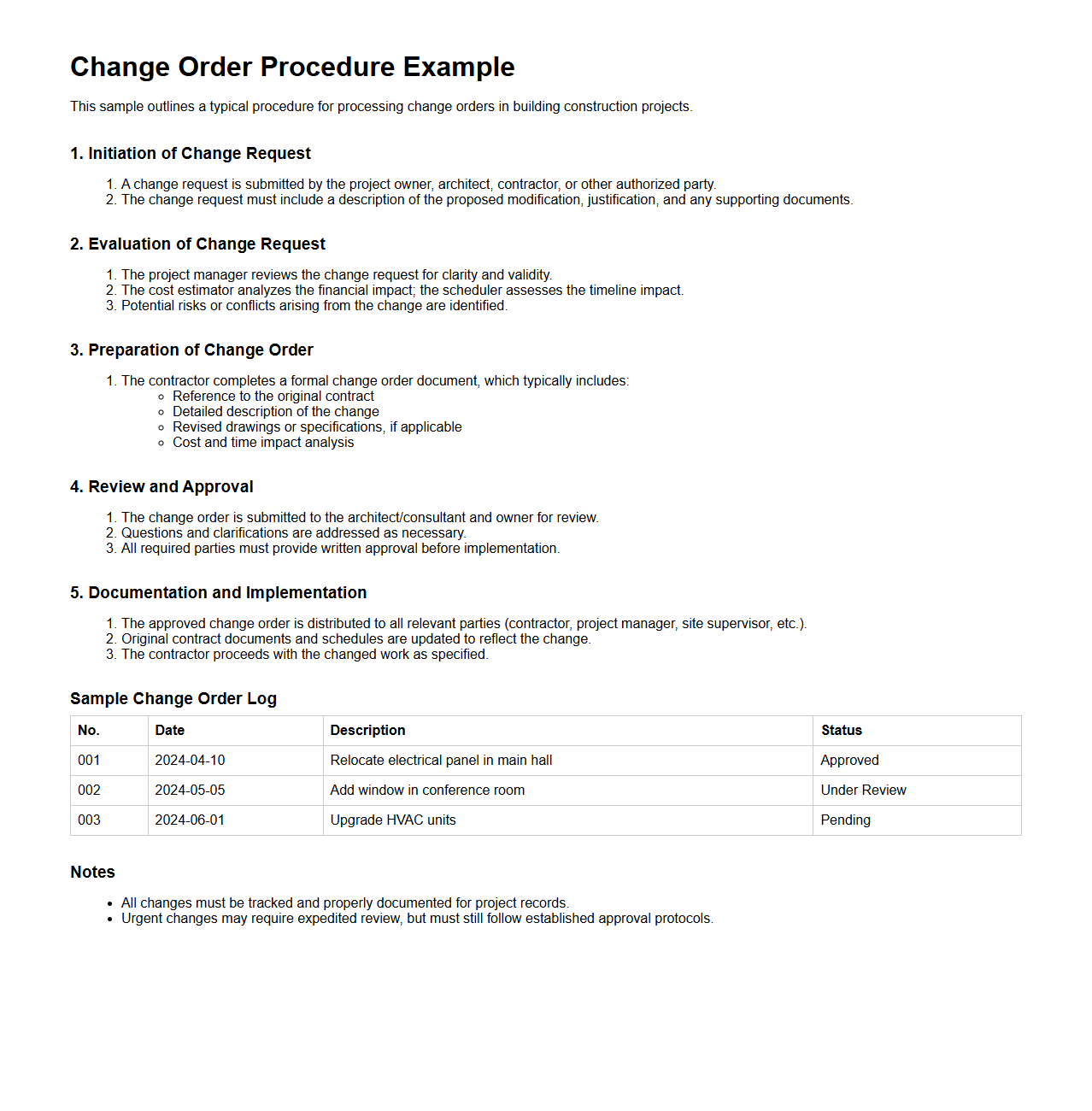
Change Order Procedure Example for Building Construction Projects
The
Change Order Procedure Example for Building Construction Projects document outlines the standardized process for managing modifications to the original construction contract. It details the steps for submitting, reviewing, approving, and documenting change requests to ensure clear communication and avoid disputes. This procedure helps maintain project timelines, budget control, and compliance with contractual obligations.
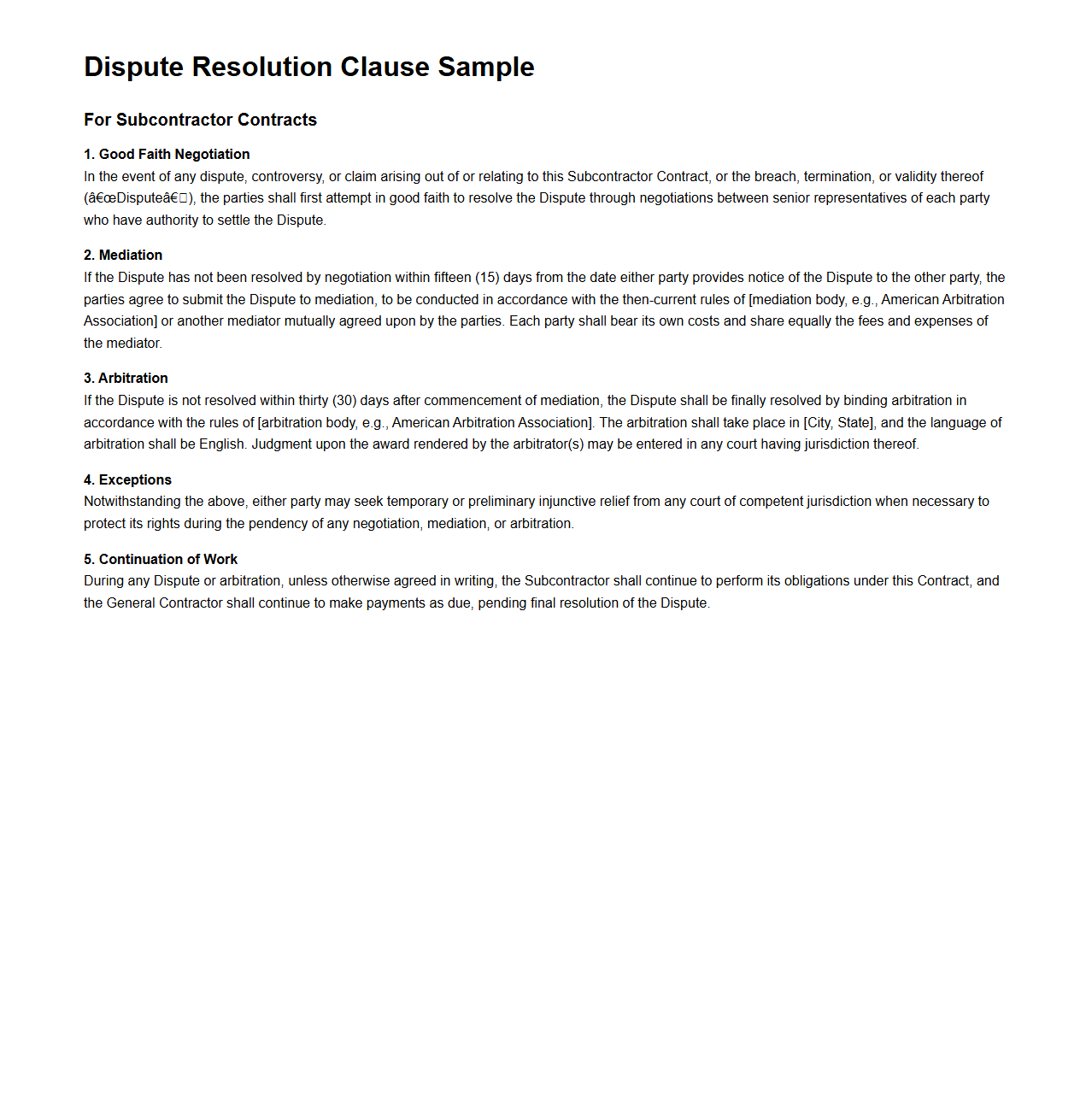
Dispute Resolution Clause Sample for Subcontractor Contracts
A
Dispute Resolution Clause Sample for Subcontractor Contracts outlines specific procedures for resolving conflicts between the contractor and subcontractor, ensuring efficient handling of disagreements to avoid litigation. This document typically includes methods such as negotiation, mediation, arbitration, or escalation protocols tailored to subcontracting agreements. Implementing this clause helps protect both parties by providing a clear framework that promotes timely and cost-effective conflict resolution.
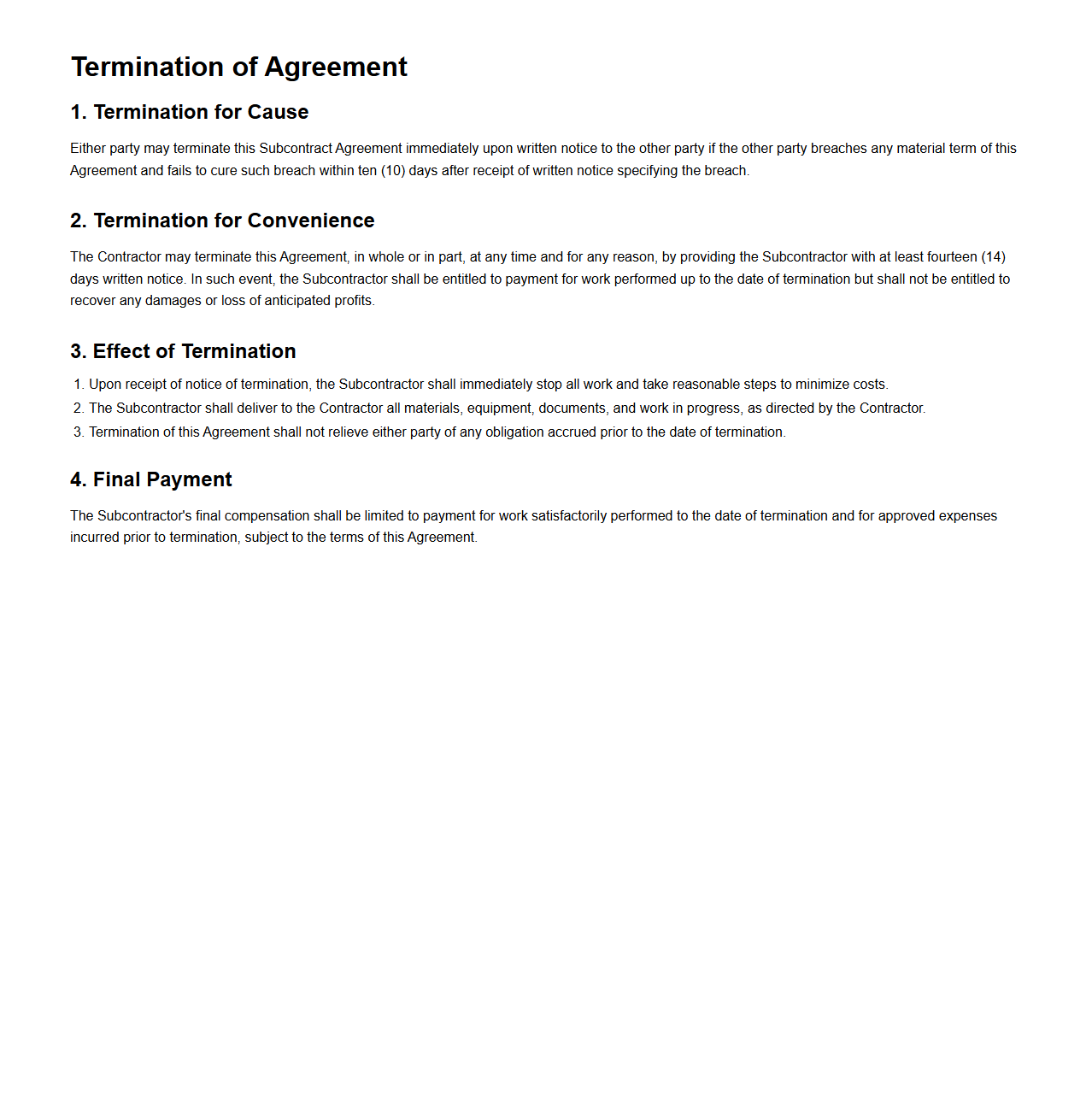
Termination of Agreement Section for Construction Subcontractors
The
Termination of Agreement Section in a construction subcontractor document outlines the conditions under which either party may end the contract before project completion. It specifies the required notice period, acceptable reasons for termination such as breach of contract or non-performance, and any associated penalties or compensation obligations. This section ensures clarity and legal protection for both the contractor and subcontractor during contract termination scenarios.
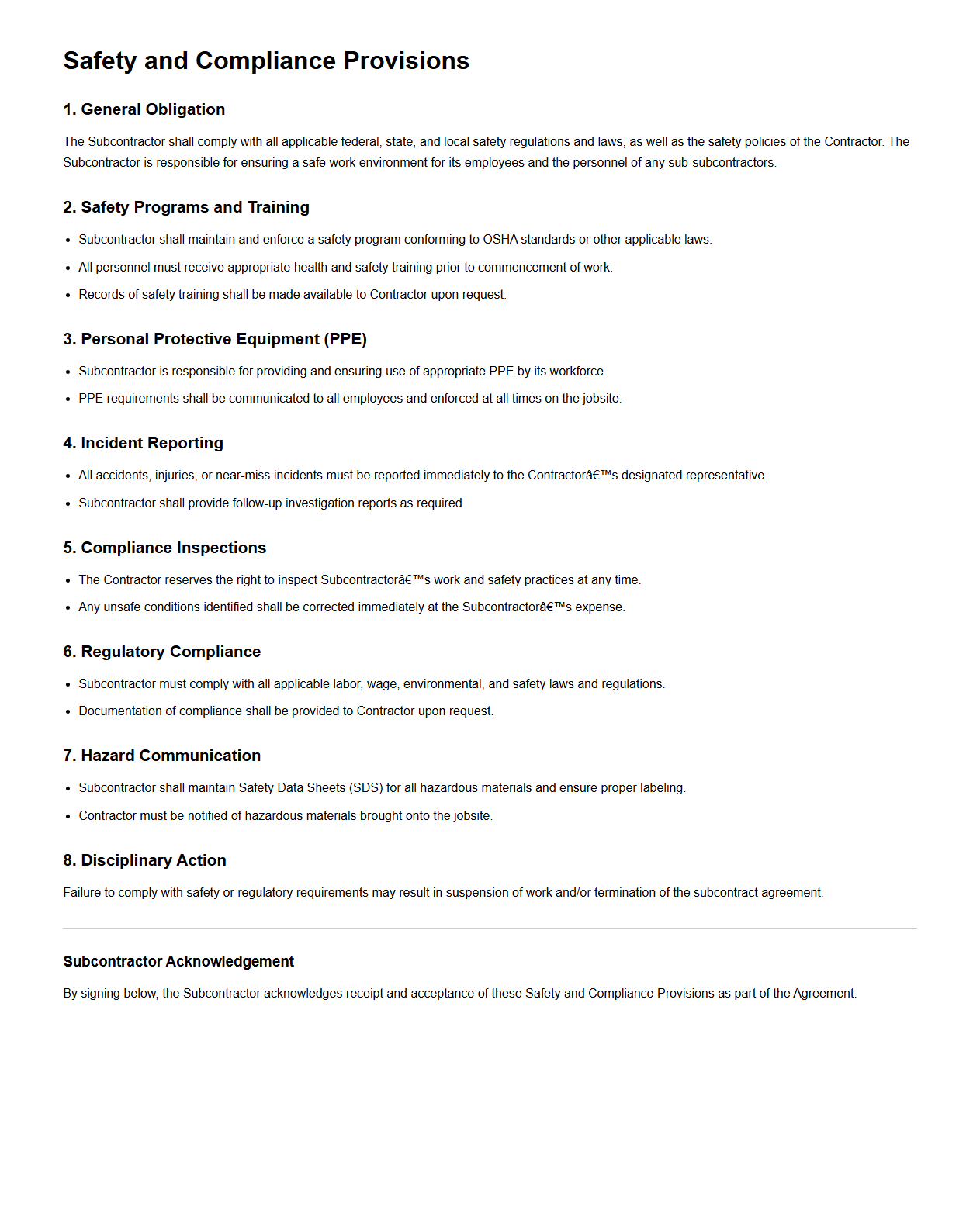
Safety and Compliance Provisions for Subcontractor Agreements
The
Safety and Compliance Provisions for Subcontractor Agreements document outlines the essential requirements and standards subcontractors must adhere to in order to maintain workplace safety and regulatory compliance. It establishes clear guidelines on hazard identification, risk mitigation, and adherence to federal, state, and local safety laws. This document ensures subcontractors are accountable for implementing proper safety measures, reporting incidents, and maintaining certification or training records to protect all parties involved.
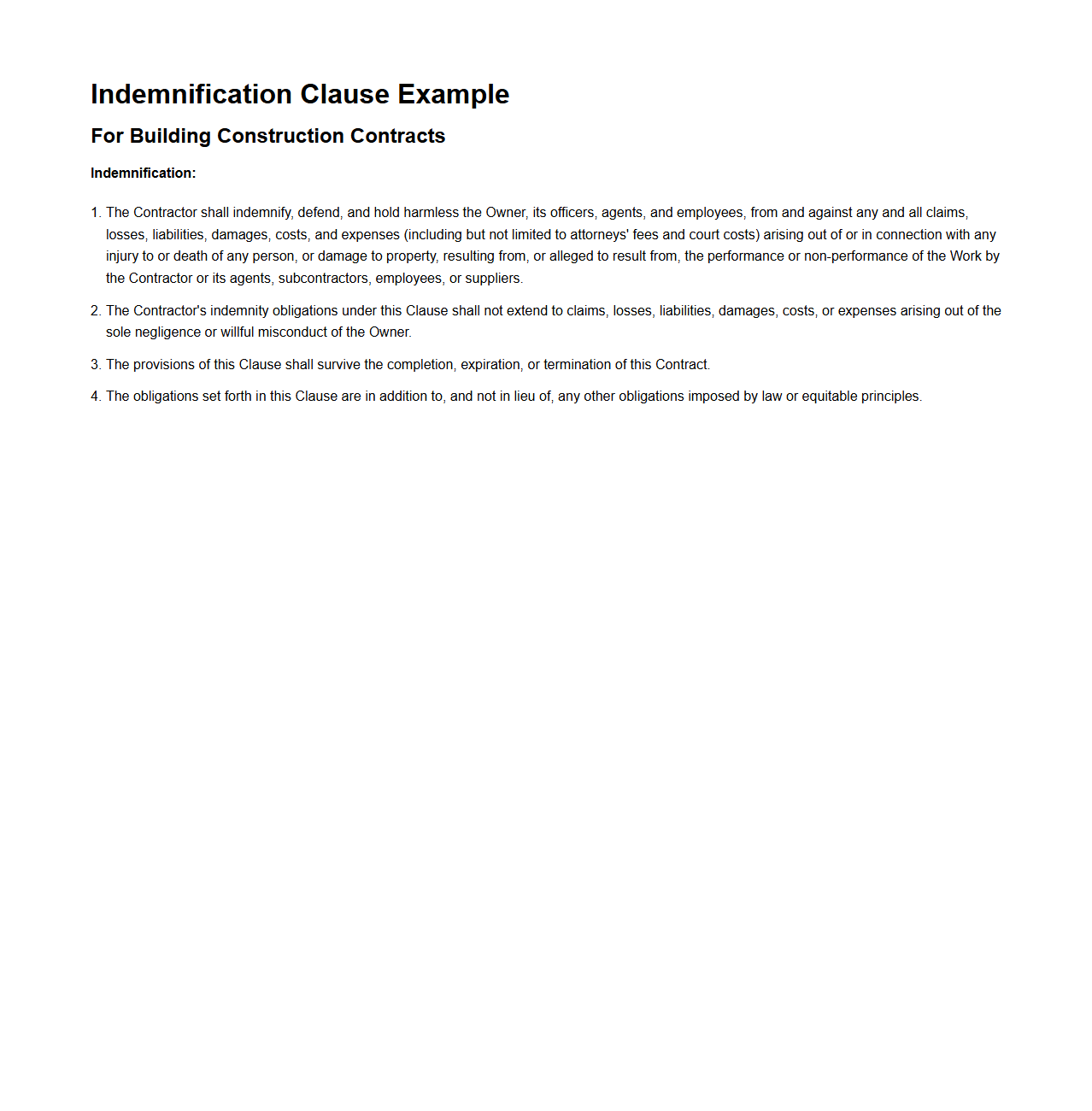
Indemnification Clause Example for Building Construction Contracts
An
Indemnification Clause in building construction contracts outlines the obligations of one party to compensate the other for any losses, damages, or liabilities arising from specified events such as accidents, property damage, or negligence. This clause protects contractors, subcontractors, and owners by clearly defining the scope of indemnity, including responsibilities for third-party claims and legal fees. Properly drafted indemnification clauses ensure risk allocation is transparent and enforceable, minimizing disputes during project execution.
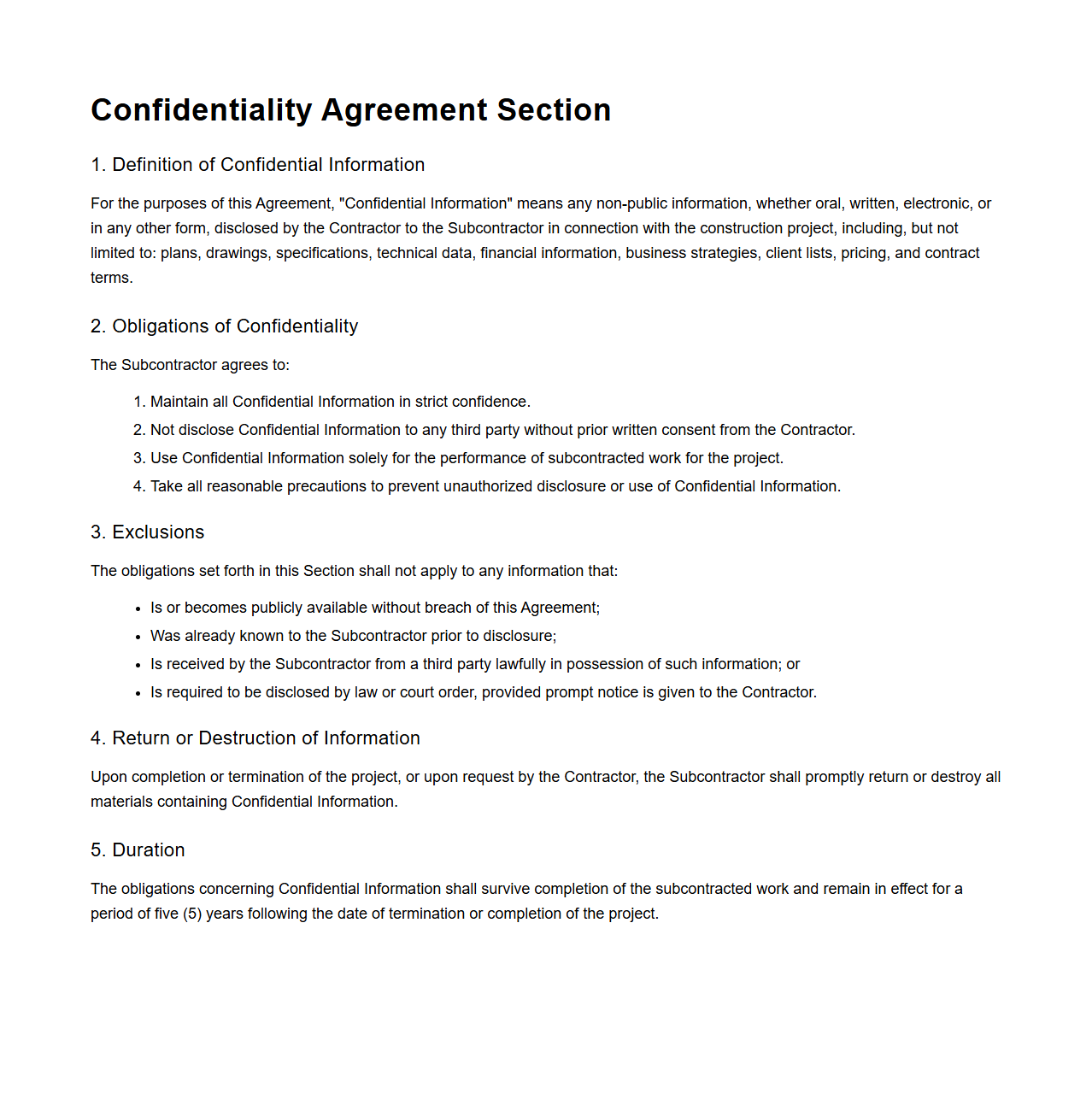
Confidentiality Agreement Section for Construction Subcontractors
The
Confidentiality Agreement Section in a Construction Subcontractors document outlines the obligations of subcontractors to protect sensitive information exchanged during the project. It specifies the types of proprietary data, including design plans, financial details, and trade secrets, that must remain confidential throughout and after the contract duration. This section ensures legal protection against unauthorized disclosure, maintaining trust and compliance between contractors and subcontractors.
Key Obligations of the Subcontractor
The subcontractor is required to perform all work as specified in the agreement with diligence and professionalism. They must comply with all applicable laws, regulations, and project requirements. Additionally, the subcontractor is obligated to provide timely updates and maintain communication with the primary contractor.
Scope of Work and Project Deliverables
The agreement clearly defines the scope of work through detailed descriptions of tasks and responsibilities. It outlines specific project deliverables, including deadlines and quality standards. This precise definition ensures accountability and helps manage project expectations.
Payment Terms and Schedules
The subcontractor's compensation is governed by explicit payment terms outlined in the contract. Payments are typically scheduled based on milestones or completion of deliverables to ensure progress aligns with compensation. Late payment penalties and invoicing procedures are also clearly detailed.
Liability, Insurance, and Indemnification Clauses
The agreement includes clauses addressing the subcontractor's liability for damages arising from their work. It requires the subcontractor to maintain adequate insurance coverage for risks associated with their services. Indemnification provisions protect the primary contractor from claims related to subcontractor negligence.
Dispute Resolution and Contract Termination Procedures
The contract specifies procedures for dispute resolution, often including negotiation, mediation, or arbitration before litigation. Termination clauses define conditions under which either party may end the agreement, including breach or failure to perform. Proper notice requirements and obligations post-termination are also outlined.
More Construction Templates