A Air Waybill Document Sample for Air Cargo provides a detailed example of the essential shipping document used in air freight transportation. It includes critical information such as shipper and consignee details, flight number, shipment description, and terms of carriage, ensuring smooth logistics and accountability. This sample helps businesses understand the proper format and requirements for efficient air cargo management.
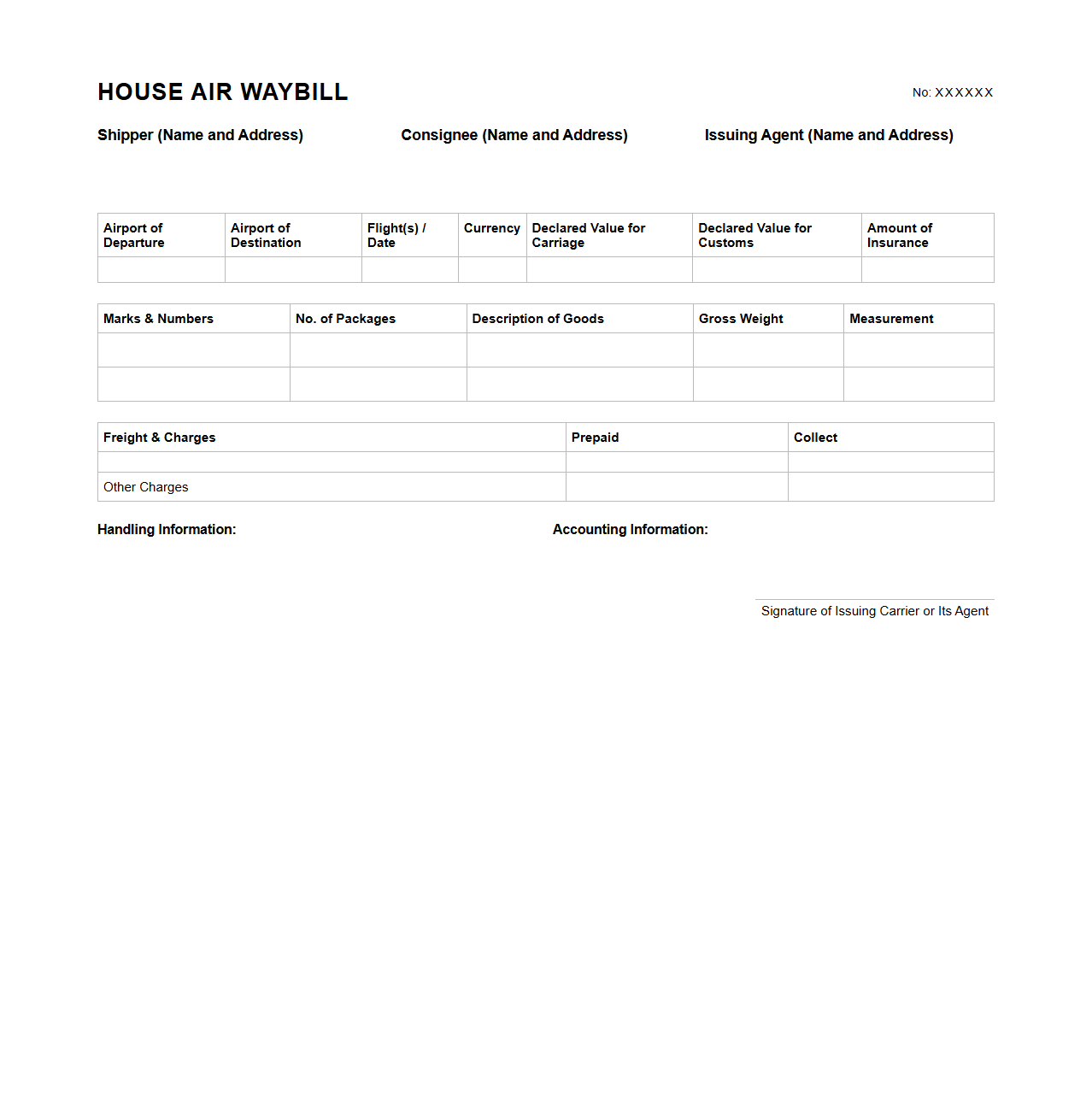
House Air Waybill Document Sample
A
House Air Waybill is a crucial shipping document issued by a freight forwarder to the shipper, outlining the details of goods being transported by air. It serves as a contract of carriage, providing essential information such as consignor and consignee details, flight numbers, and shipment weight. This document sample helps ensure smooth logistics management and serves as proof of receipt for the cargo.
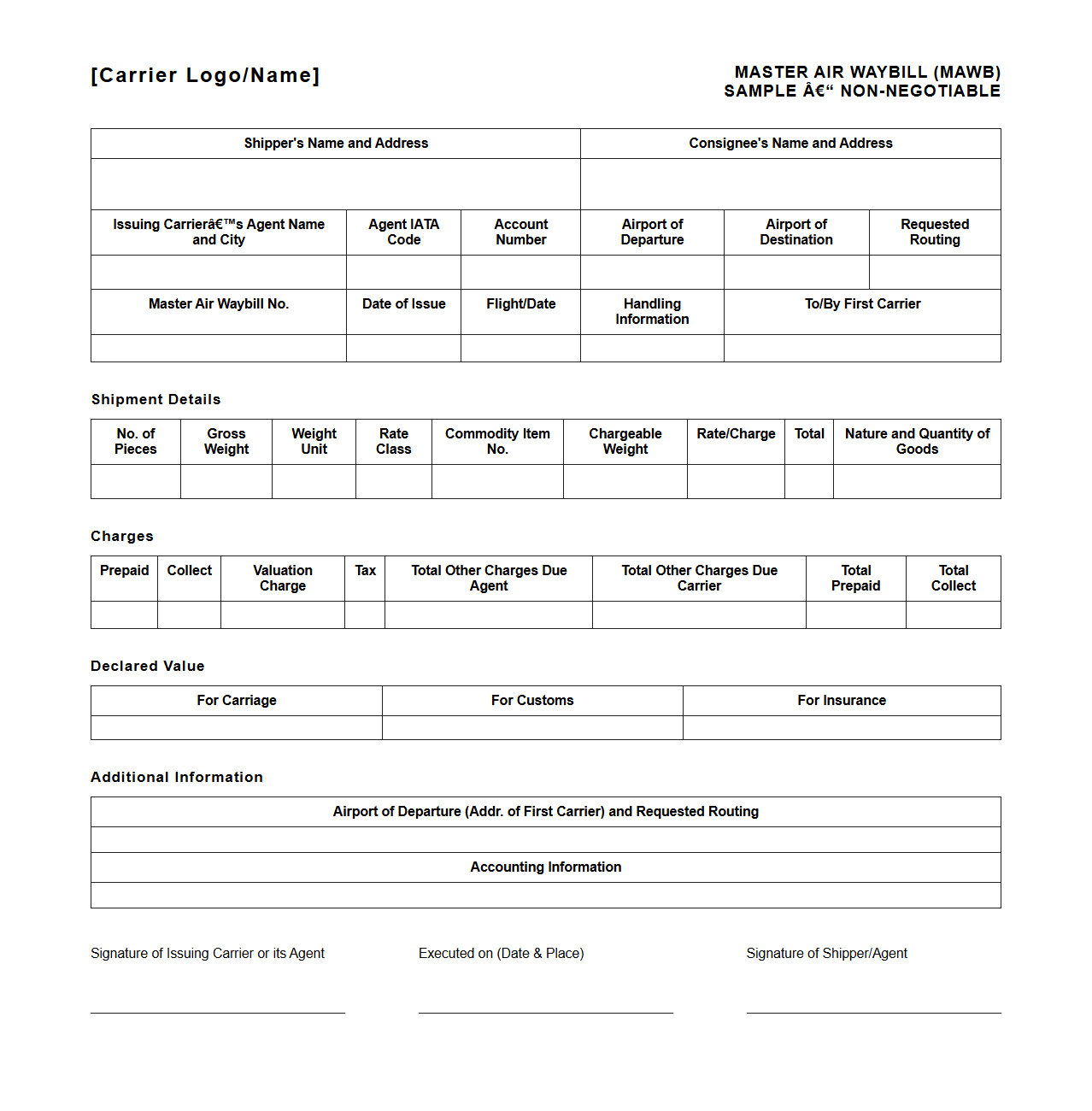
Master Air Waybill Document Sample
A
Master Air Waybill (MAWB) document sample serves as a template or example of the official airway bill used in air cargo transportation. This document includes essential shipment details such as the shipper and consignee information, flight numbers, routing, and cargo descriptions. Airlines, freight forwarders, and customs officials reference the MAWB to track and verify the movement of goods throughout the shipping process.
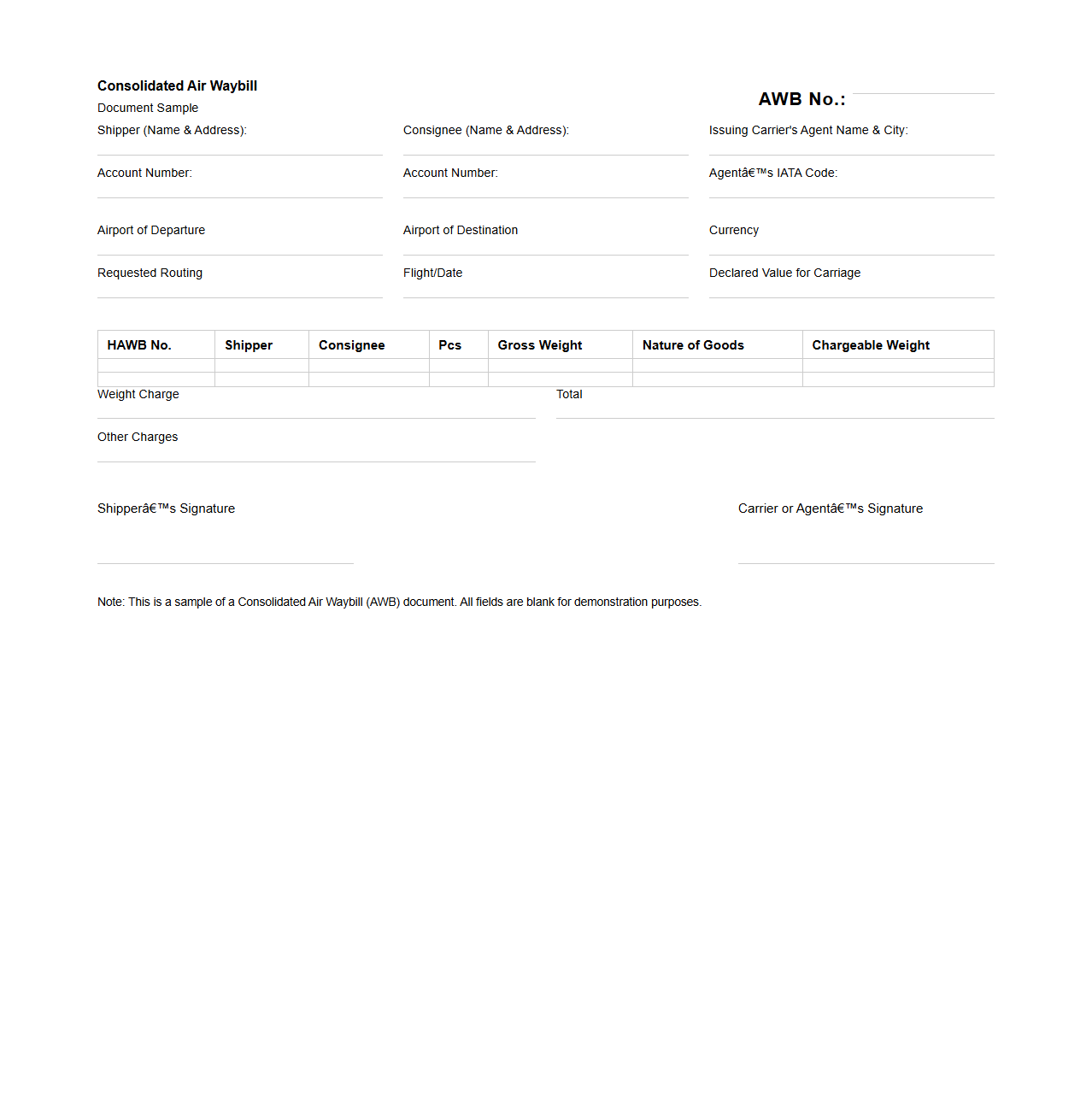
Consolidated Air Waybill Document Sample
A
Consolidated Air Waybill (CAW) is a shipping document that combines multiple individual air waybills into a single master document, streamlining the transportation process for consolidated shipments. This document sample typically includes details such as shipper and consignee information, flight details, cargo description, and total weight, ensuring accurate tracking and customs clearance. Using a consolidated air waybill enhances efficiency by reducing paperwork and simplifying cargo management for freight forwarders and airlines.
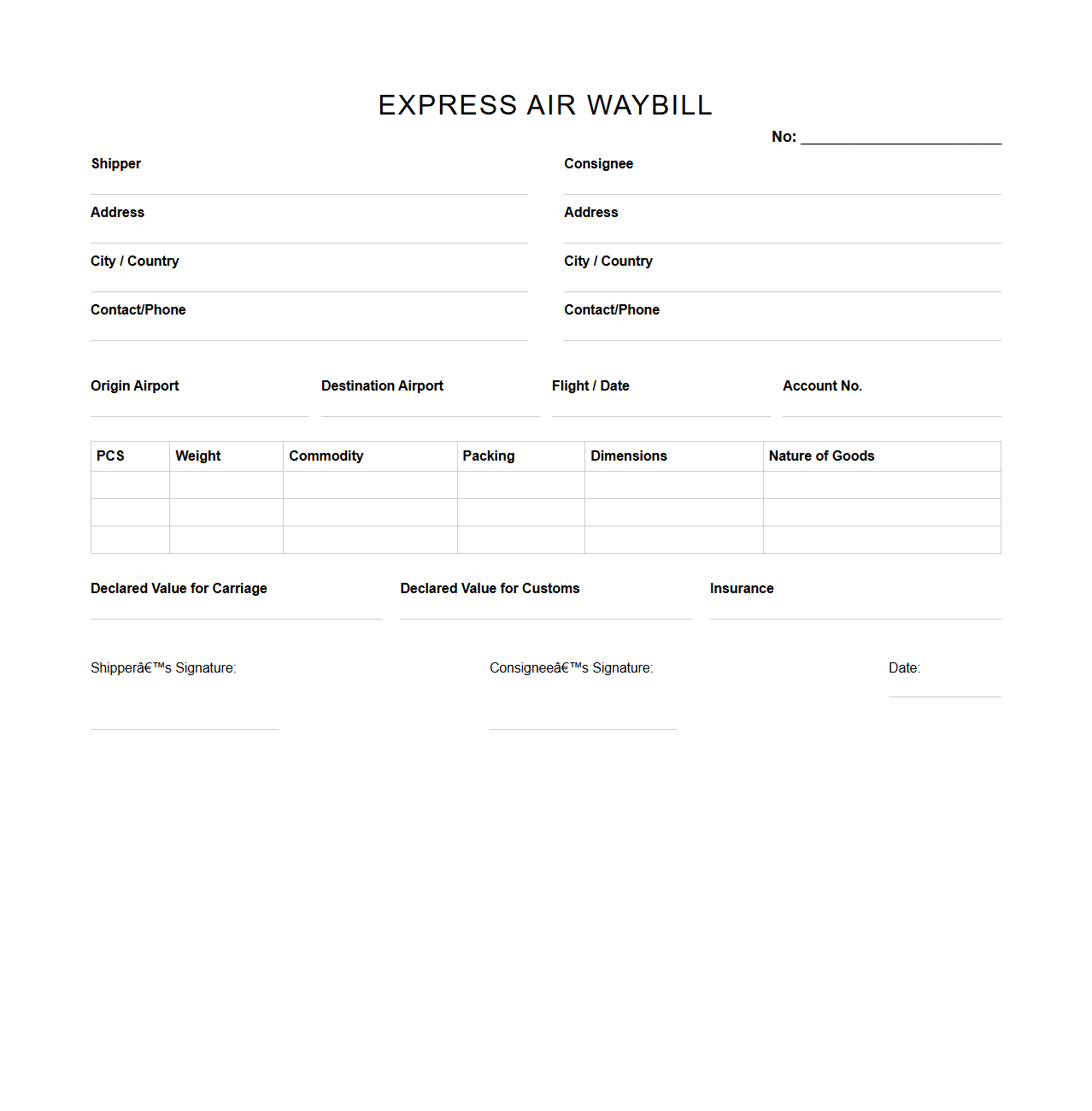
Express Air Waybill Document Sample
The
Express Air Waybill (EAWB) Document Sample serves as a standardized template illustrating the format and essential information included in an air freight shipping document. It contains critical shipment details such as sender and receiver information, flight data, goods description, and payment terms required for tracking and regulatory compliance. This sample document helps businesses and logistics providers ensure accurate and efficient processing of air cargo shipments.
Electronic Air Waybill Document Sample
The
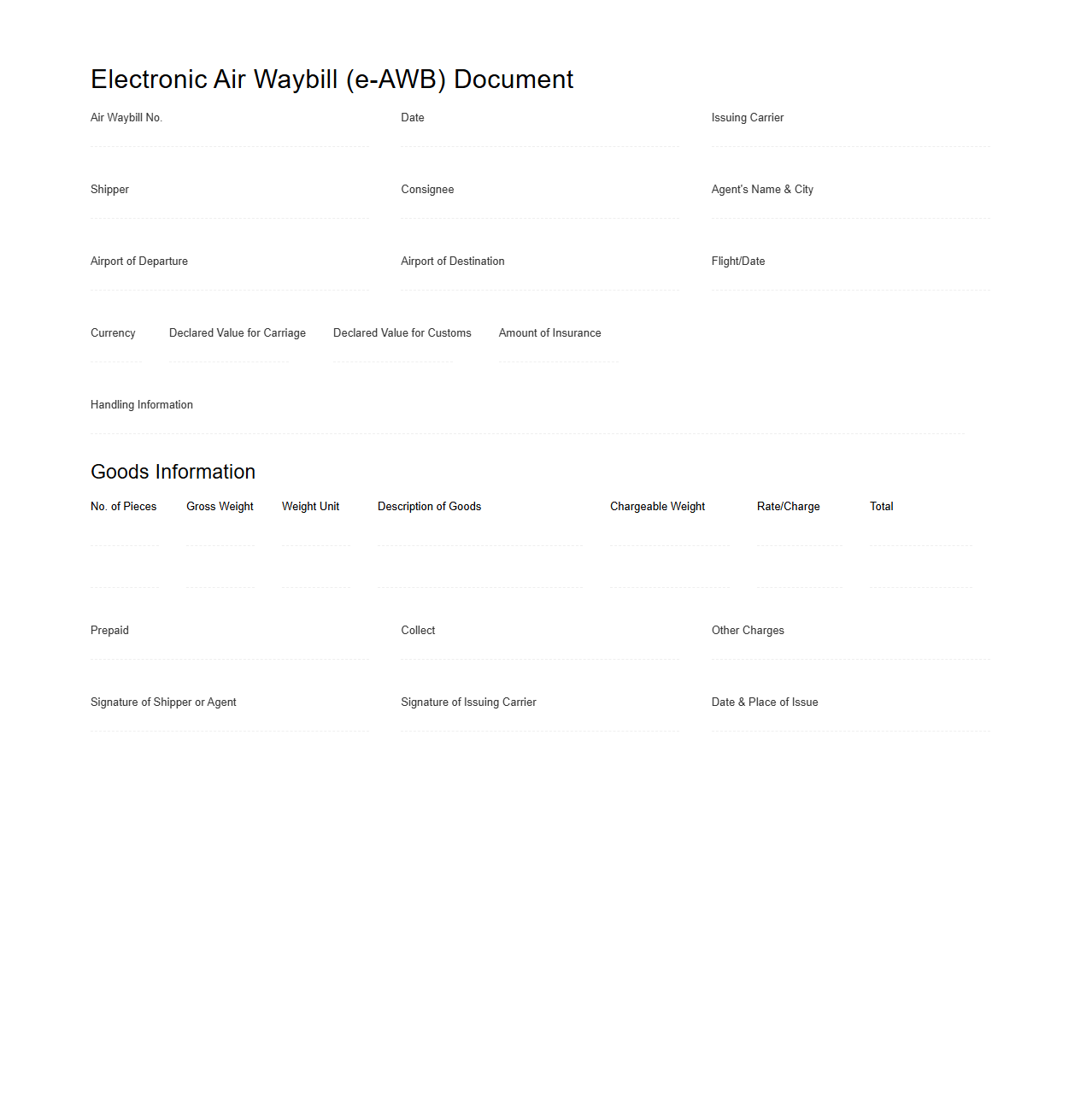
Electronic Air Waybill (e-AWB) Document Sample serves as a digital version of the traditional air waybill, facilitating faster and more efficient air cargo shipments. This document contains essential shipment details such as consignor, consignee, flight information, and cargo description in an electronic format, compliant with the International Air Transport Association (IATA) standards. Utilizing the e-AWB reduces paperwork, improves data accuracy, and accelerates customs clearance processes in air freight logistics.
Neutral Air Waybill Document Sample
A
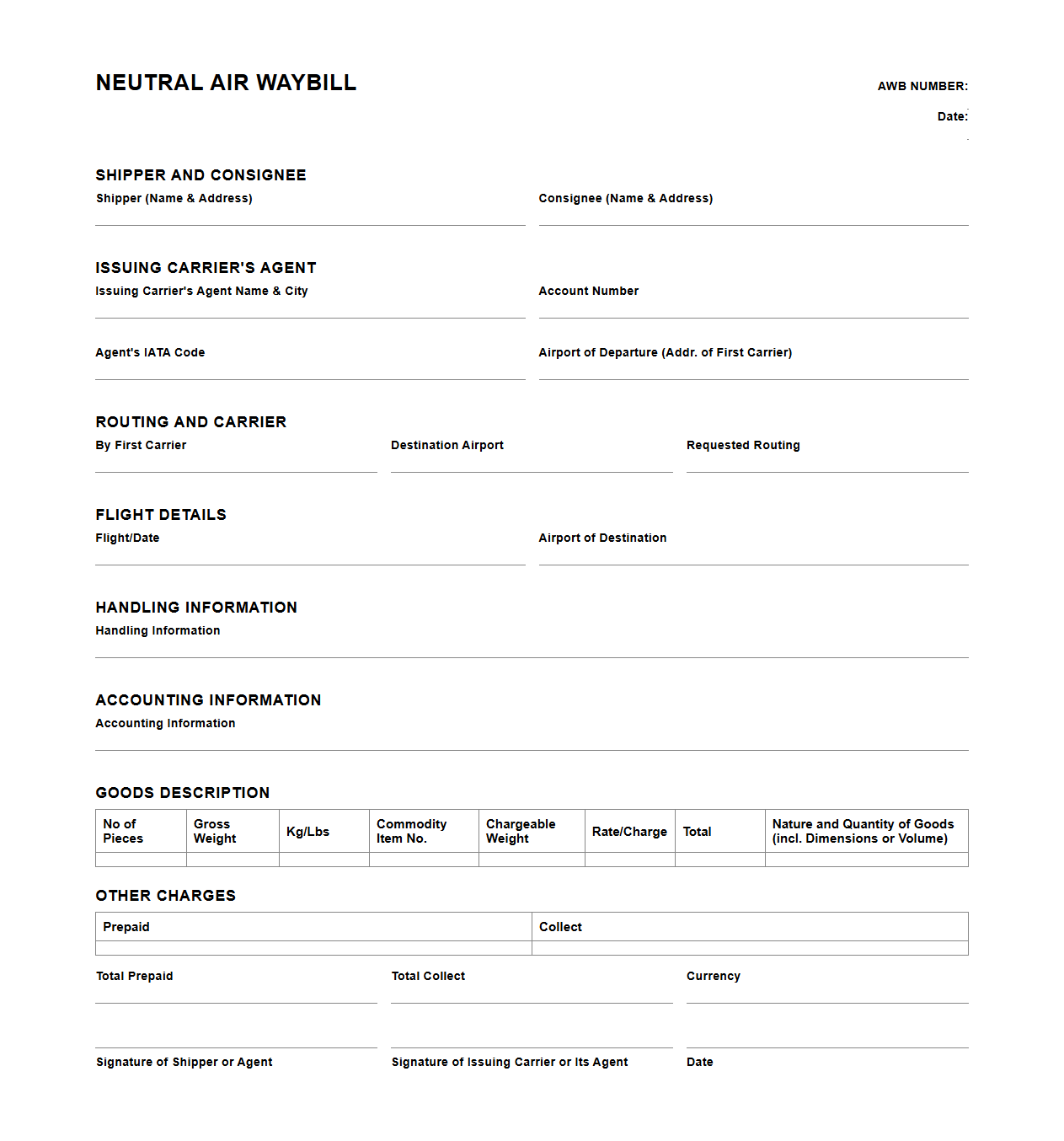
Neutral Air Waybill Document Sample is a standardized template used in air cargo shipping that outlines shipment details without branding from any specific airline or freight forwarder. This document facilitates the transfer of goods by providing essential information such as shipper and consignee details, flight data, and cargo description, ensuring smooth customs clearance and tracking. It is pivotal for maintaining impartiality and flexibility in the logistics chain when multiple carriers or parties are involved.
Air Waybill with Customs Declaration Sample
An
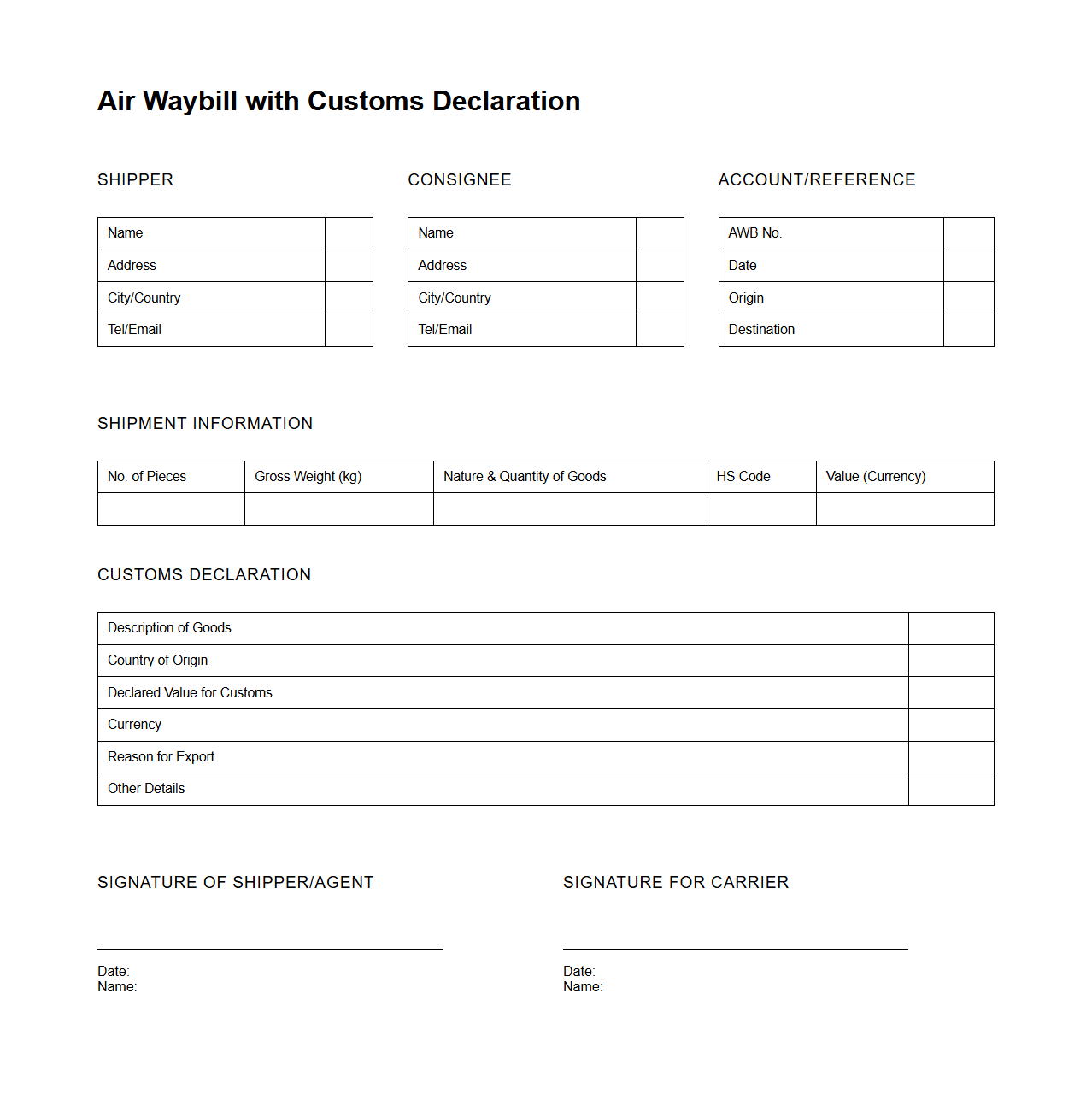
Air Waybill (AWB) is a crucial shipping document used in air freight that serves as a contract between the shipper and the carrier, detailing the shipment's contents, origin, and destination. It accompanies the goods and provides essential information for customs clearance, including the shipper's and consignee's details, description of the cargo, weight, and freight charges. A typical customs declaration sample attached to an Air Waybill includes specific data such as Harmonized System (HS) codes, value of the goods, country of origin, and import/export authorizations, facilitating smooth customs processing and compliance with international trade regulations.
Dangerous Goods Air Waybill Document Sample
The
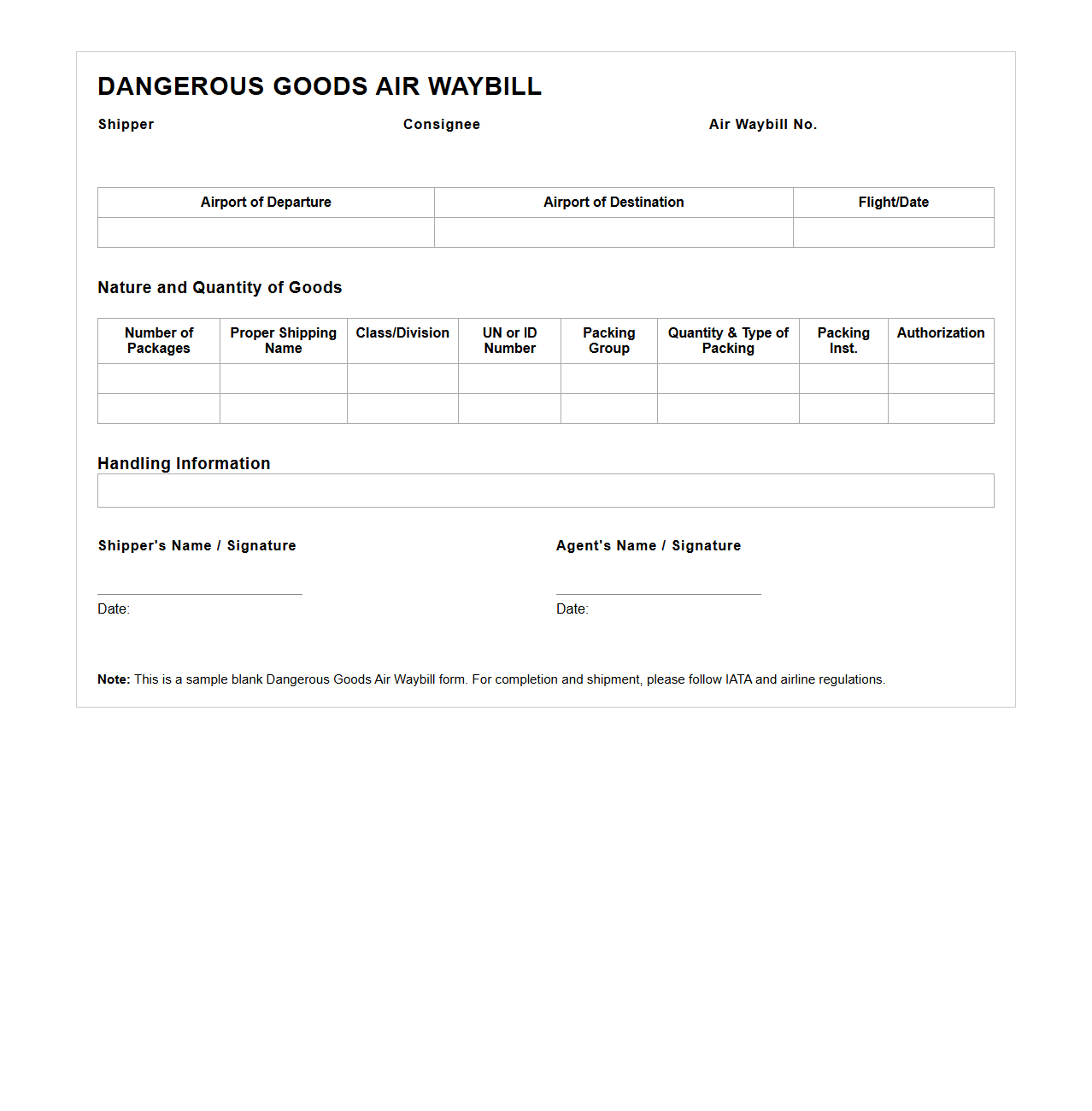
Dangerous Goods Air Waybill Document Sample is a standardized form used in the air transport of hazardous materials, ensuring compliance with international regulations set by IATA and ICAO. This document details the nature, quantity, and packaging of dangerous goods, facilitating safe handling, storage, and emergency response. Accurate completion of this air waybill is crucial to prevent incidents during air shipment and to maintain safety for crew and cargo.
Perishable Cargo Air Waybill Document Sample
A
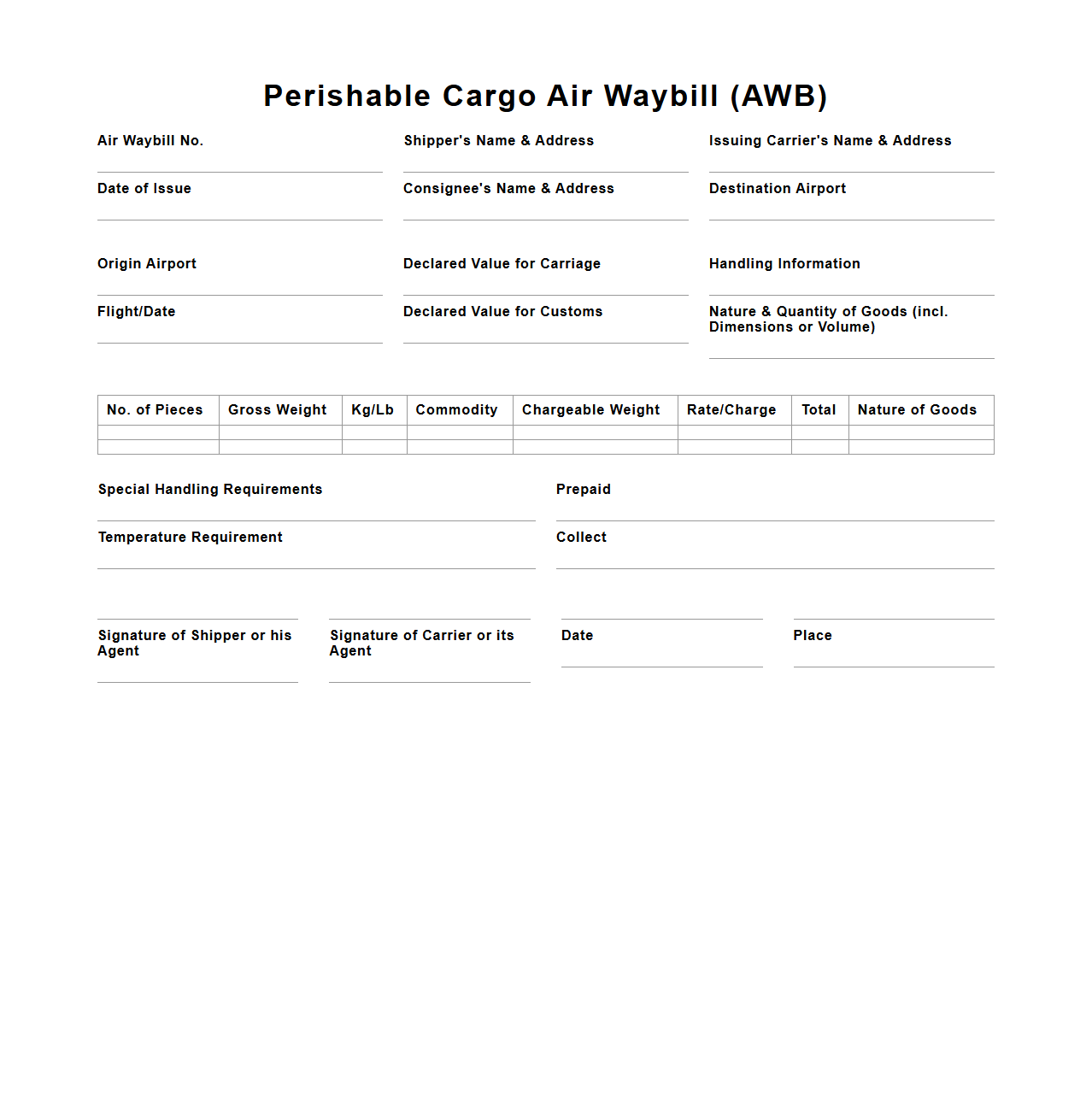
Perishable Cargo Air Waybill (AWB) Document Sample is a crucial transportation paper specifically designed for shipping temperature-sensitive goods such as fresh produce, pharmaceuticals, and flowers. This document details essential information including the shipper and consignee data, cargo description, handling instructions, and temperature requirements to ensure the integrity of perishable items during air transit. Airlines and customs rely on the AWB to facilitate smooth logistics, maintain product quality, and comply with regulatory standards for perishable cargo shipments.
Live Animal Air Waybill Document Sample
A
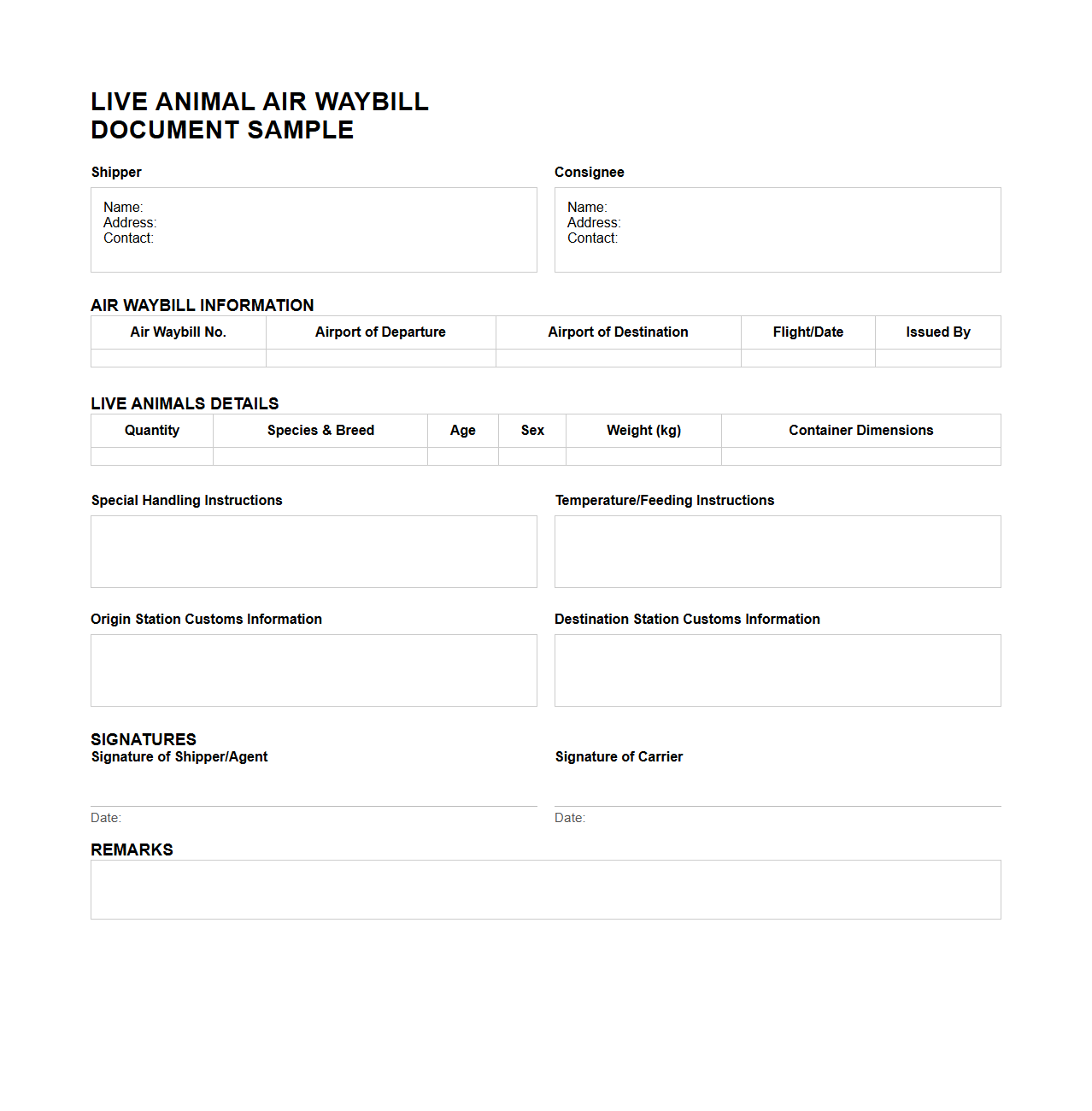
Live Animal Air Waybill (LAAWB) Document Sample serves as a crucial template that outlines the specific details required for the safe and compliant transportation of live animals by air. It includes essential information such as the shipper's and consignee's details, animal species, number of animals, crate specifications, health certificates, and any special handling instructions. This document ensures adherence to international regulations and facilitates smooth communication between carriers, handlers, and regulatory authorities during the transit of live animals.
What essential information must be included in an Air Waybill document for air cargo shipments?
An Air Waybill (AWB) must contain the shipper's name and address, ensuring clear identification of the party responsible for the cargo. It also requires detailed consignee information to specify the goods' destination accurately. Additionally, the AWB must list a precise description of the cargo, including weight, dimensions, and any special handling instructions.
How does the Air Waybill serve as a contract between the shipper and the carrier?
The Air Waybill acts as a legal contract outlining the obligations of both the shipper and the carrier for transporting goods by air. It specifies the terms and conditions under which the carrier agrees to transport the cargo safely to the destination. This contract governs liability, delivery timelines, and payment terms, ensuring all parties have a formal agreement.
What distinguishes a Master Air Waybill (MAWB) from a House Air Waybill (HAWB)?
A Master Air Waybill (MAWB) is issued by the main carrier and covers the entire cargo shipment on the aircraft. In contrast, a House Air Waybill (HAWB) is issued by freight forwarders to their customers and represents individual consignments within the MAWB. The MAWB serves as the primary airway bill recognized by airlines, while the HAWB is a subcontract under the MAWB.
In what situations is the Air Waybill used as a receipt of goods, and what details validate this function?
The Air Waybill functions as a receipt when the carrier acknowledges the acceptance of the cargo from the shipper at the point of origin. This receipt is validated by the carrier's signature and date on the AWB, confirming that goods were received in good condition. It serves as proof for shipment initiation and facilitates claims if damages or discrepancies occur.
Which sections of the Air Waybill are critical for tracking and tracing air cargo during transportation?
Sections such as the AWB number, shipper's and consignee's details, and flight information are crucial for tracking air cargo. The AWB number acts as a unique identifier, allowing carriers and customers to trace the shipment status accurately. Additionally, details on the routing, handling instructions, and delivery address ensure proper cargo monitoring throughout transit.