A Certificate of Origin Document Sample for Customs Clearance verifies the country where goods are manufactured, facilitating smooth import and export processes. It is essential for meeting customs requirements, ensuring compliance with trade regulations, and determining applicable tariffs. This document typically includes details such as product description, manufacturer information, and shipment origin.
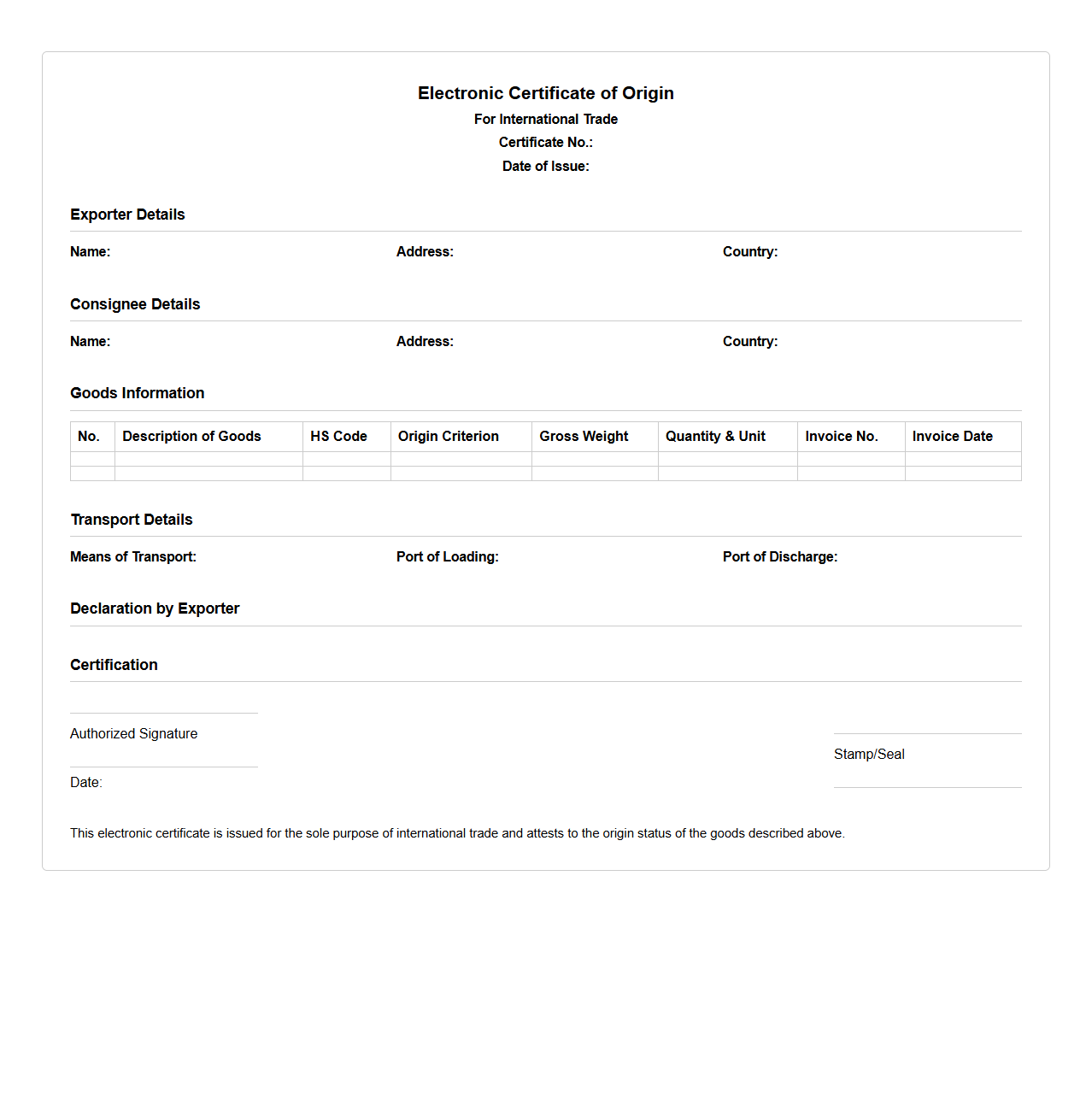
Electronic Certificate of Origin Template for International Trade
An
Electronic Certificate of Origin Template is a standardized digital format used in international trade to certify the country where goods were manufactured. This document facilitates customs clearance by verifying product origin, helping businesses comply with trade agreements and reduce tariffs. Using an electronic template streamlines the certification process, improves accuracy, and enables faster processing in global shipping.
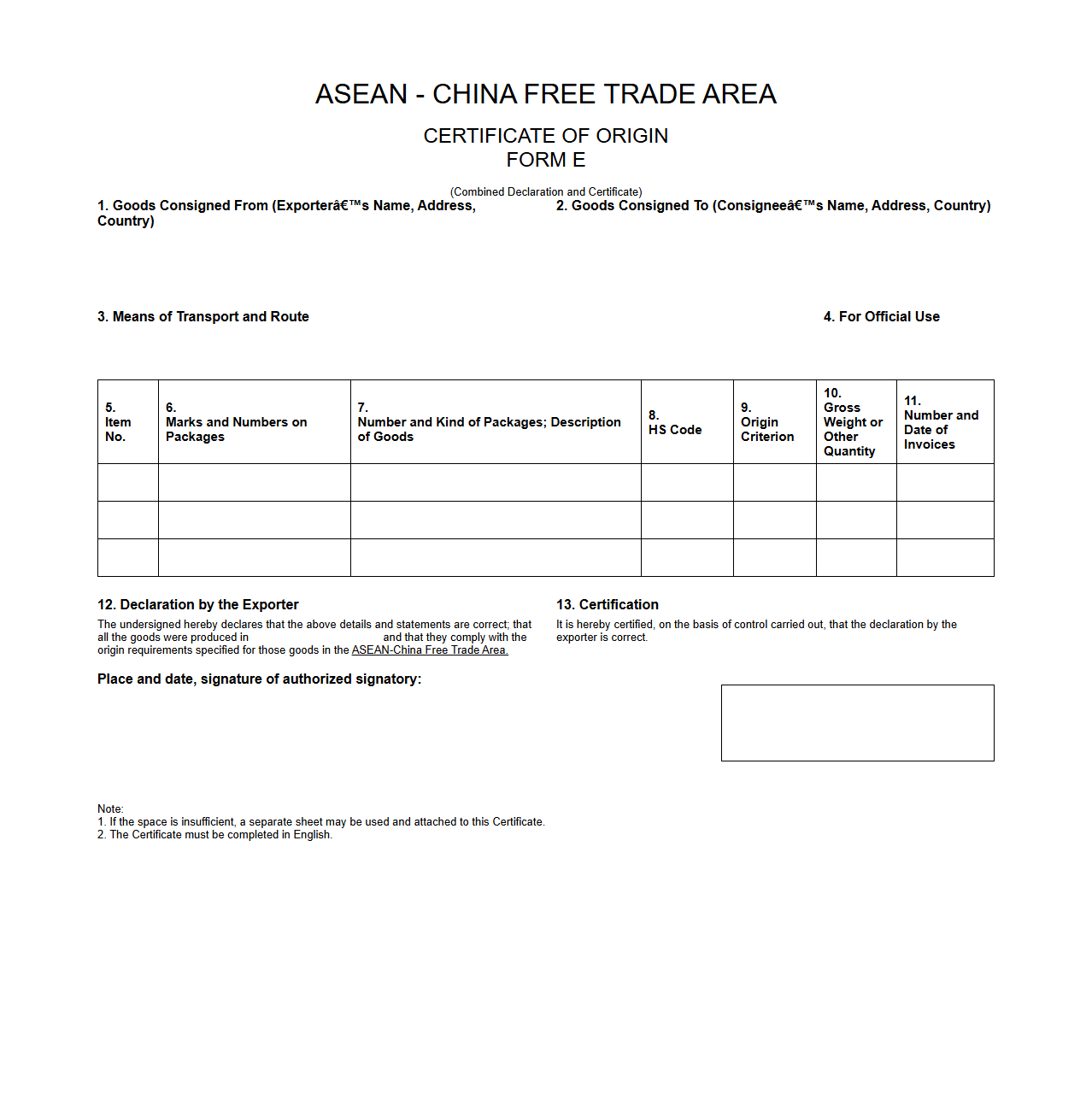
ASEAN Certificate of Origin Form E Sample
The
ASEAN Certificate of Origin Form E is a crucial trade document used within the ASEAN member countries to certify that goods exported qualify for preferential tariff treatment under the ASEAN Trade in Goods Agreement (ATIGA). This form ensures products meet the rules of origin criteria, facilitating smoother customs procedures and reduced import duties among participating nations. Exporters must accurately complete and submit the Form E to gain customs benefits and promote regional economic integration.
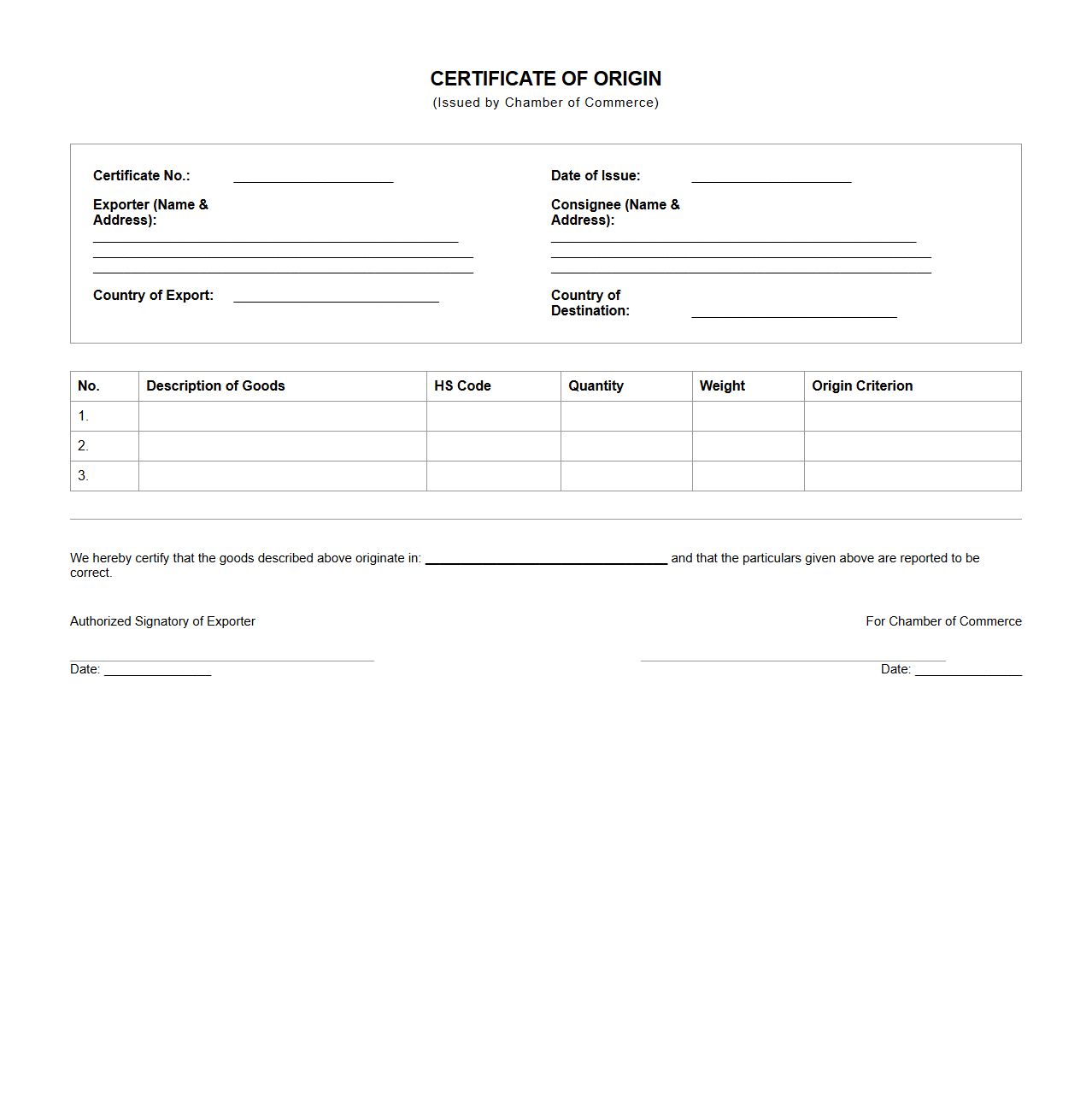
Chamber-Issued Certificate of Origin Example for Exporters
A
Chamber-Issued Certificate of Origin is an official document provided by a local chamber of commerce that certifies the country where the exported goods were manufactured or produced. Exporters use this certificate to meet customs requirements, facilitate trade, and qualify for preferential tariff treatments under international trade agreements. The document typically includes detailed product descriptions, exporter information, and verification stamps to ensure authenticity and compliance with destination country regulations.
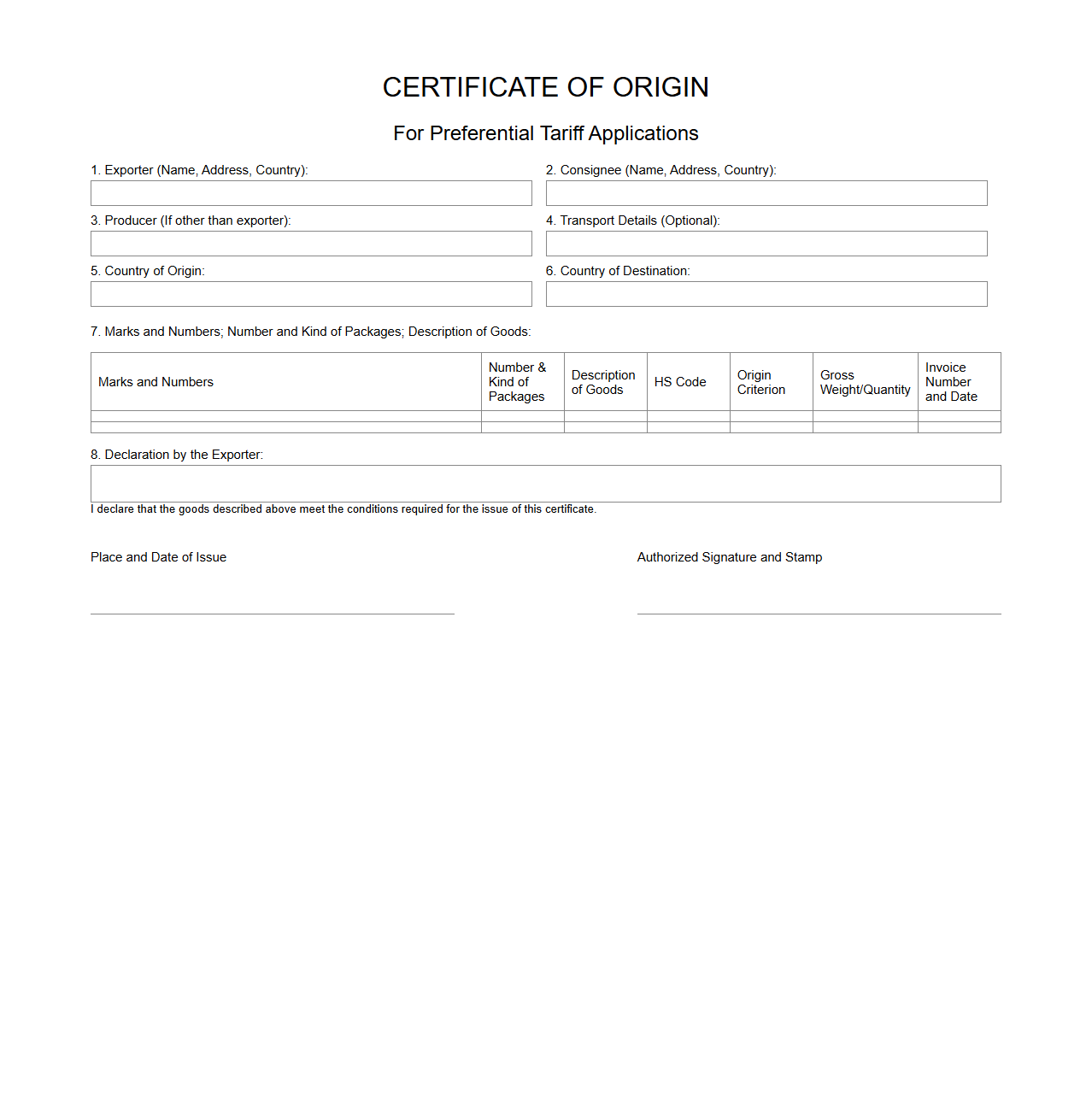
Certificate of Origin for Preferential Tariff Applications
A
Certificate of Origin for Preferential Tariff Applications is an official document certifying that goods exported from a country qualify for reduced tariffs under specific trade agreements. It verifies the origin of products to ensure compliance with rules of origin criteria set by trade treaties, which is essential for importers seeking tariff concessions. This document helps streamline customs processes and supports international trade by confirming the preferential status of the goods.
Non-Preferential Certificate of Origin Document Layout
The
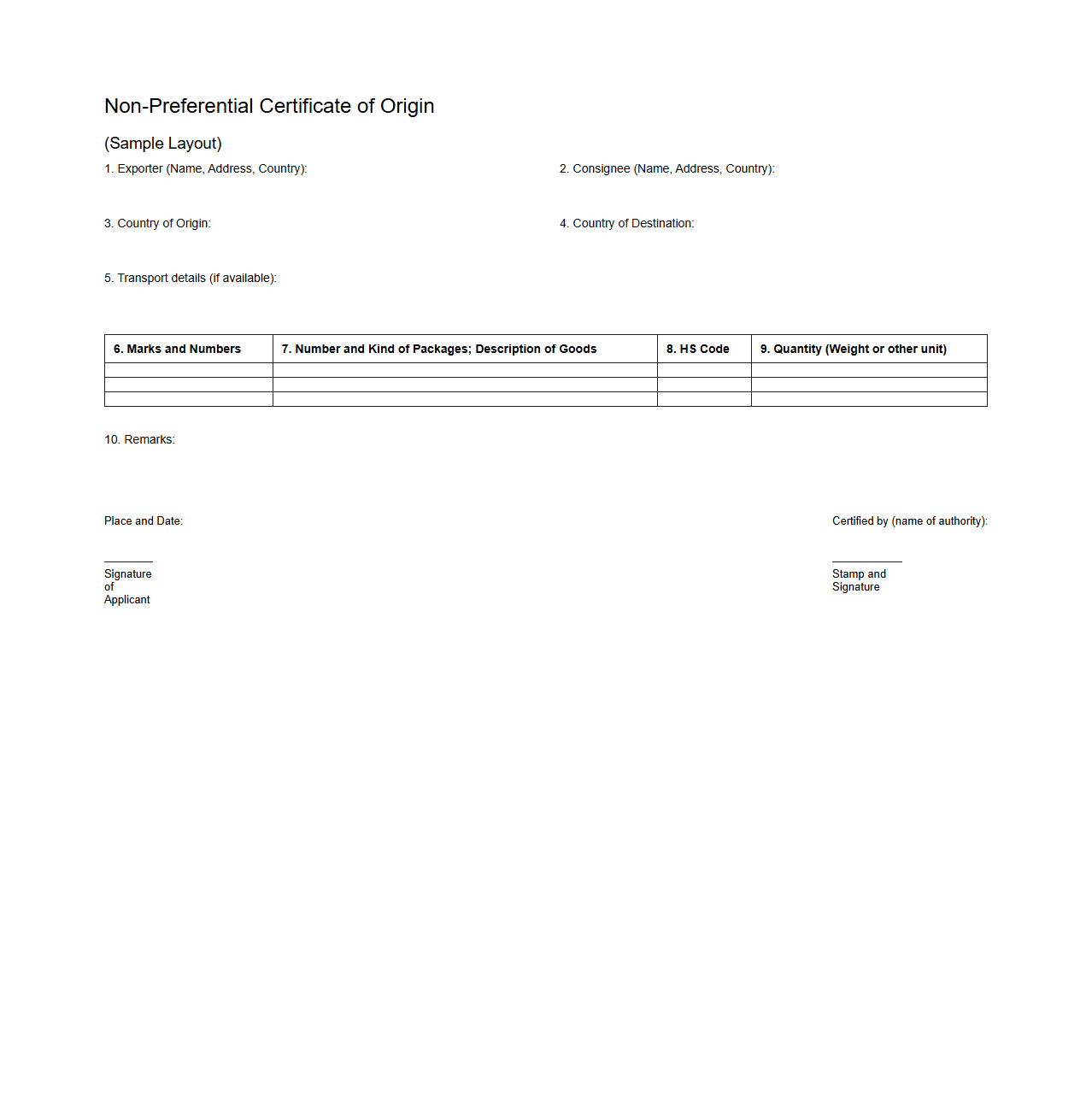
Non-Preferential Certificate of Origin is a crucial trade document that certifies the country where the goods were manufactured or produced without granting preferential tariff treatment. Its layout typically includes detailed exporter and importer information, a description of the goods, and the country of origin, ensuring compliance with customs regulations. This document supports international trade by verifying product origin, facilitating customs clearance, and validating commercial transactions.
Certificate of Origin with Manufacturer’s Declaration Section
A
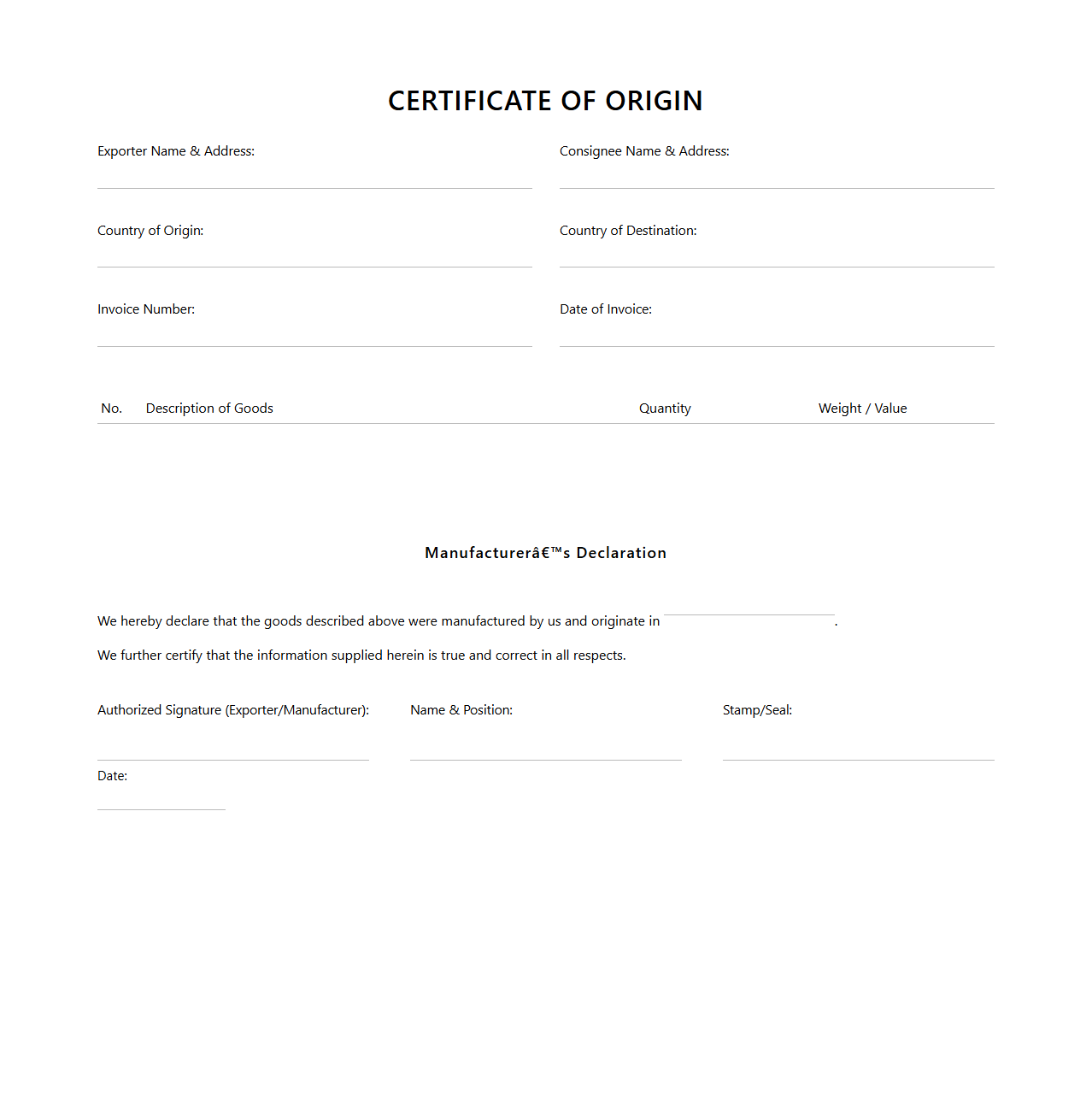
Certificate of Origin with Manufacturer's Declaration Section is an official document that certifies the country where the goods were produced and includes a declaration from the manufacturer confirming the authenticity and origin of the products. This document is crucial for customs clearance, trade compliance, and ensuring eligibility for preferential tariffs under trade agreements. It facilitates transparent international trade by verifying the product's origin and manufacturer's details for importers, exporters, and regulatory authorities.
Simple Certificate of Origin Sample for Small Businesses
The
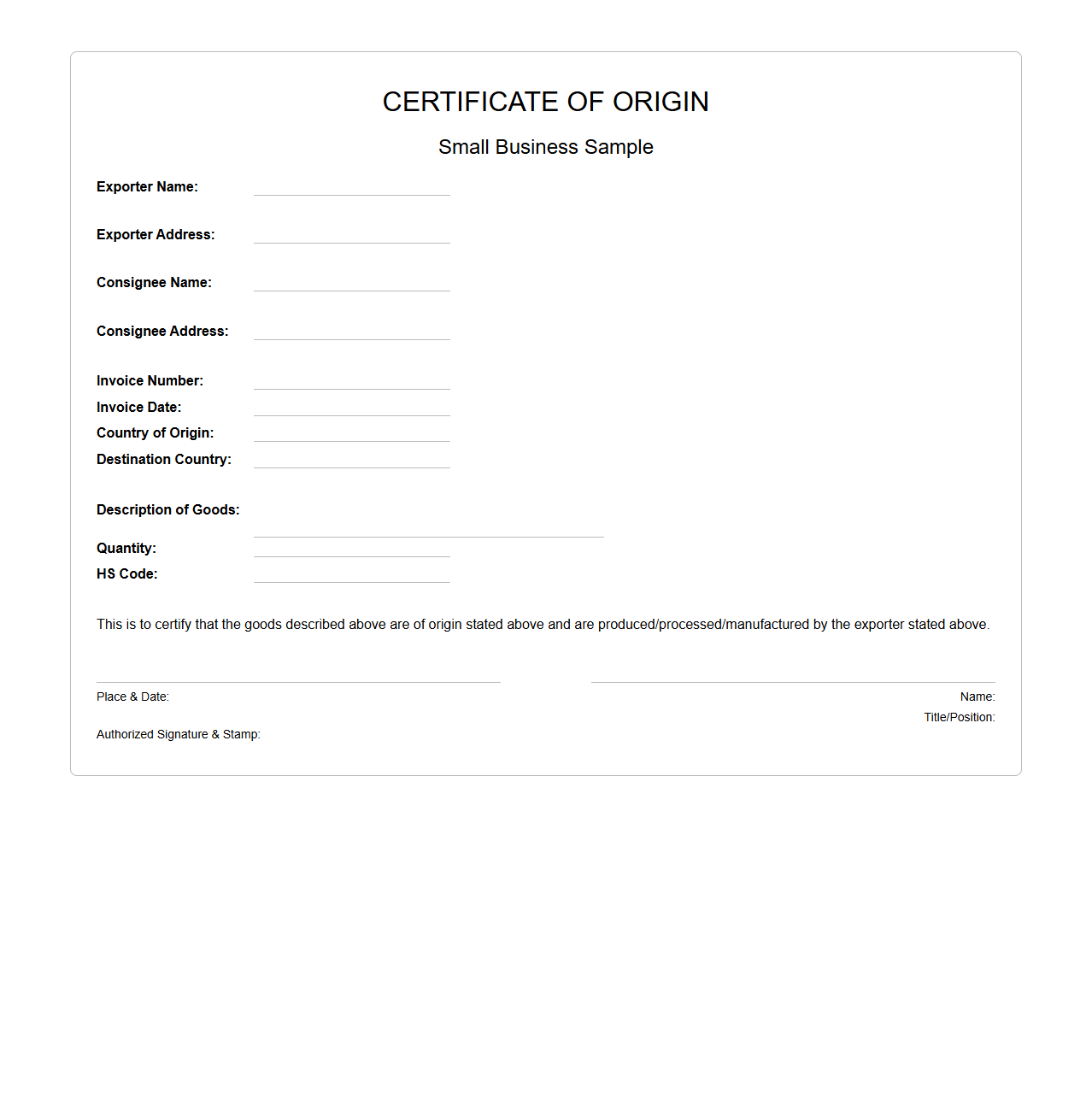
Simple Certificate of Origin Sample for Small Businesses is an essential document used to certify the country where the goods were manufactured or produced. It helps small enterprises comply with international trade regulations and facilitates smooth customs clearance by verifying the origin of products. This certificate is often required by importers, exporters, and customs authorities to ensure proper tariff application and trade agreement benefits.
Certificate of Origin for Multiple Goods Description
A
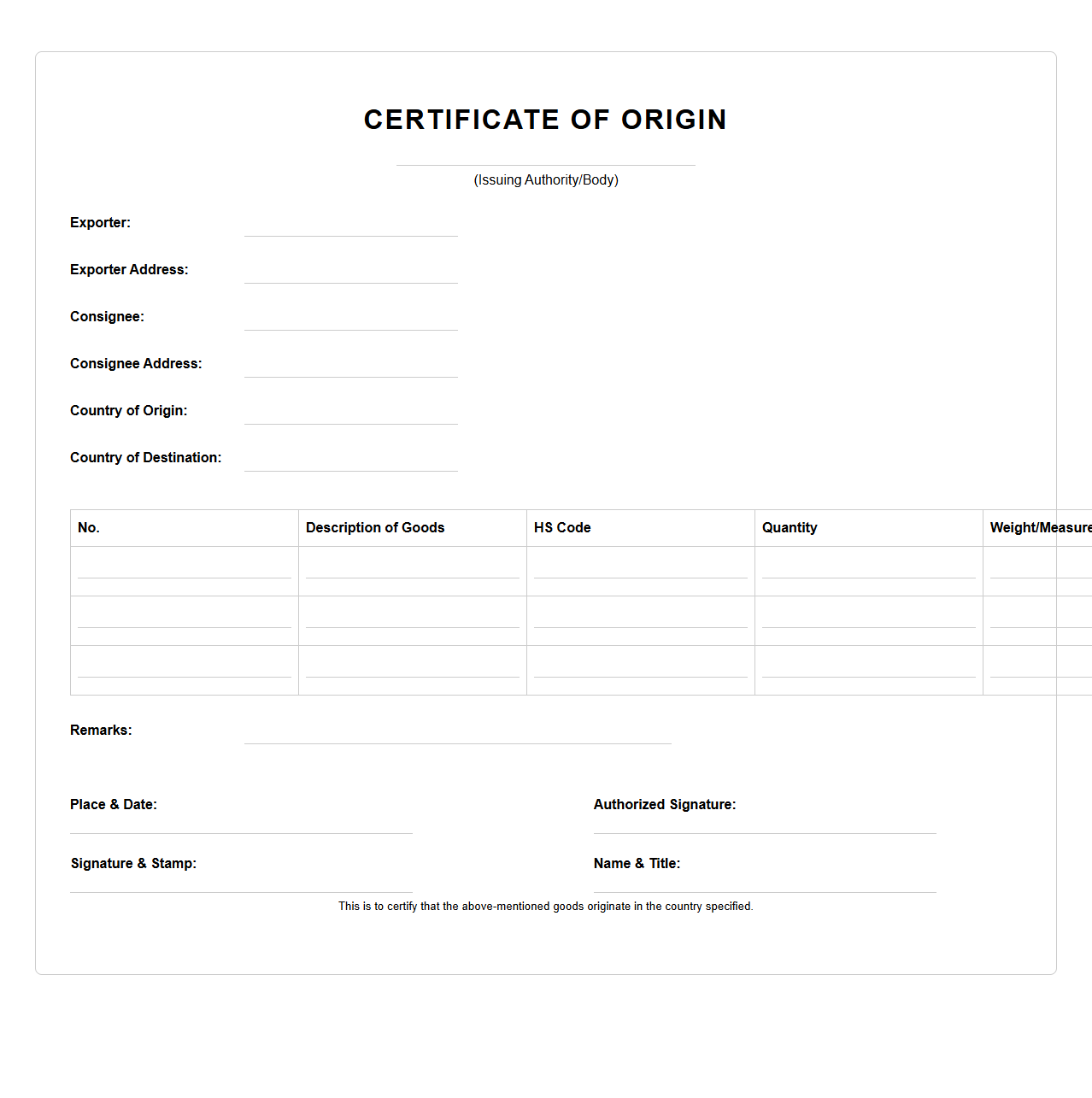
Certificate of Origin for Multiple Goods Description is an official document that certifies the country where multiple products or goods were manufactured or produced. It serves as a crucial legal requirement in international trade, helping customs authorities verify the origin of the goods to determine applicable tariffs and trade policies. This document enhances transparency in global commerce by detailing the origin of each item listed, ensuring compliance with trade agreements and regulations.
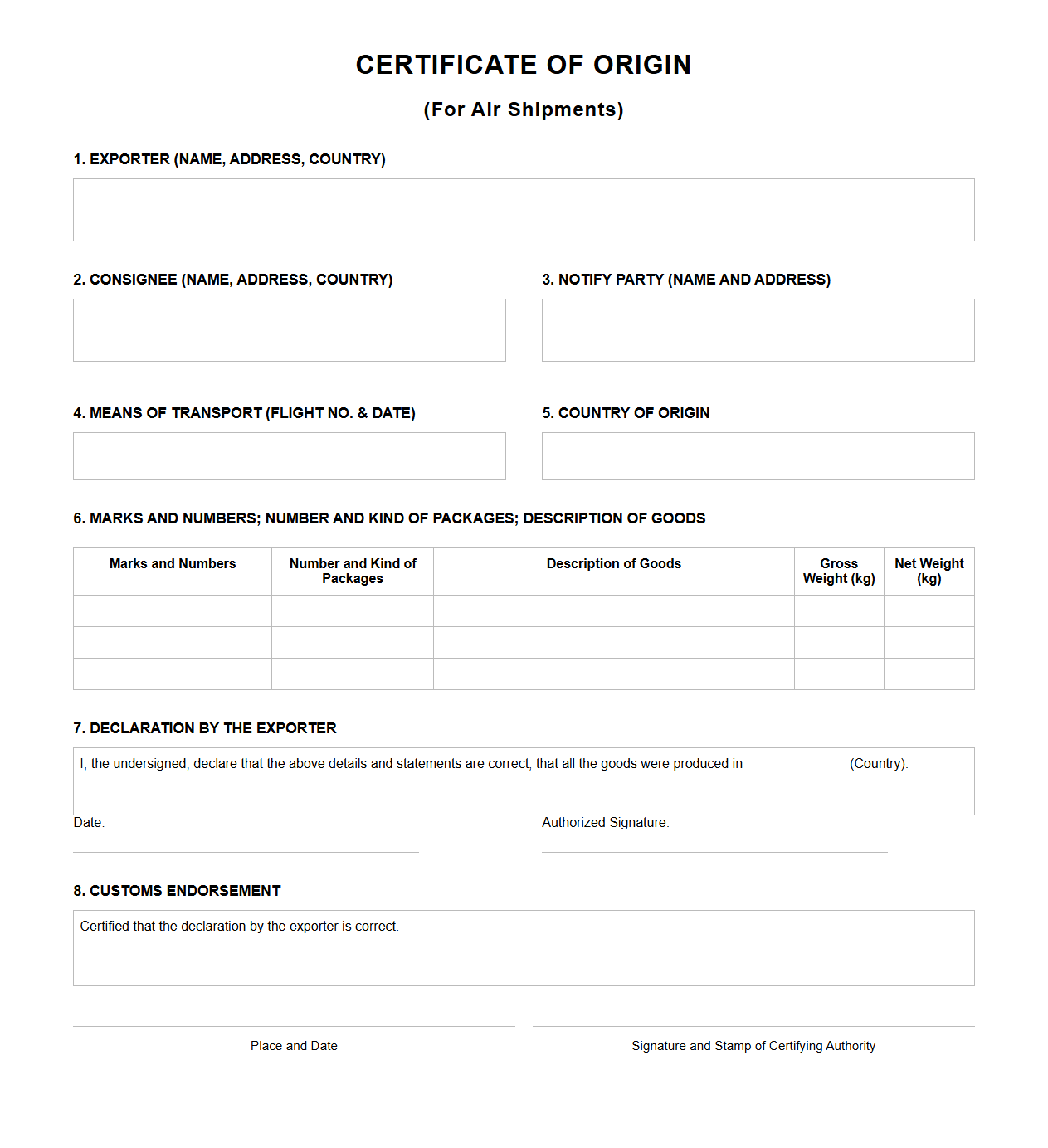
Customs Endorsed Certificate of Origin for Air Shipments
A
Customs Endorsed Certificate of Origin for Air Shipments is an official document that certifies the country where the goods were manufactured or produced, specifically for air freight transportation. It facilitates customs clearance by verifying the origin of goods, ensuring compliance with trade agreements and import regulations. This document is crucial for determining applicable tariffs and preventing delays at air cargo checkpoints.
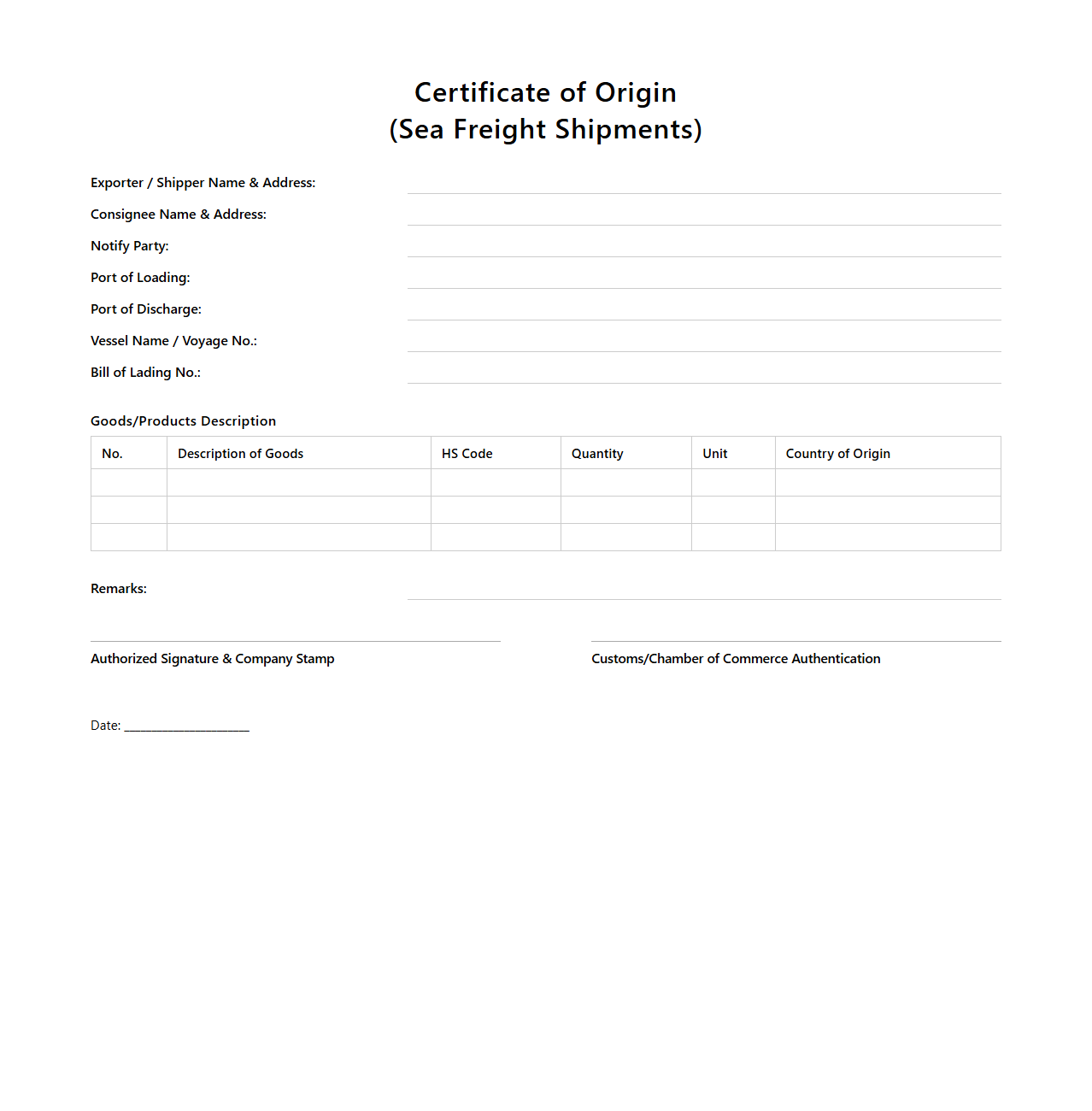
Certificate of Origin Format for Sea Freight Shipments
The
Certificate of Origin format for sea freight shipments is a standardized document that certifies the country where the goods were manufactured or produced. This document is essential for customs clearance, trade compliance, and determining applicable tariffs or trade agreements. It typically includes details such as the exporter's and importer's information, description of the goods, and the certifying authority's signature.
What essential information must be included in a Certificate of Origin for customs clearance?
A Certificate of Origin must include the exporter's and importer's details to identify the parties involved in the transaction. It should clearly state the description of the goods including quantity, weight, and specifications. Additionally, the document must specify the country of origin to validate eligibility for tariffs and trade agreements.
Which authorities or organizations are authorized to issue a valid Certificate of Origin?
Chambers of Commerce are the primary authorities authorized to issue a valid Certificate of Origin in most countries. In some cases, government trade departments or customs authorities may also provide certification services. It is critical the issuing body is recognized by the importing country's customs to ensure acceptance.
How does a Certificate of Origin sample demonstrate compliance with trade agreements?
A Certificate of Origin sample shows compliance by clearly indicating that the goods meet the rules of origin established under specific trade agreements. It highlights the preferential tariff treatment applicable to the shipment if conditions are met. Inclusion of precise origin details helps customs verify shipment eligibility for reduced duties or exemptions.
What sections or fields must be present in a Certificate of Origin document for it to be accepted by customs?
The document must contain key sections such as exporter and consignee information, the description of goods, and their quantity and weight. An explicit declaration of the country of origin and the signature and stamp of the authorized issuer are mandatory. Without these fields, customs will likely reject the certificate, delaying clearance.
What supporting documents are typically required alongside a Certificate of Origin for effective customs processing?
Supporting documents often include the commercial invoice, which details the transaction and value of goods. A packing list helps customs inspect and verify the shipment's contents. Additionally, a bill of lading or airway bill confirms the transport details necessary for clearance procedures.