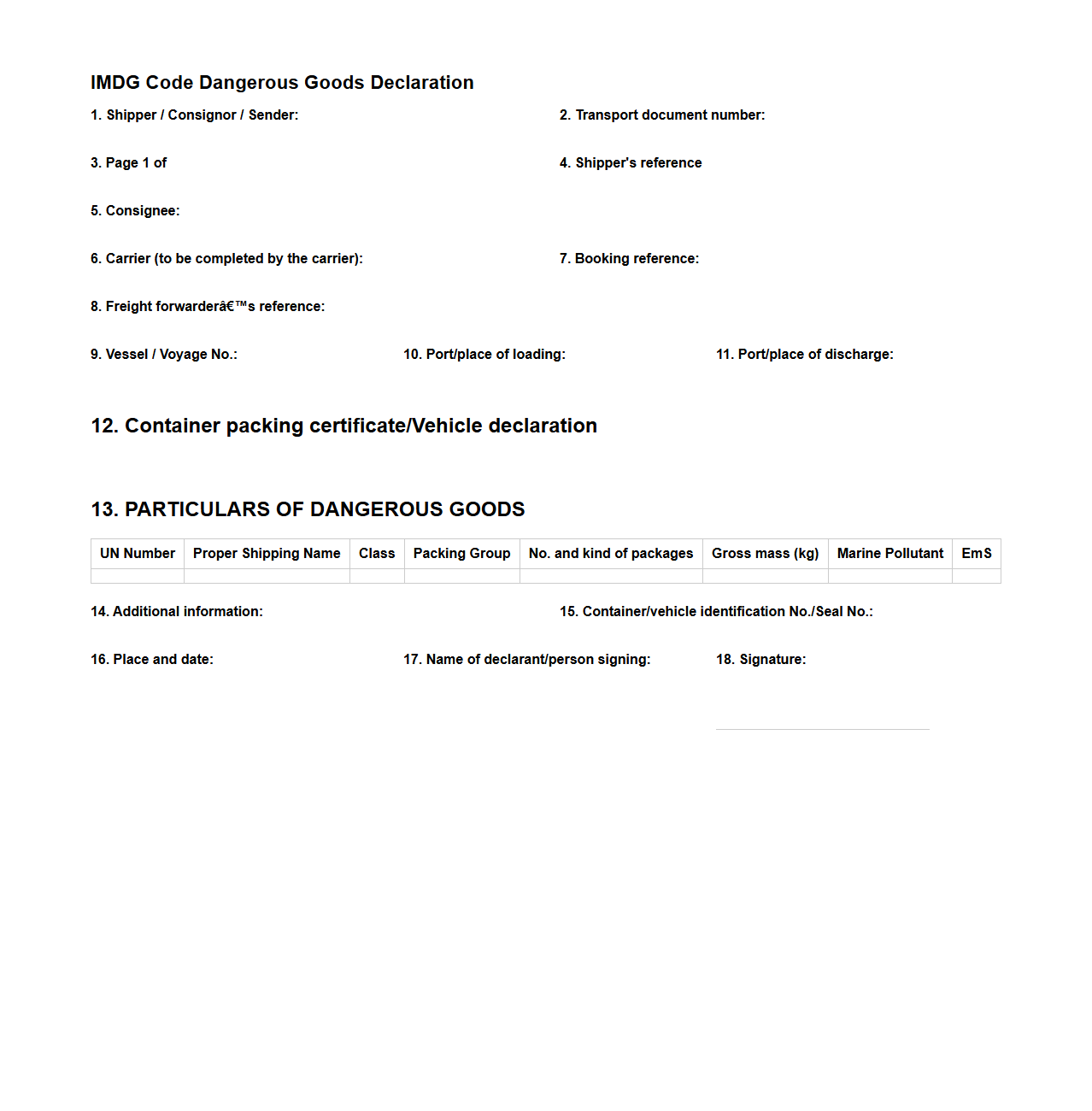
IMDG Code Dangerous Goods Declaration Template
The IMDG Code Dangerous Goods Declaration Template document is a crucial tool for shipping hazardous materials by sea, ensuring compliance with the International Maritime Dangerous Goods (IMDG) Code regulations. This template standardizes the declaration process, detailing essential information such as the UN number, proper shipping name, hazard class, packing group, and emergency contact details. Using a
properly completed Dangerous Goods Declaration enhances safety, facilitates communication between shippers and carriers, and helps prevent accidents during maritime transport.
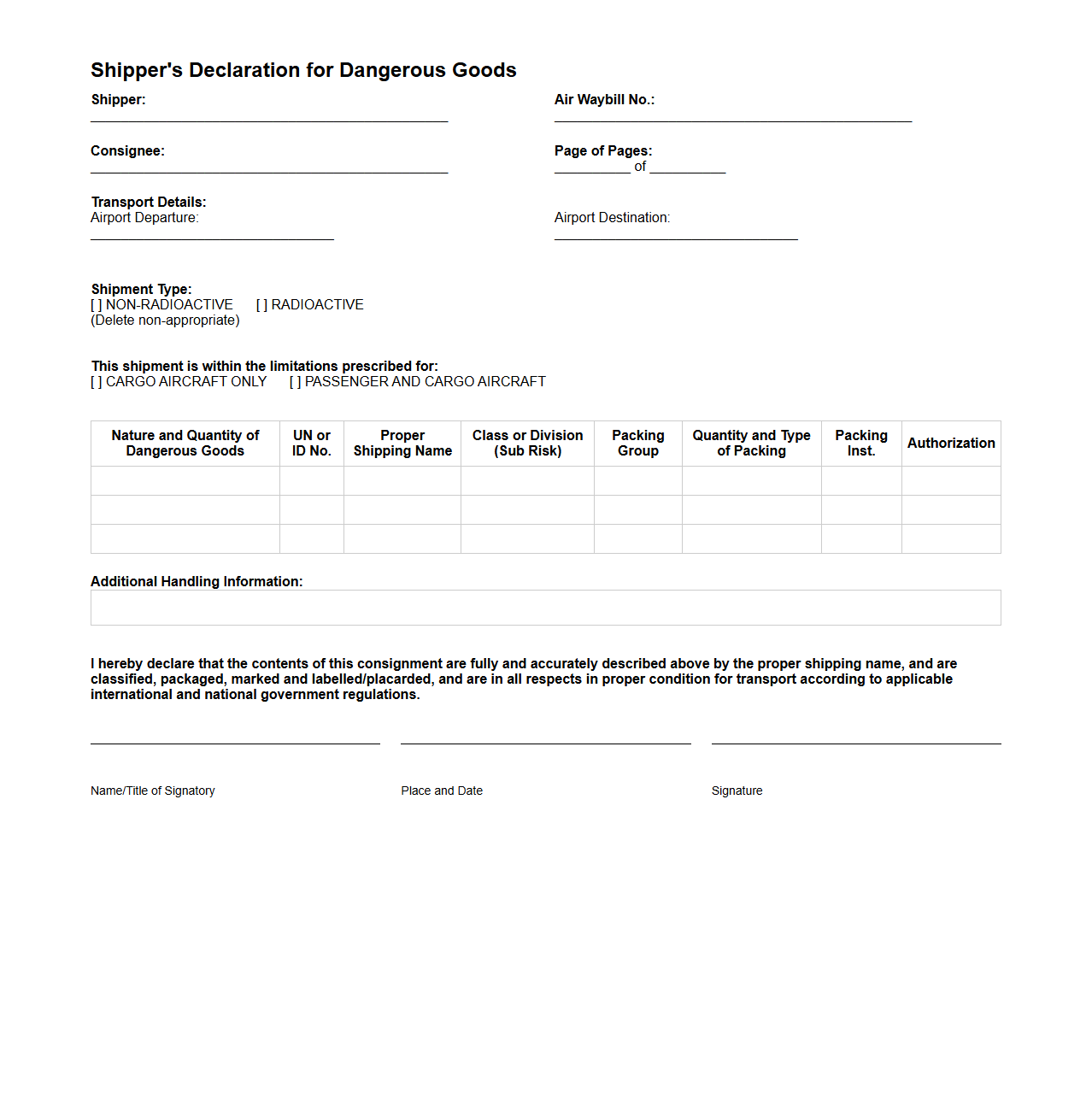
Shipper’s Declaration for Air Transport of Dangerous Goods
The
Shipper's Declaration for Air Transport of Dangerous Goods is a vital document required by the International Air Transport Association (IATA) to ensure the safe and compliant shipment of hazardous materials by air. It provides detailed information about the nature, quantity, and packaging of dangerous goods, confirming that the shipment meets all regulatory requirements and safety standards. This declaration helps airlines and regulatory authorities assess risks and handle the cargo appropriately during transit.
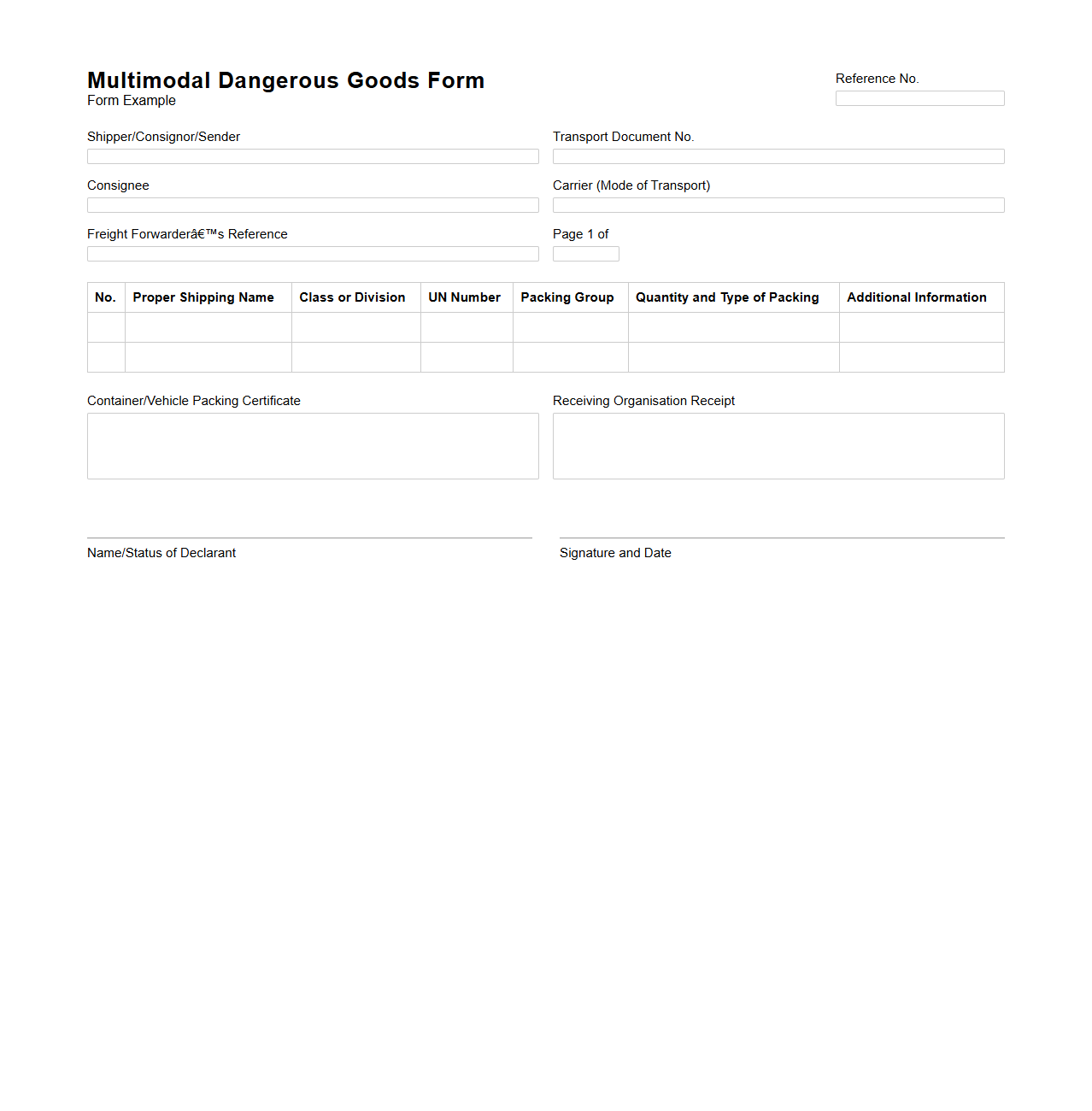
Multimodal Dangerous Goods Form Example
The
Multimodal Dangerous Goods Form Example document provides a standardized template that facilitates the declaration and safe transport of hazardous materials across multiple transportation modes. It includes critical information such as UN numbers, proper shipping names, packing groups, and emergency response instructions, ensuring compliance with international regulations like IMDG, ADR, and IATA. This form enhances safety by clearly communicating the specific hazards and handling requirements to all carriers involved in the shipment process.
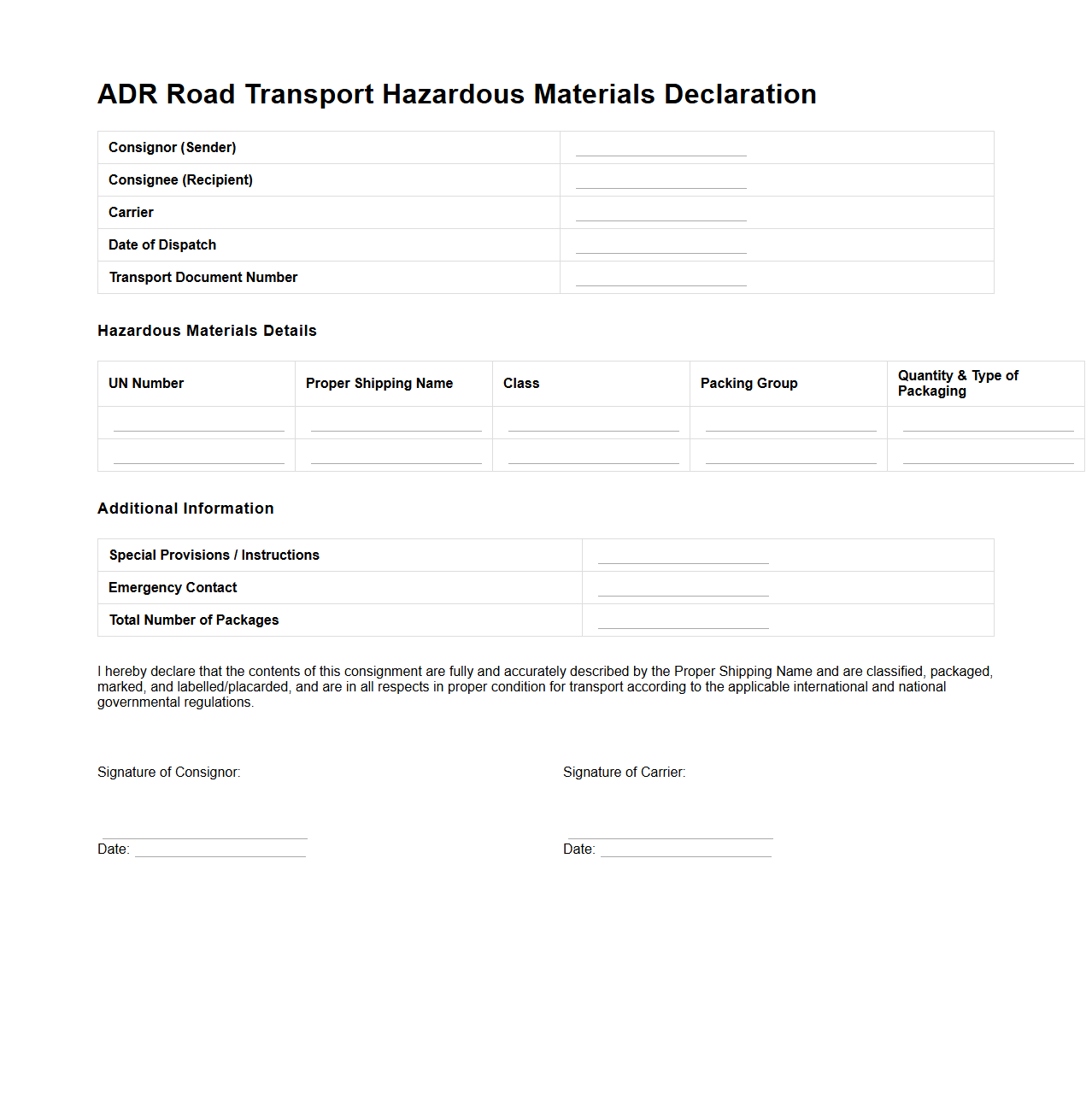
ADR Road Transport Hazardous Materials Declaration
The
ADR Road Transport Hazardous Materials Declaration document is a critical compliance form used in the European Agreement concerning the International Carriage of Dangerous Goods by Road (ADR). It ensures that all hazardous materials being transported by road are accurately identified, classified, and packaged according to strict safety standards to prevent accidents and environmental damage. This declaration provides essential information such as the UN number, proper shipping name, hazard class, packing group, and emergency response instructions, enabling safe handling and efficient emergency response.
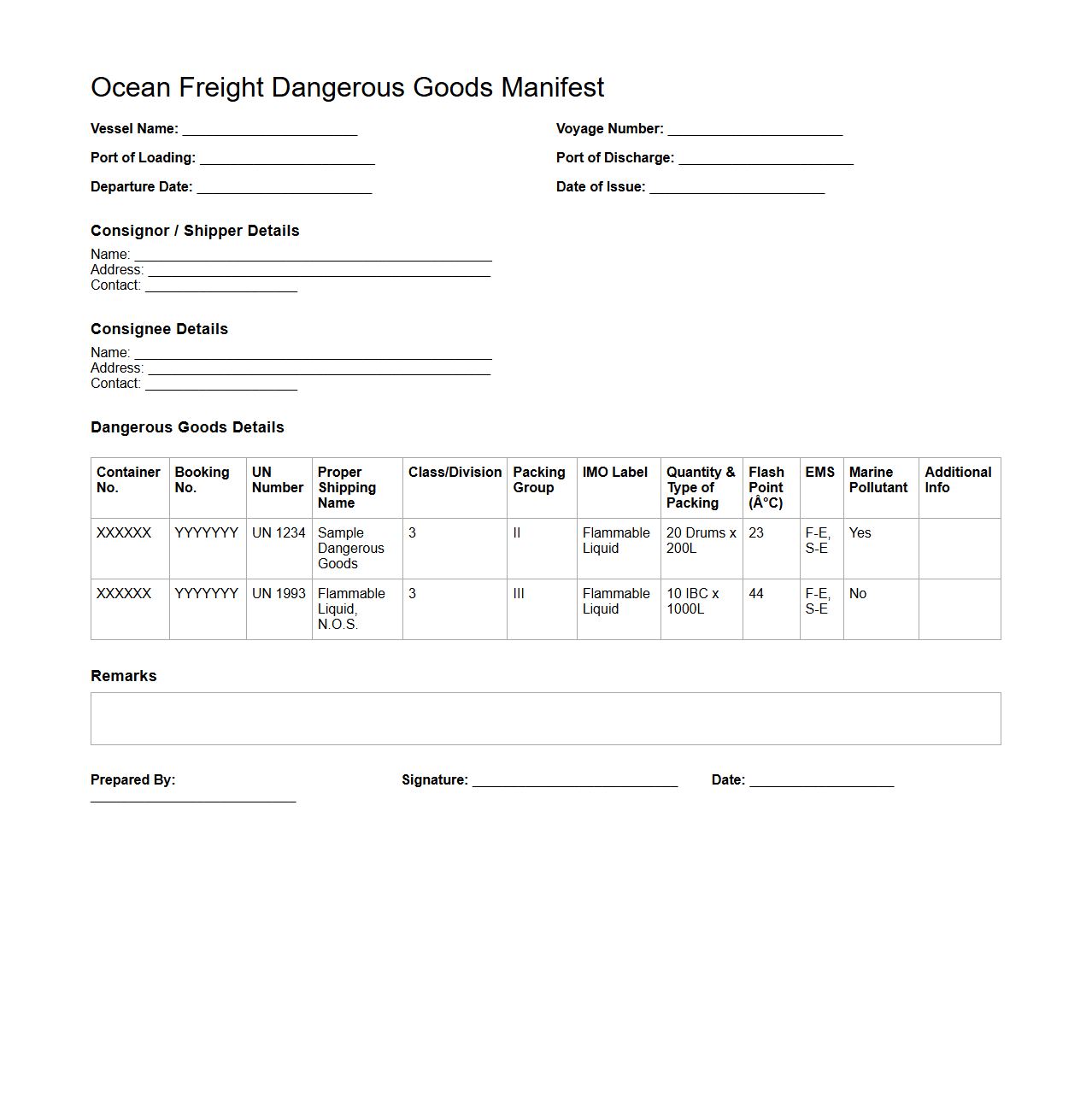
Ocean Freight Dangerous Goods Manifest Sample
The Ocean Freight Dangerous Goods Manifest Sample document is a crucial record that lists hazardous materials transported via sea freight, detailing their classification, quantity, and packaging. This document ensures compliance with international maritime safety regulations such as the IMDG Code and facilitates safe handling during transit and customs clearance. Maintaining an accurate
Dangerous Goods Manifest helps prevent accidents and environmental hazards by providing essential information to carriers, port authorities, and emergency responders.
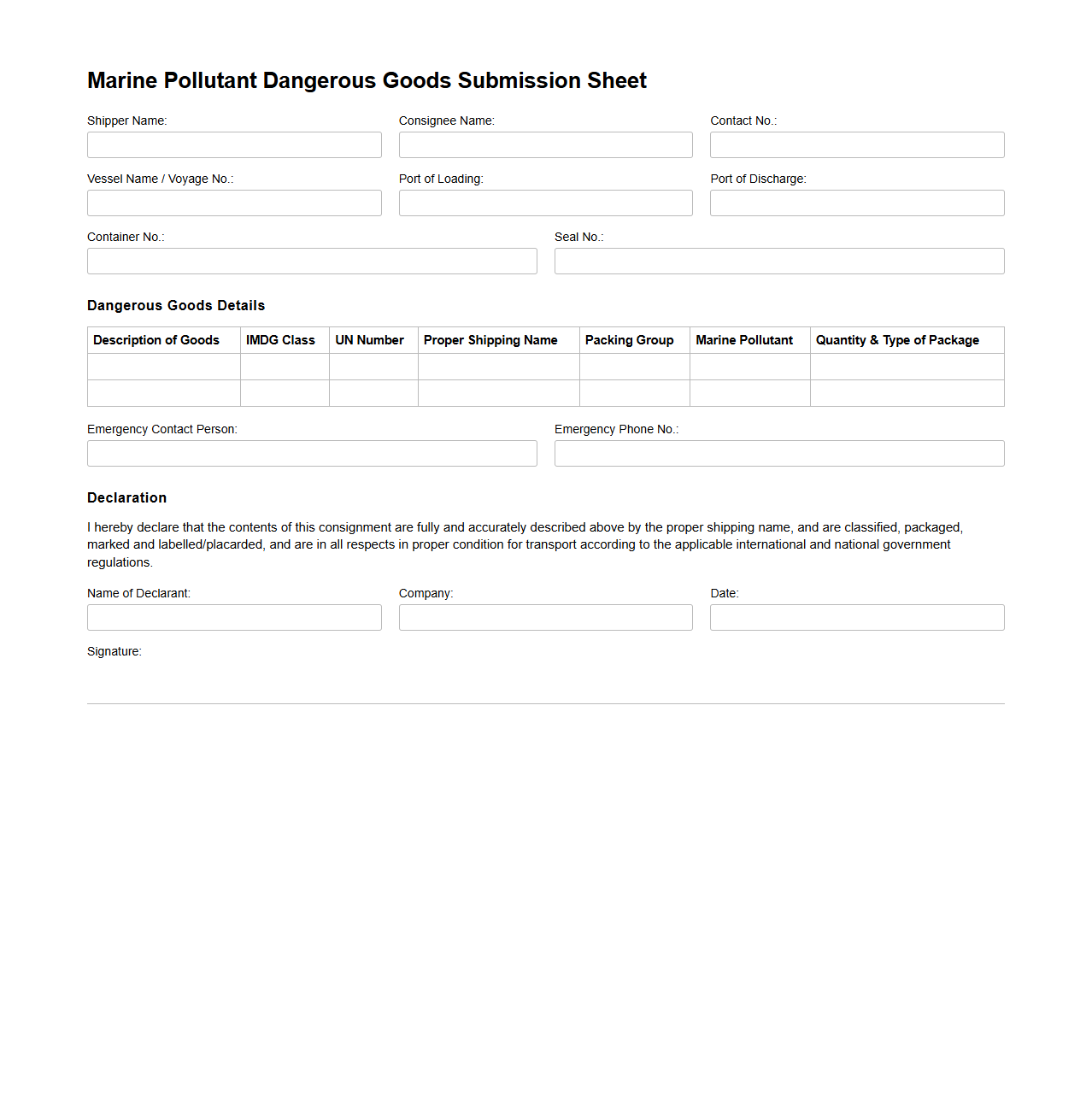
Marine Pollutant Dangerous Goods Submission Sheet
The Marine Pollutant Dangerous Goods Submission Sheet is a critical document used in the shipping and transportation industry to declare substances classified as marine pollutants under international regulations. It ensures compliance with the International Maritime Dangerous Goods (IMDG) Code by providing detailed information on the hazardous properties, handling instructions, and environmental risks of the cargo. This document plays a vital role in safeguarding marine environments from toxic chemical spills during transit.
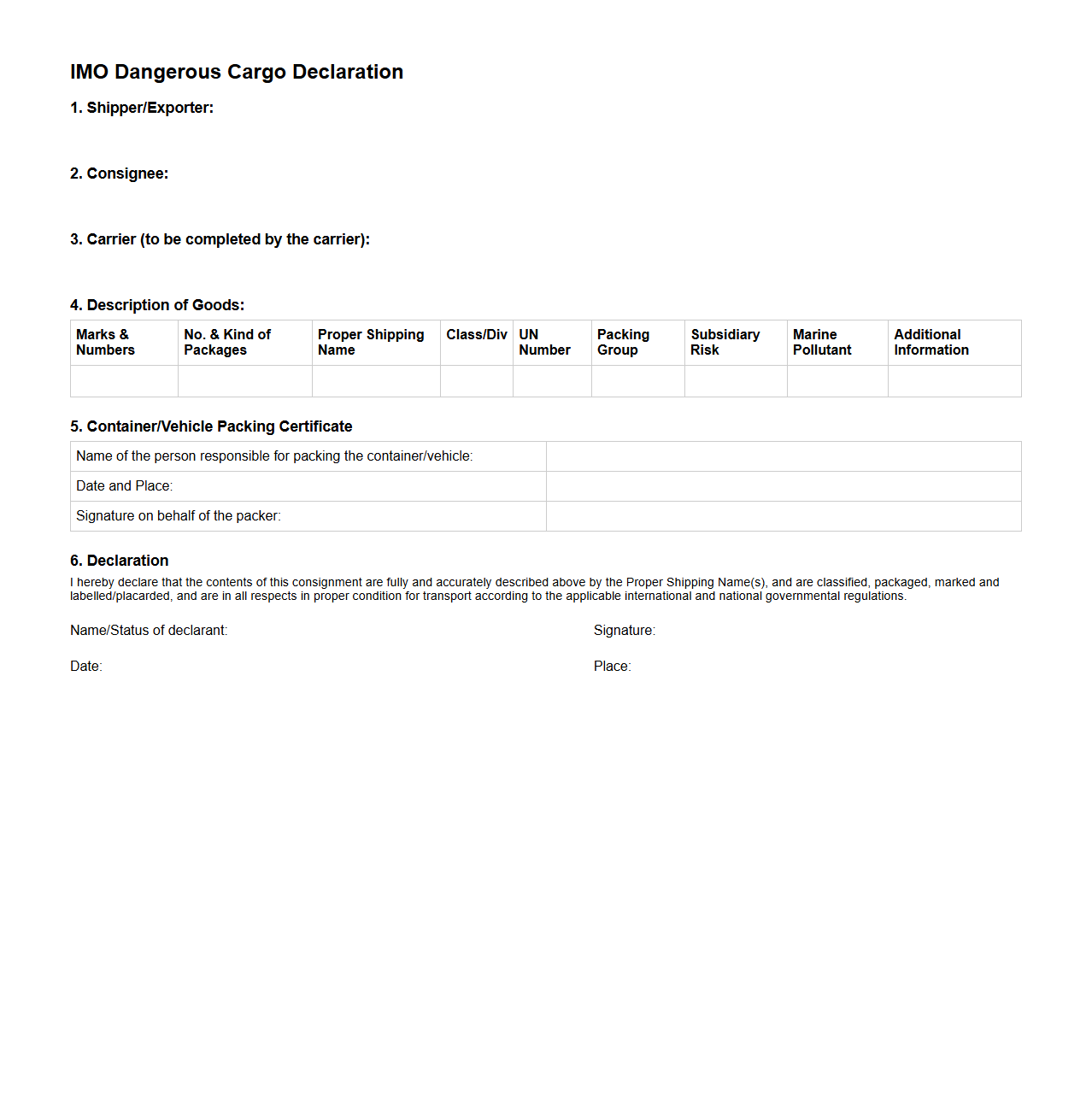
IMO Dangerous Cargo Declaration Format
The
IMO Dangerous Cargo Declaration Format document is a standardized form used to accurately specify the nature, quantity, and classification of hazardous materials being transported by sea. It ensures compliance with the International Maritime Organization's regulations for the safe handling and shipping of dangerous goods, reducing risks during transit. Proper completion of this document is critical for preventing accidents and facilitating emergency response if incidents occur.
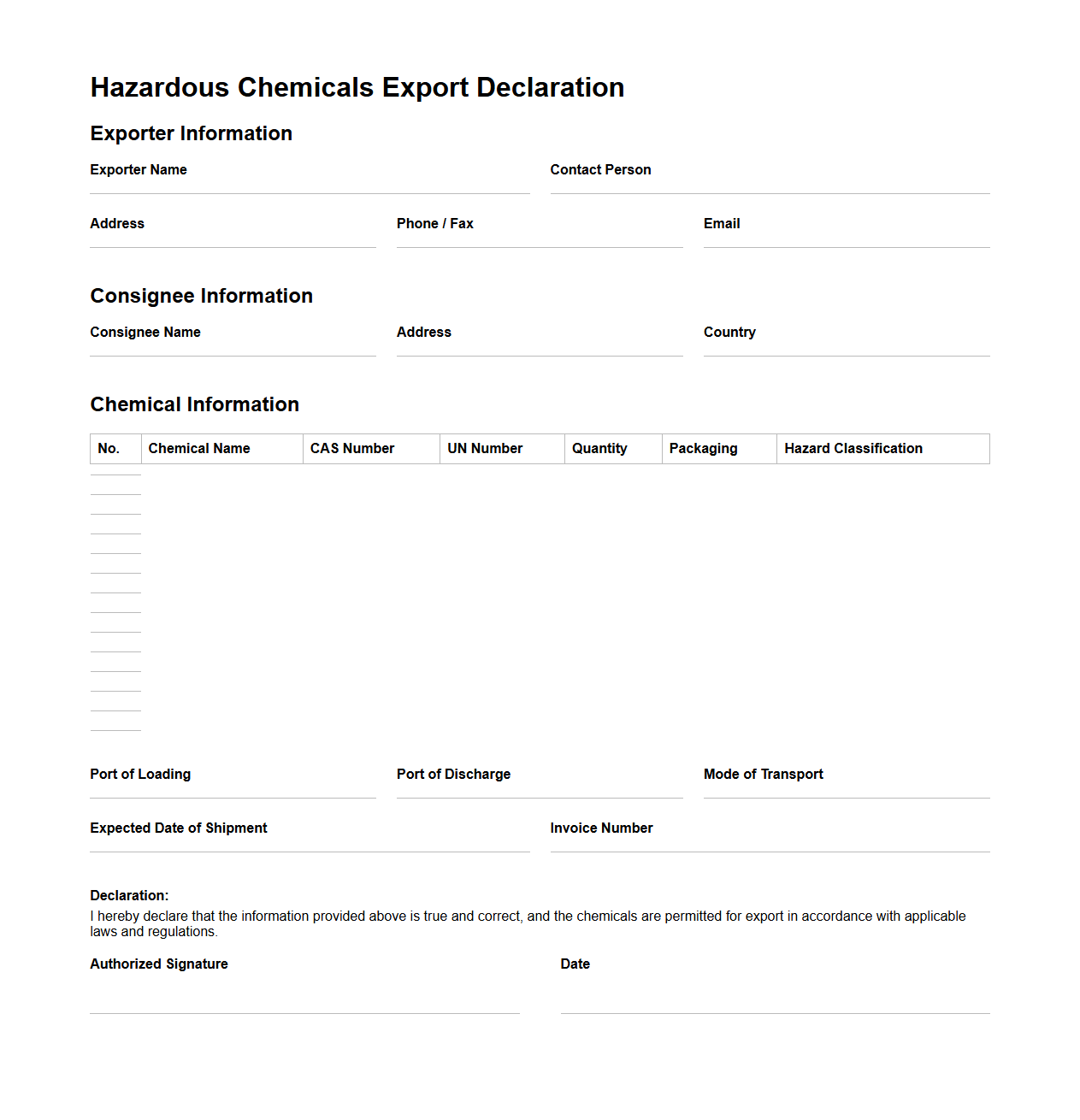
Hazardous Chemicals Export Declaration Sample
A
Hazardous Chemicals Export Declaration Sample document provides a standardized template to declare the nature, quantity, and safety measures of hazardous chemicals being exported. It ensures compliance with international regulations like the Globally Harmonized System (GHS) and helps customs authorities assess risks accurately. The document typically includes chemical identification, packaging details, and emergency contact information for safe handling during transit.
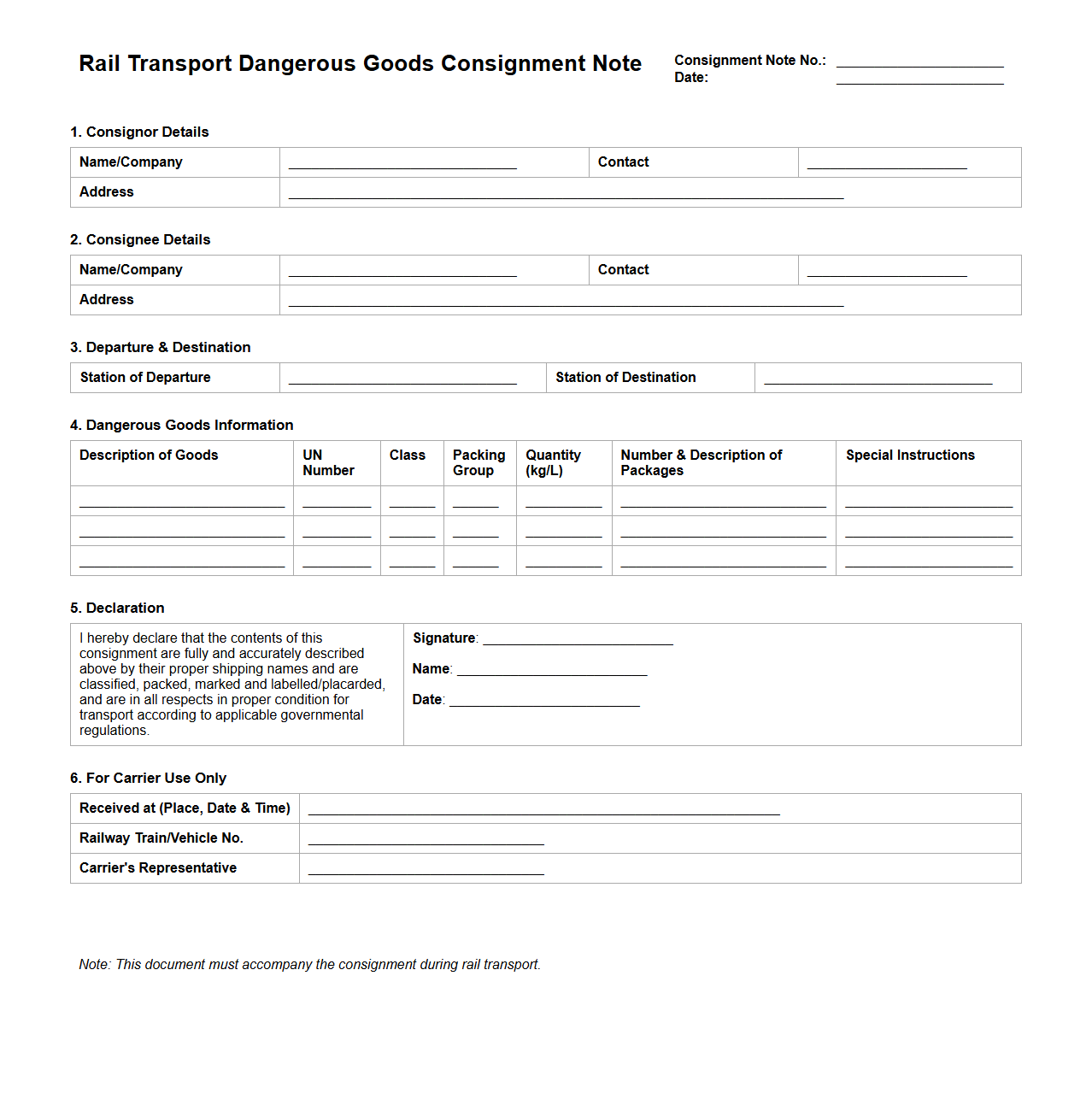
Rail Transport Dangerous Goods Consignment Note
The
Rail Transport Dangerous Goods Consignment Note document is a critical safety and regulatory paper used during the shipment of hazardous materials by rail. It provides detailed information about the dangerous goods, including their classification, quantity, packaging, and emergency contact details, ensuring compliance with international transport regulations. This document facilitates the safe handling, loading, and unloading of dangerous substances, minimizing risks to personnel, the public, and the environment.
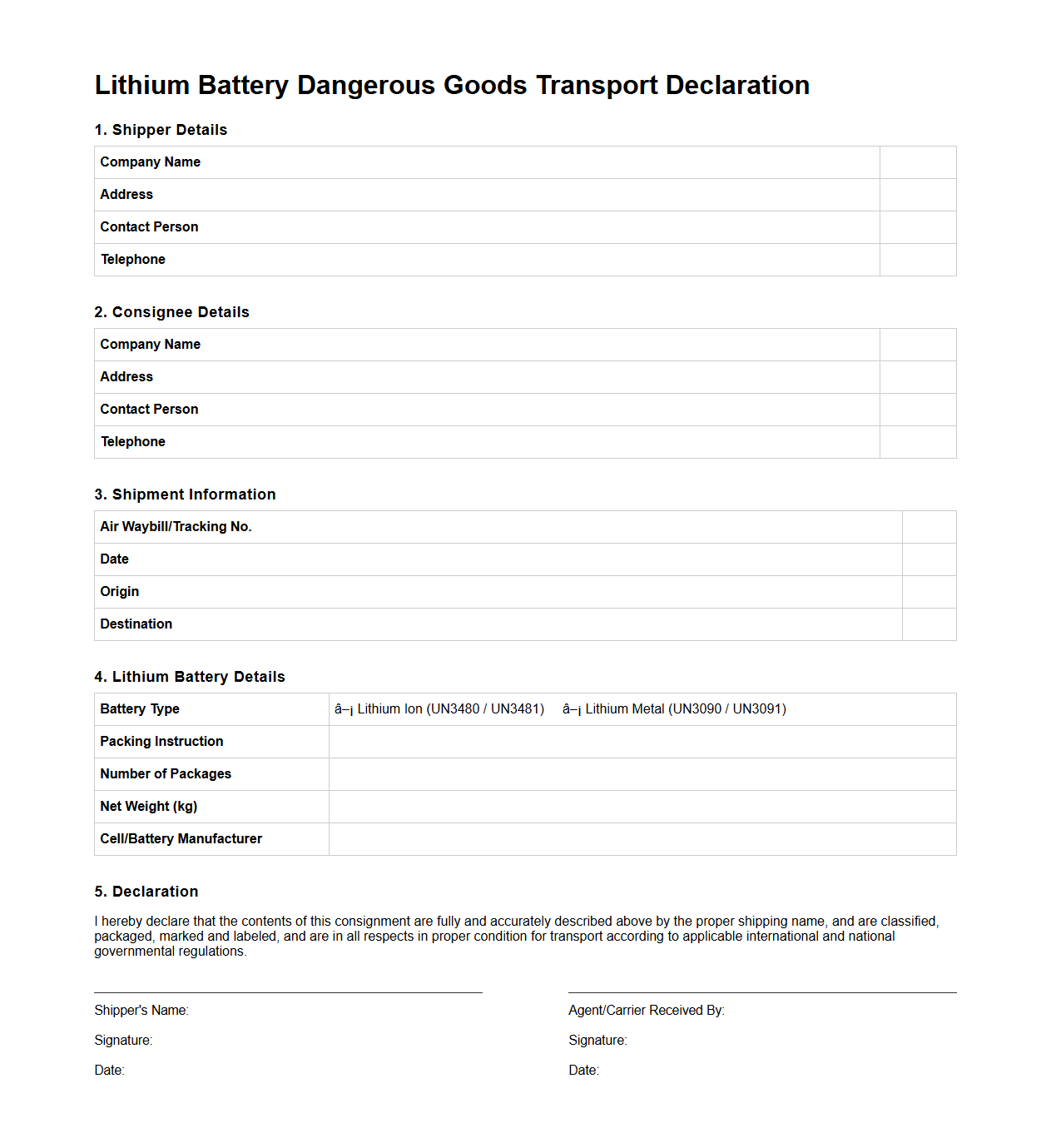
Lithium Battery Dangerous Goods Transport Declaration
The
Lithium Battery Dangerous Goods Transport Declaration document is a mandatory paper that details the safe handling, packaging, and shipping of lithium batteries classified as hazardous materials. It ensures compliance with international regulations such as IATA, IMDG, and DOT, minimizing risks during transportation by specifying proper labeling, quantity limits, and emergency response information. Carriers and authorities rely on this declaration to prevent incidents like fires or explosions linked to lithium battery transport.
What essential information must be included in a Dangerous Goods Declaration Document sample?
A Dangerous Goods Declaration Document must include detailed information about the nature of the hazardous material. This includes the proper shipping name, class or division number, and packing group. Additionally, the document should specify the quantity, packaging type, and emergency contact details.
How does the document demonstrate compliance with international hazardous materials regulations?
The document adheres to international regulations such as the IMDG Code or ADR by explicitly listing required data points like UN numbers and hazard classes. It confirms that the goods are packaged, labeled, and transported in accordance with regulatory standards. Moreover, it serves as official evidence that the shipper has followed all applicable safety and legal protocols.
Which classification codes and UN numbers should appear on a declaration form for hazardous goods?
The declaration form must prominently display the relevant UN numbers that identify the substance uniquely for international transport. It should also include the correct hazard classification codes that correspond to the material's primary and subsidiary risks. This ensures proper handling and emergency response during transit.
What signature or authorization is required to validate a Dangerous Goods Declaration Document?
A valid Dangerous Goods Declaration requires the signature of the shipper or authorized person responsible for the consignment. This signature certifies that all information is accurate and complete to the best of their knowledge. Additionally, dates and company details must accompany the signature for accountability.
How does the sample document ensure accurate and clear communication of hazards during transport?
The sample document uses standardized terminology, labeling, and formatting to convey hazard information clearly and consistently. It includes detailed descriptions alongside pictograms and hazard classes for quick recognition. This clarity is critical for safe handling and emergency response throughout the transportation process.