Data Migration Project Overview Document Sample
A
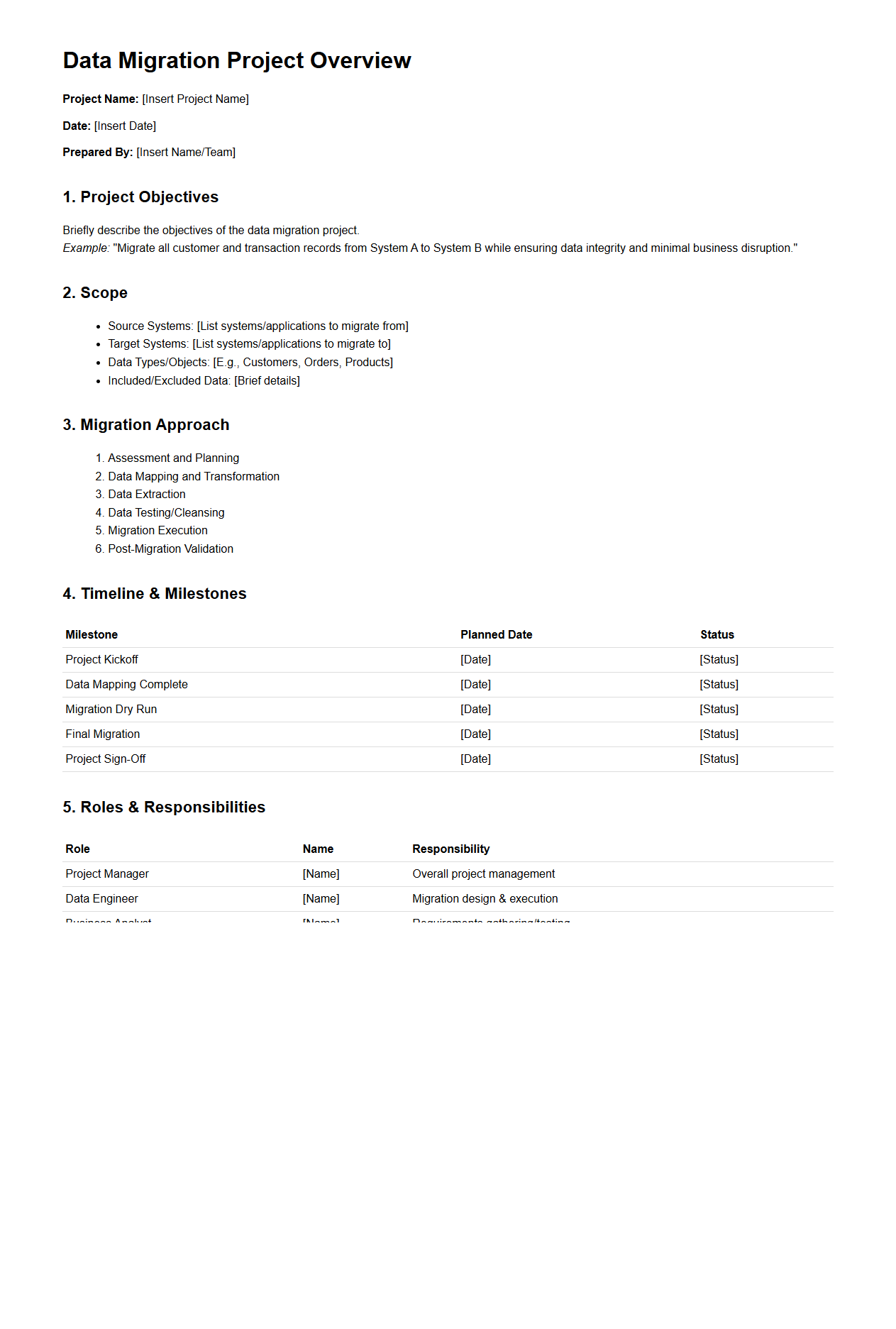
Data Migration Project Overview Document Sample serves as a foundational guide outlining the scope, objectives, timelines, and resources required for transferring data between systems or storage types. It includes detailed information on data mapping, validation processes, risk assessments, and roles/responsibilities to ensure a smooth and secure migration. This document helps stakeholders understand project expectations and supports effective communication throughout the migration lifecycle.
Database Source-to-Target Mapping Document Sample
A
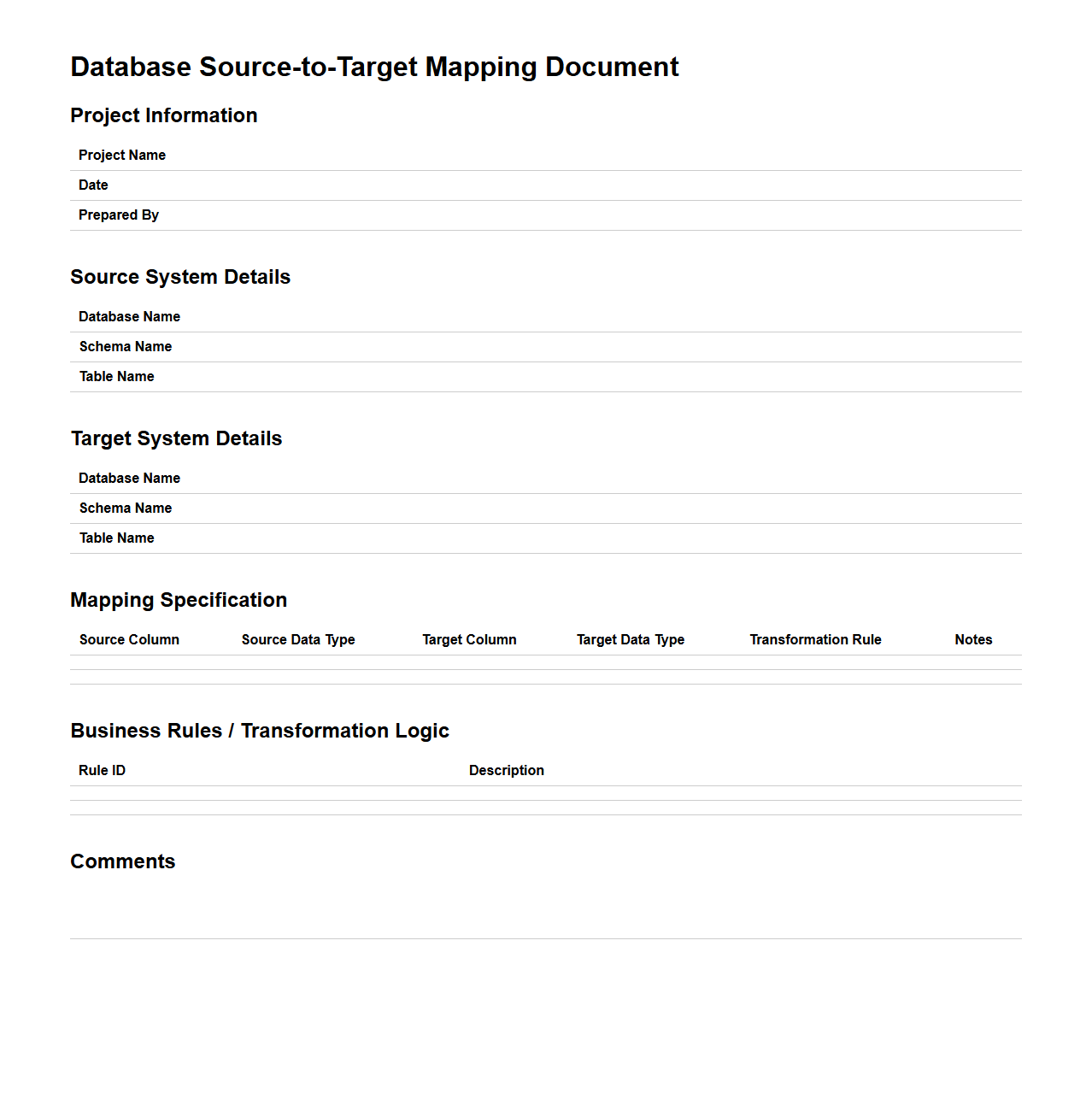
Database Source-to-Target Mapping Document Sample outlines the precise data transformation and movement from source databases to target systems, ensuring accurate data integration and consistency. It captures key elements such as source and target table structures, field-level mappings, data types, transformation rules, and business logic applied during the ETL process. This document serves as a critical reference for developers, testers, and analysts involved in database migration, data warehousing, or system integration projects.
Data Cleansing and Transformation Rules Document Sample
A
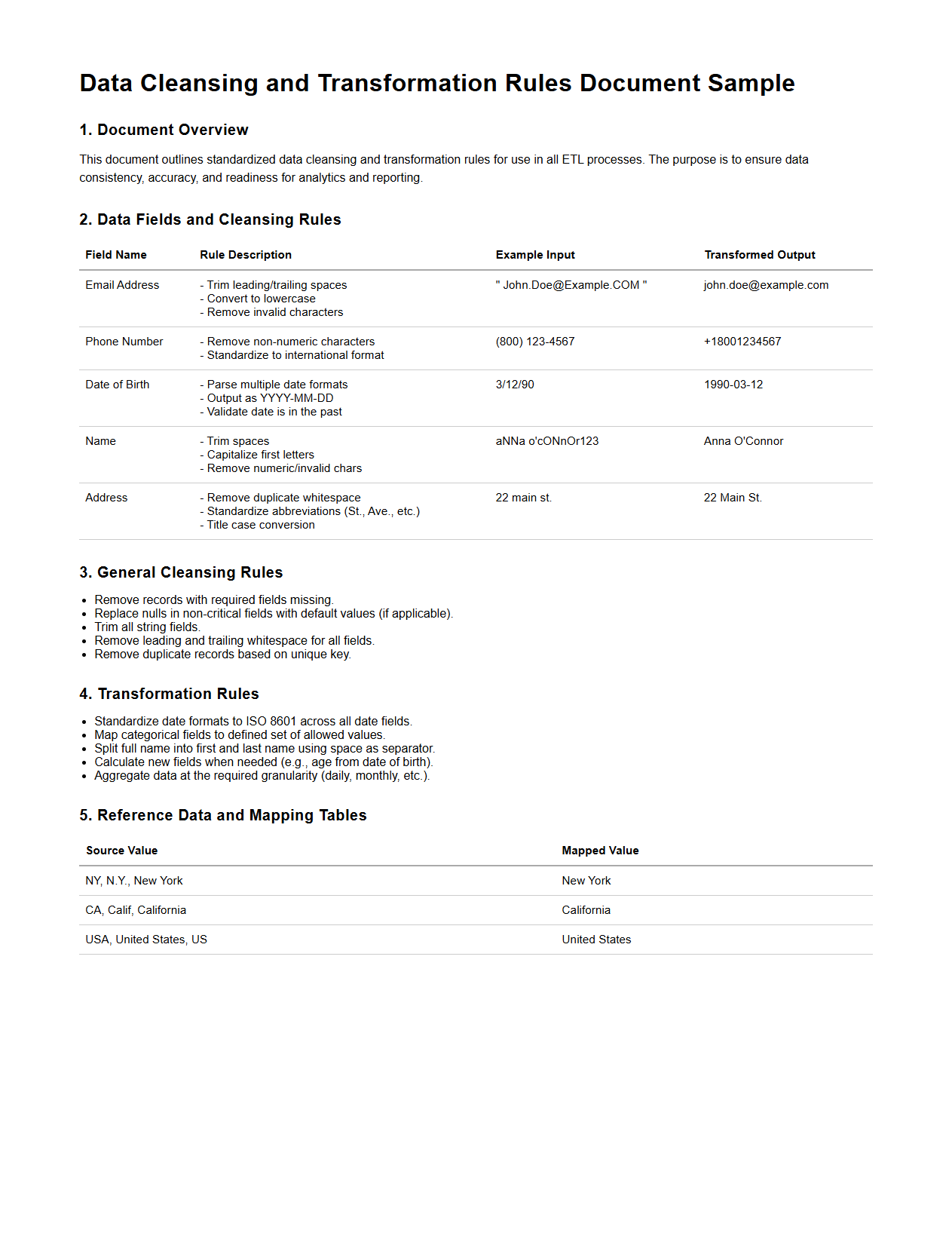
Data Cleansing and Transformation Rules Document sample outlines standardized procedures for identifying, correcting, and converting raw data into a clean, consistent format suitable for analysis. It serves as a guideline for applying specific rules to handle duplicates, missing values, and format inconsistencies, ensuring data quality and integrity. This document is essential for maintaining uniform data processing across systems and enabling reliable decision-making based on accurate information.
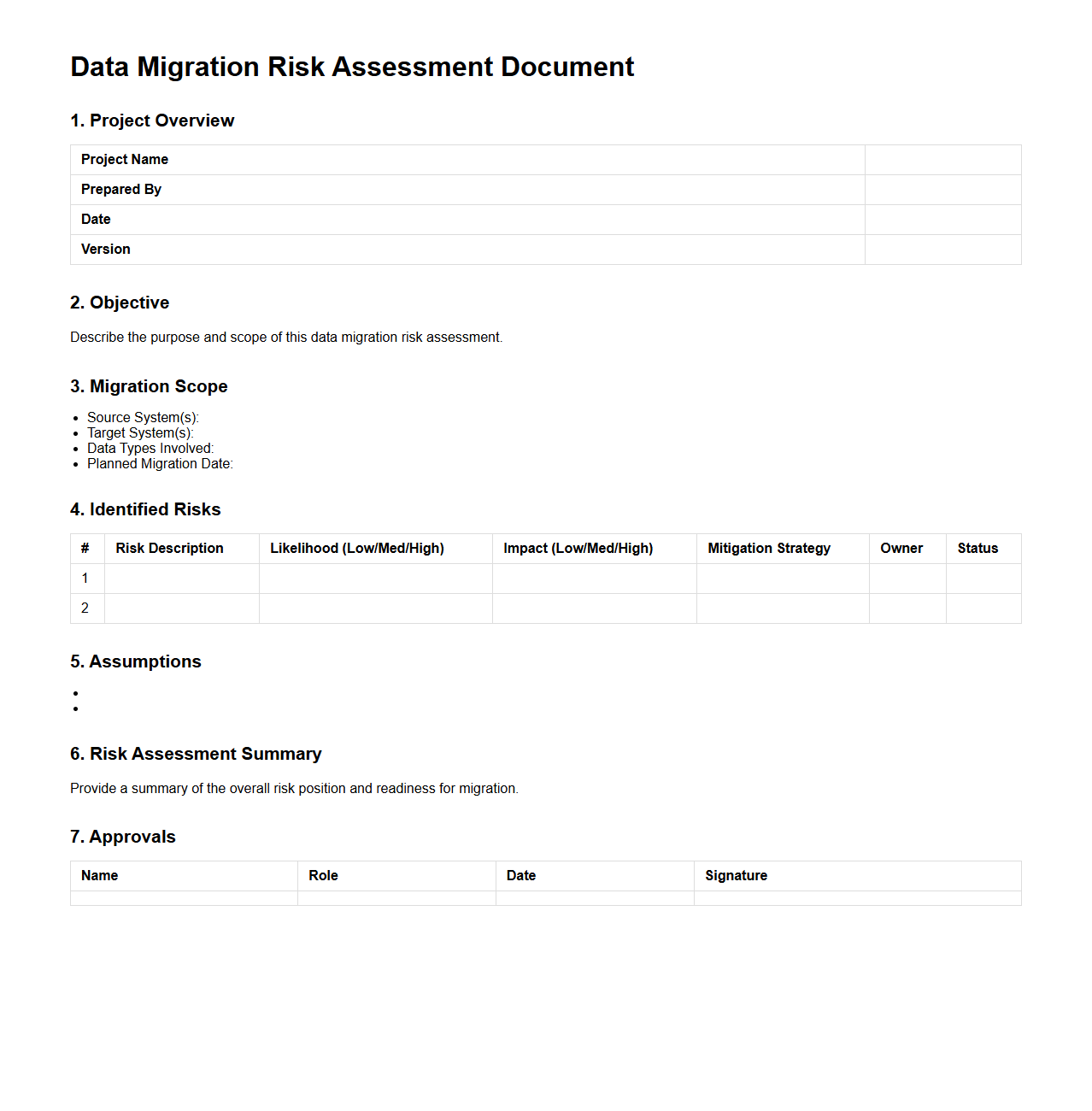
Data Migration Risk Assessment Document Sample
A
Data Migration Risk Assessment Document Sample provides a structured template to identify, analyze, and evaluate potential risks during the transfer of data between systems. It outlines risk categories such as data loss, corruption, or security breaches, and suggests mitigation strategies to ensure a smooth migration process. Organizations use this document to minimize downtime and safeguard data integrity throughout the migration lifecycle.
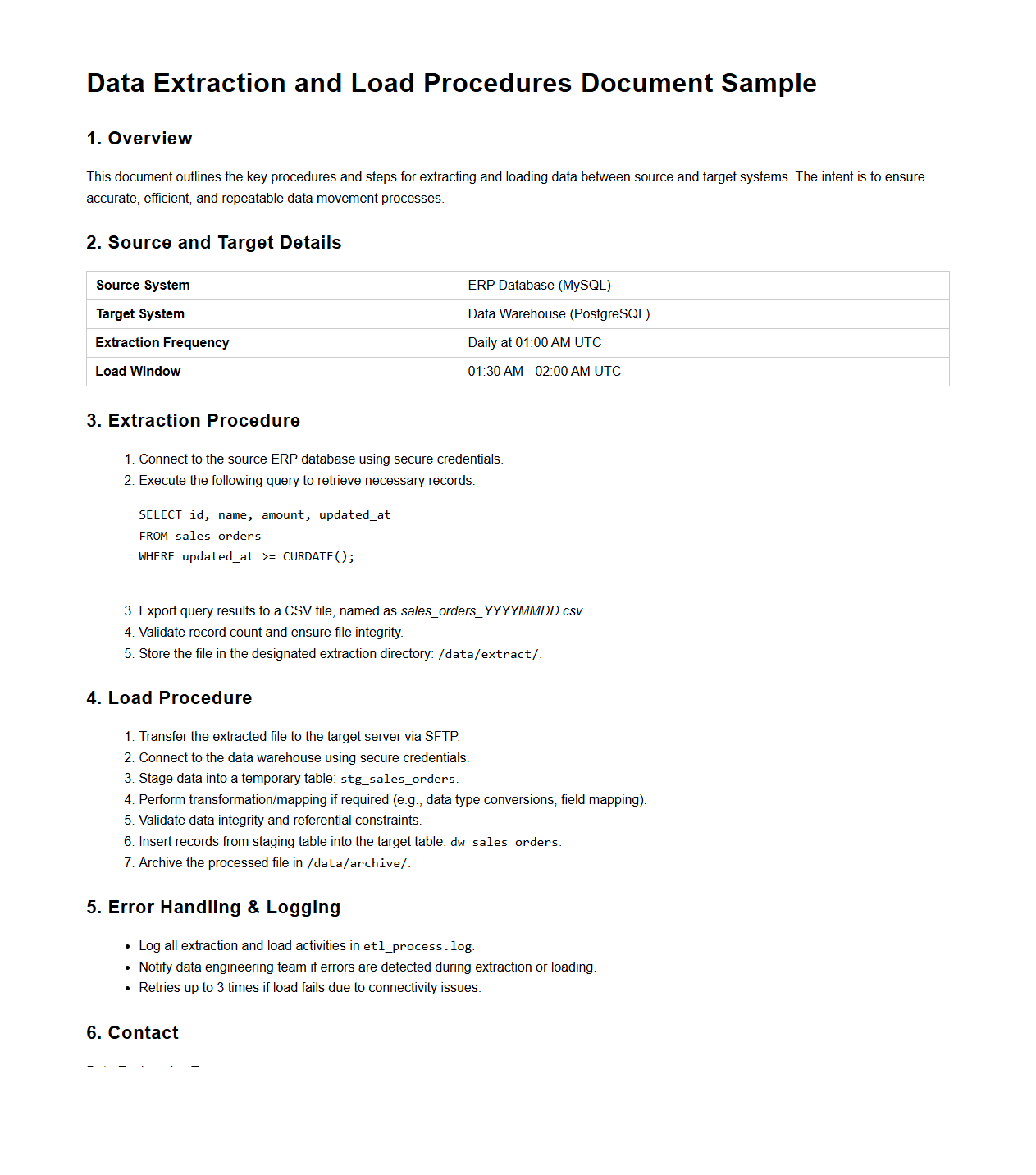
Data Extraction and Load Procedures Document Sample
A
Data Extraction and Load Procedures Document Sample outlines the specific steps and methodologies used to retrieve data from various sources and load it into target systems such as data warehouses or databases. It details extraction tools, transformation rules, data validation checks, scheduling, error handling, and loading processes to ensure data accuracy and consistency. This document serves as a critical reference for ETL developers, data engineers, and project stakeholders to maintain standardized and efficient data workflows.
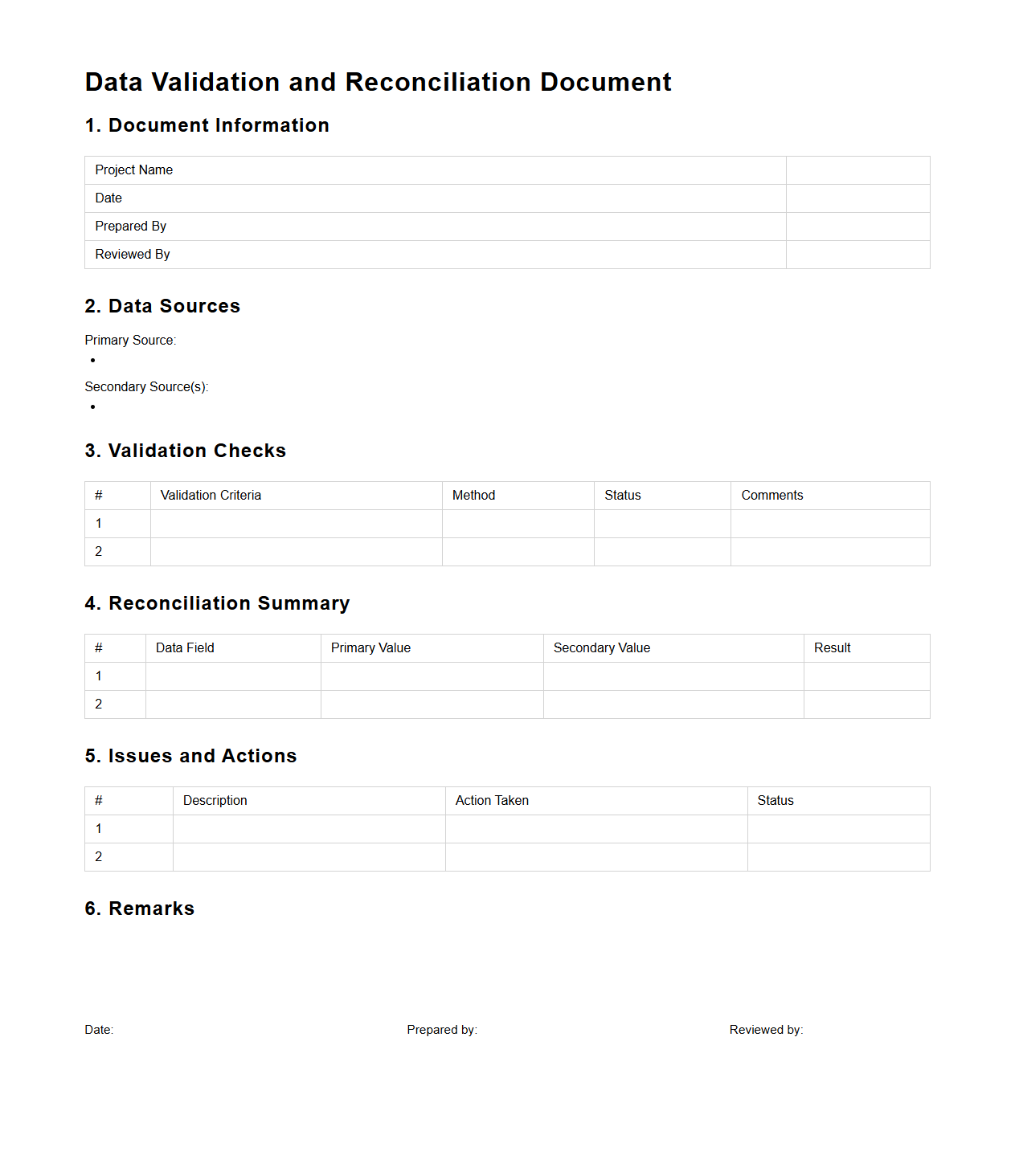
Data Validation and Reconciliation Document Sample
A
Data Validation and Reconciliation Document Sample is a structured template used to ensure accuracy and consistency between different data sources or datasets. It typically includes detailed steps for cross-checking data entries, validating data quality against predefined criteria, and documenting discrepancies for further analysis. This document helps organizations maintain data integrity by providing a clear framework for identifying and resolving inconsistencies in financial reports, transaction records, or operational databases.
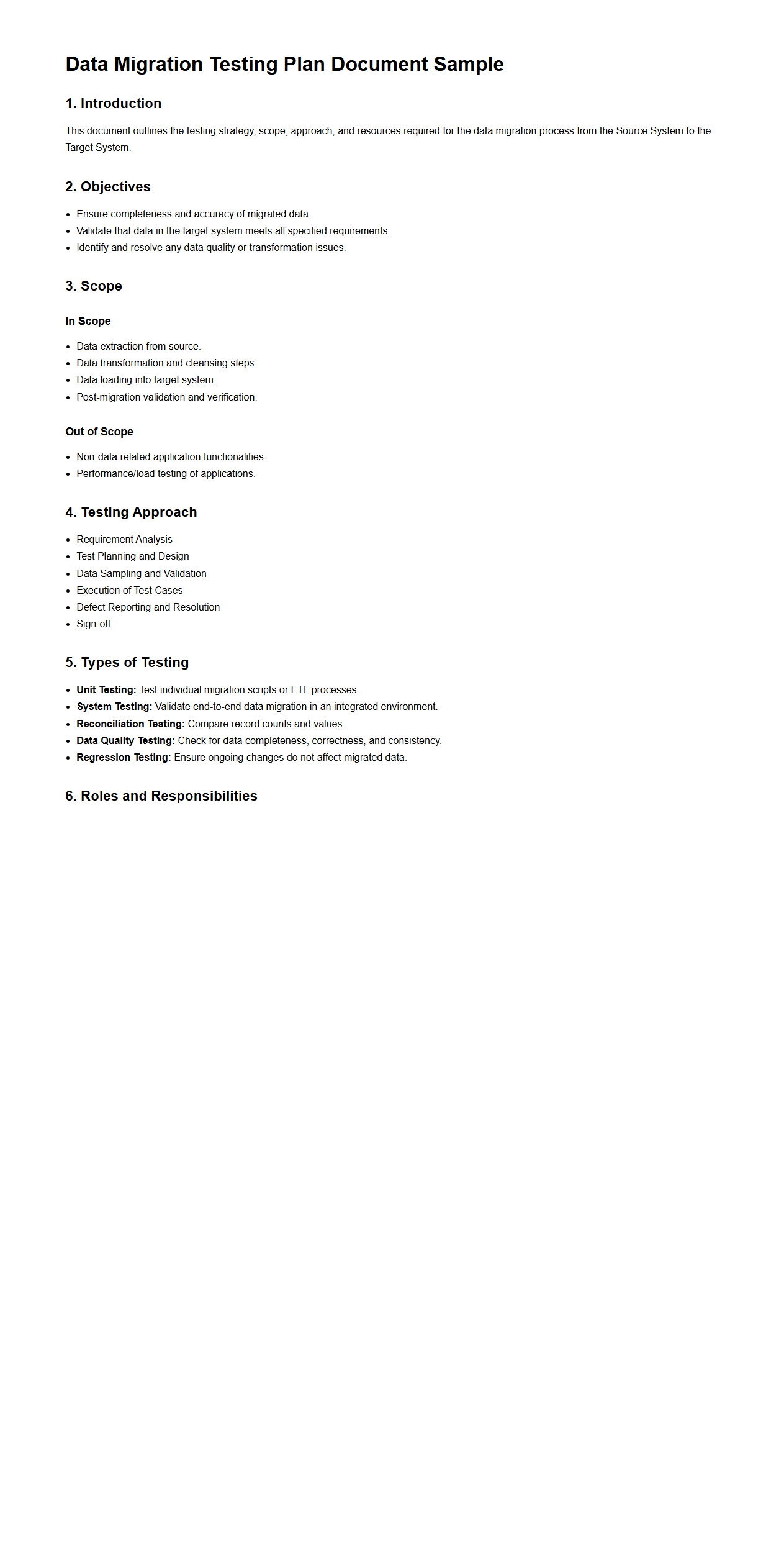
Data Migration Testing Plan Document Sample
A
Data Migration Testing Plan Document Sample outlines the structured approach and methodology for verifying the accuracy, completeness, and integrity of data transferred from legacy systems to new platforms. It details specific testing phases, test cases, data verification techniques, and acceptance criteria to ensure seamless data migration. This document serves as a crucial blueprint for validating data consistency and minimizing risks during migration projects.
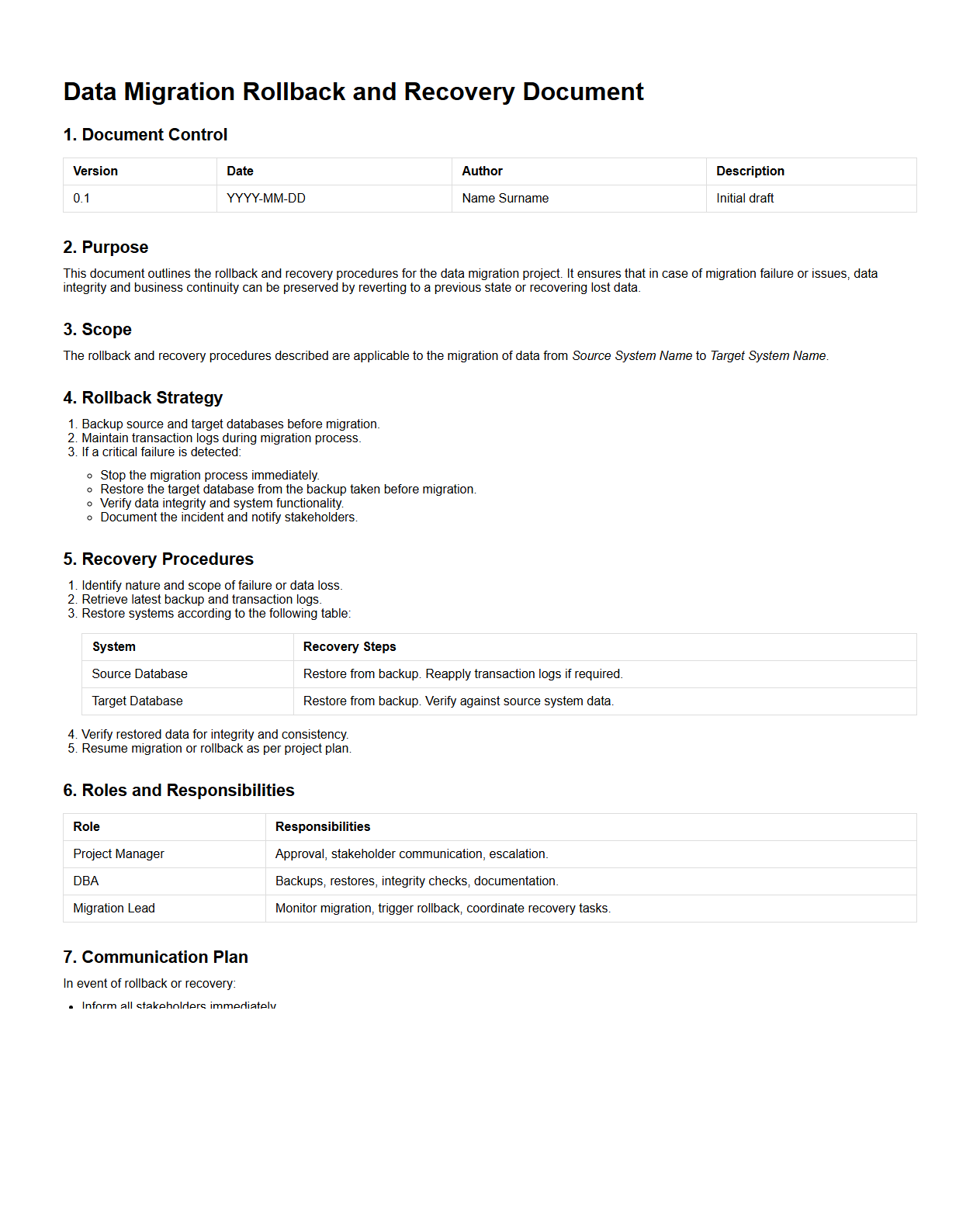
Data Migration Rollback and Recovery Document Sample
A
Data Migration Rollback and Recovery Document provides a structured plan outlining steps to reverse data migration changes in case of errors or failures, ensuring system integrity and minimizing downtime. It includes detailed rollback procedures, recovery points, backup verification, and critical system checkpoints necessary for restoring the original data state. This document serves as a vital reference for IT teams to manage unexpected issues during migration, safeguarding against data loss and operational disruptions.
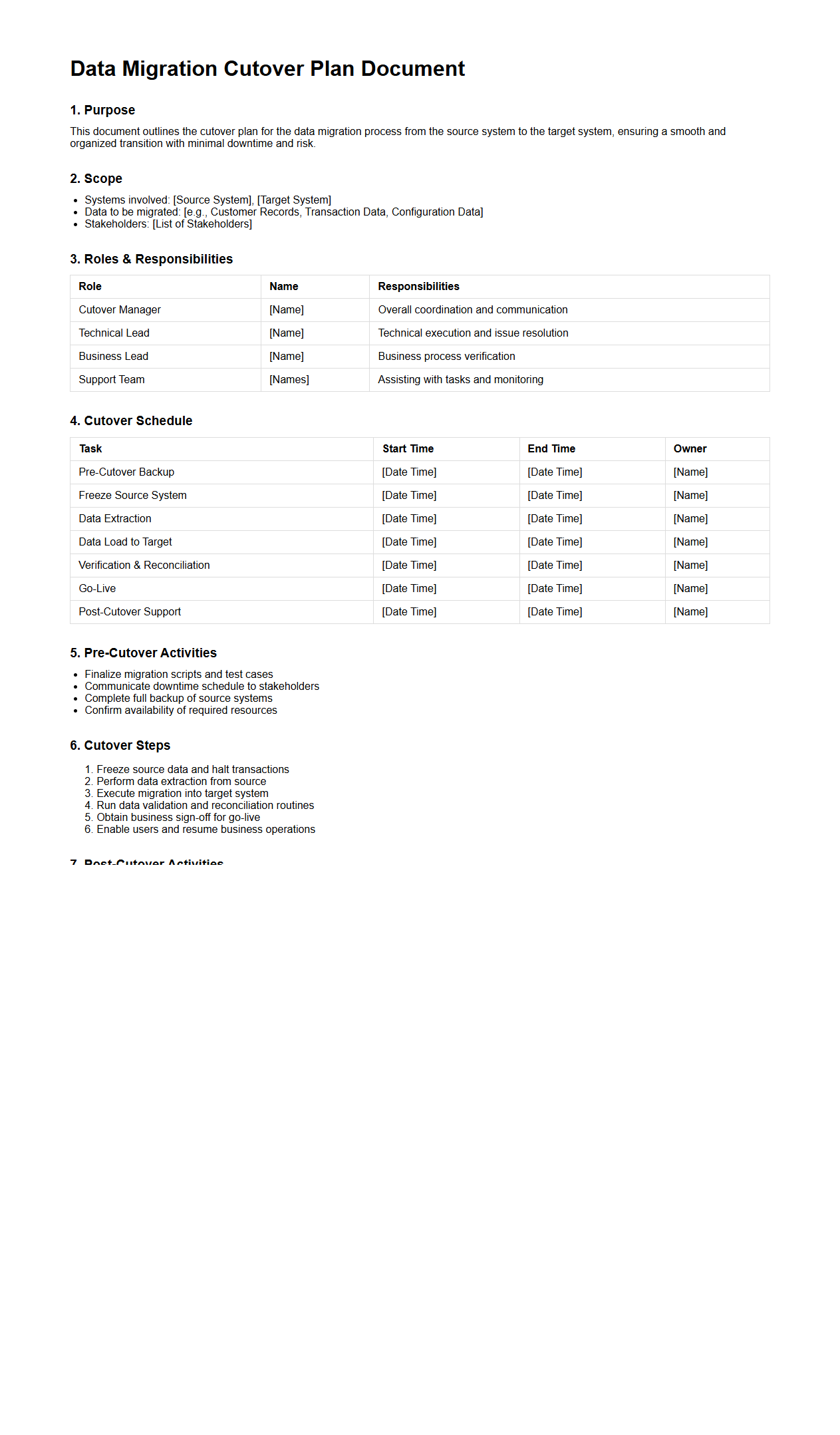
Data Migration Cutover Plan Document Sample
A
Data Migration Cutover Plan Document Sample outlines the detailed steps and procedures required to successfully transition data from legacy systems to new platforms, minimizing downtime and data loss. It includes timelines, roles and responsibilities, validation checkpoints, and rollback strategies that ensure a smooth and controlled migration process. This document serves as a critical reference to coordinate technical teams and stakeholders during the cutover phase of data migration projects.
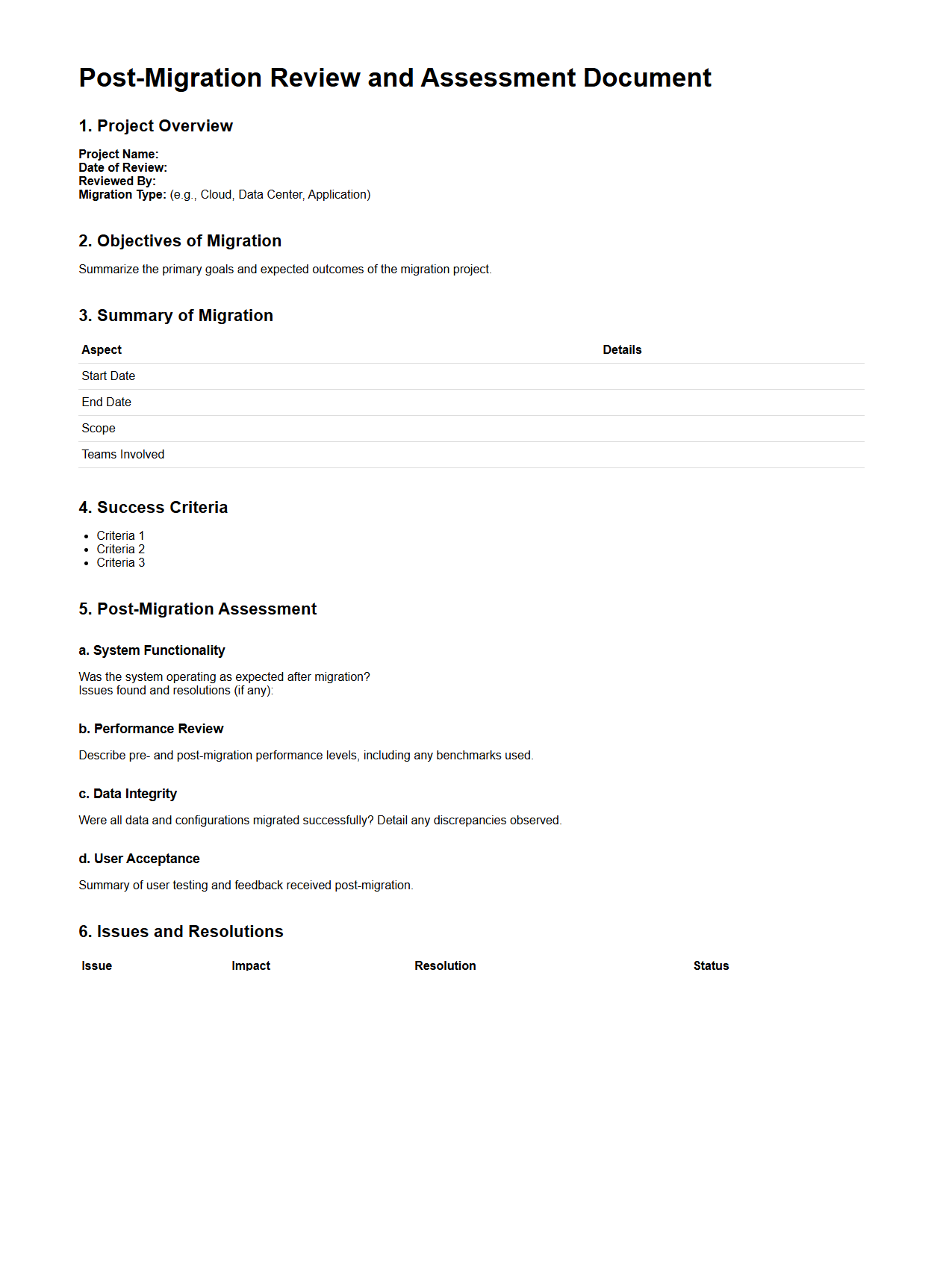
Post-Migration Review and Assessment Document Sample
A
Post-Migration Review and Assessment Document Sample provides a structured template for evaluating the success of a data or system migration project. It outlines key performance metrics, identifies any migration issues, and assesses whether objectives such as data integrity, system functionality, and user acceptance were met. This document serves as a critical tool for stakeholders to validate migration outcomes and plan necessary corrective actions.
What metadata mapping strategies are detailed in your Data Migration Document?
The Data Migration Document outlines comprehensive metadata mapping strategies to ensure consistency between source and target systems. It specifies the use of mapping matrices that detail field-to-field correspondences and data type conversions. Additionally, the document emphasizes maintaining traceability for all metadata transformations during migration.
How does the document address rollback procedures for failed migrations?
The document defines clear rollback procedures to manage migration failures effectively. It describes step-by-step processes for reverting data changes and restoring system states to pre-migration snapshots. These procedures aim to minimize downtime and data loss by incorporating automated rollback scripts and checkpoints.
Which data validation checkpoints are specified in the migration workflow?
The migration workflow includes multiple data validation checkpoints to ensure data integrity at each phase. These checkpoints involve verifying record counts, data completeness, and consistency between source and target datasets. The document also mandates post-migration audits to confirm successful data transfers.
Are legacy data transformation rules explicitly documented for each table?
The document explicitly details legacy data transformation rules for every table involved in the migration. It specifies conditions for data cleansing, format restructuring, and value mapping to align with the new system schema. This granular documentation facilitates transparency and repeatability throughout the migration process.
How does the document handle character encoding mismatches between source and target databases?
The document addresses character encoding mismatches by defining standard encoding formats to be used consistently across systems. It recommends performing encoding conversions during the extraction or loading phases to avoid data corruption. Additionally, verification steps are included to detect and resolve any encoding issues before final data integration.